
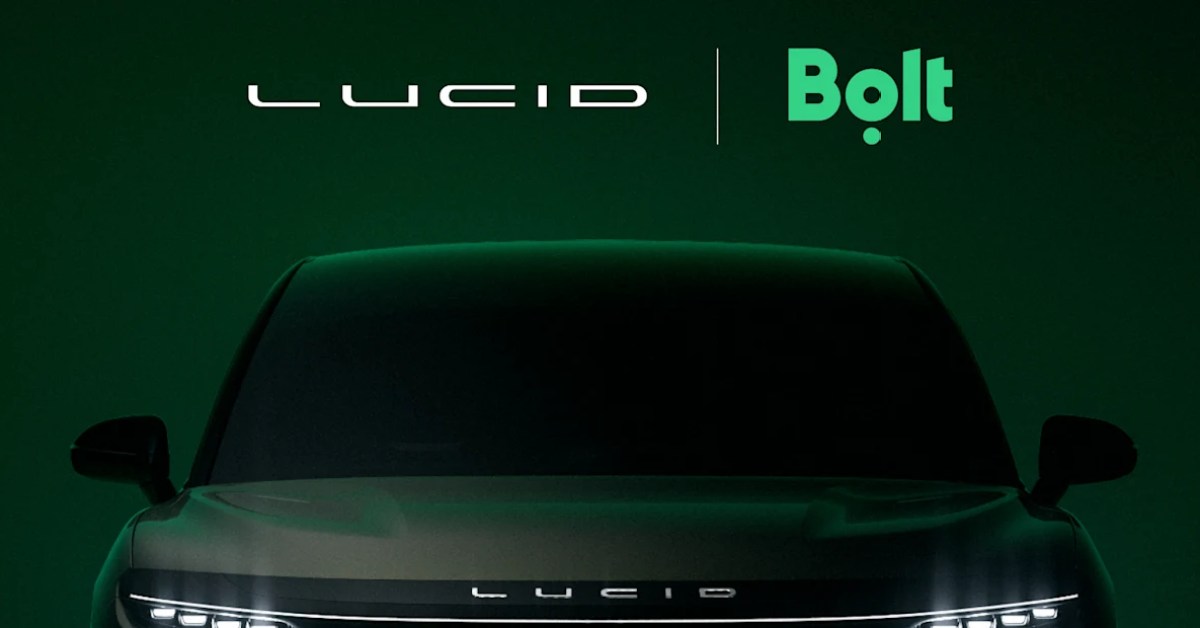
Lucid and Bolt Partner to Deploy 25,000 Robotaxis in Europe
Lucid Motors and European mobility leader Bolt have unveiled a strategic partnership to deploy autonomous electric vehicles across Europe. Under the agreement, Bolt aims to integrate at least 25,000 self-driving Lucid EVs into its ride-hailing network. The initiative marks a major effort to scale autonomous transit, supporting Bolt’s objective to operate 100,000 autonomous vehicles across its platform by 2035.
Bolt stands as Europe’s largest shared-mobility platform, operating in over 50 countries and 850 cities. With 200 million customers and 4.5 million drivers, the operator brings extensive urban mapping and operational reach to the venture. Industry filings indicate that the fleet will help establish scalable, commercially viable autonomous ride-hailing services tailored specifically to European urban infrastructure.
Technical Integration and Platform Architecture
The upcoming autonomous fleet will utilize Lucid’s scheduled Midsize vehicle platform, engineered to support SAE Level 4 autonomous driving capabilities. The two companies plan to co-develop an ADS-ready vehicle from the initial product stage. This approach streamlines hardware integration, sensor embedding, thermal management, and power distribution systems required for continuous driverless operations within dense European cities.
The hardware foundation relies on NVIDIA Hyperion, a production-ready reference architecture bundling high-performance centralized compute with a standardized sensor suite. By integrating Hyperion, the partnership creates a unified hardware baseline capable of processing real-time environmental data, obstacle perception, and path planning. This architecture provides the necessary raw computing power required for complex urban driving scenarios.
Under the agreement, Bolt Autonomous Driving Solutions will serve as fleet operator, defining vehicle specifications, building infrastructure, and handling city partnerships. On Lucid’s side, operations run through Lucid Technologies, a newly formed unit consolidating artificial intelligence, driver-assistance, and autonomy efforts under one roof. Bolt intends to own and operate the resulting fleet directly across European markets.
Lucid’s Growing Portfolio of Global Fleet Commitments
Executive leadership highlighted that shared autonomous mobility offers an ideal opportunity to extend proprietary electric vehicle technologies beyond consumer markets. Meanwhile, operating leadership emphasized that mastering European autonomous driving requires data, software, vehicles, and operations working as a single unified system. That integrated approach is considered vital for navigating complex European municipal regulations and varied road conditions.
This initiative represents Lucid’s second major autonomous fleet arrangement within just over a year. In mid-2025, Uber committed to deploying 20,000 Lucid Gravity robotaxis in the United States using Nuro’s self-driving technology alongside a $300 million investment. Uber subsequently built its equity stake in Lucid to roughly 11.5 percent as part of a wider effort to back autonomous alternatives.
Together, these agreements give Lucid commitments for 45,000 autonomous vehicles spanning two continents. However, the commercial structures differ significantly. While the U.S. arrangement relies on the larger Gravity SUV and Nuro software, the European deployment centers on the upcoming Midsize platform and NVIDIA Hyperion architecture, demonstrating a flexible hardware strategy across distinct international markets.
Execution Challenges and Hardware Supply Reality
Despite these massive commitments, regulatory disclosures highlight critical operational questions. Lucid serves primarily as the vehicle hardware manufacturer rather than the driverless software provider. Because NVIDIA Hyperion delivers compute and sensors rather than full self-driving software, the partners must still collaborate with specialized autonomous driving technology developers to achieve operational Level 4 capabilities on public roads.
Furthermore, the 25,000 European vehicles depend on a vehicle platform currently facing delays. Industry filings confirm that Lucid recently delayed its Midsize program during an operational reset. That restructuring included an 18 percent workforce reduction affecting 1,500 jobs, the withdrawal of 2026 production guidance, and leadership changes following low second-quarter vehicle delivery numbers totaling fewer than 4,000 units.
Manufacturing volumes highlight the scale of the challenge facing the automaker. Producing tens of thousands of commercial fleet vehicles requires substantial expansion of factory capacity and supply chain logistics. Balancing large-scale commercial fleet orders alongside consumer vehicle production will require Lucid to significantly increase manufacturing output beyond its current quarterly production levels over the coming years.
The Operational Outlook for European Shared Mobility
Neither company has established a public deployment date for the European fleet. Bolt’s ultimate target of deploying 100,000 autonomous vehicles extends to 2035, providing a multi-year horizon to finalize software partnerships, complete safety testing, and establish municipal agreements. This timeline allows both companies to resolve platform engineering challenges while working within Europe’s strict regulatory framework for driverless transport.
For Bolt, securing custom electric vehicle hardware provides a key asset for long-term fleet automation. With operating experience across 850 cities, the platform offers the mapping data and routing density essential for autonomous deployment. Co-developing hardware ensures vehicles are optimized from the factory floor for intensive ride-hailing duty cycles, durability, and rapid charging demands.
Ultimately, the partnership reflects the growing specialization across the autonomous vehicle industry. Automakers are increasingly positioning themselves as hardware suppliers for sensor-ready vehicle platforms, while mobility operators manage localized fleet operations. The success of this 25,000-vehicle deal will depend on successfully bridging vehicle production schedules with proven driverless software solutions across European cities.
