
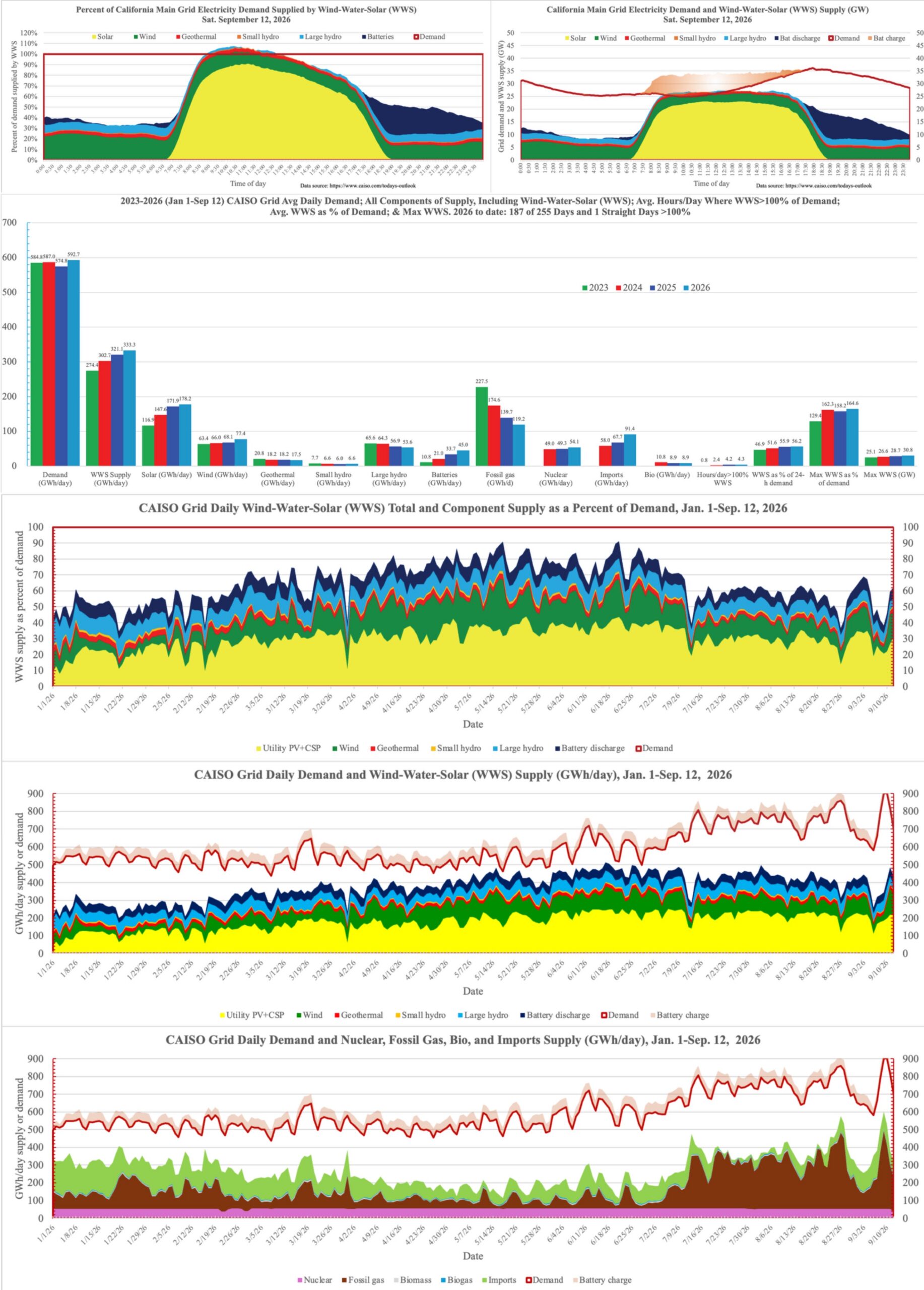
California Meets Over 56% of Electricity Demand With Renewables
California has reached a monumental milestone in its transition toward zero-carbon energy, with wind, water, and solar sources supplying over 56 percent of the state’s total electricity demand. This historic achievement underscores the rapid acceleration of clean power infrastructure across the Golden State. It demonstrates that large-scale economies can successfully rely on variable renewable energy while maintaining grid reliability and powering millions of homes and commercial enterprises.
According to academic tracking and grid operator data, the landmark figure highlights years of sustained investment in utility-scale solar farms, residential rooftop installations, and expanded battery storage systems. As the state continues adding renewable capacity at a record-setting pace, energy analysts note that milestones previously considered distant targets are now becoming routine operational norms for California's complex transmission network.
The Rise of Wind, Water, and Solar Integration
The primary driver behind this shift is the systematic combination of wind, water, and solar, commonly referred to as the WWS energy framework. Stanford University professor Mark Z. Jacobson, a long-time pioneer in atmospheric energy research, has continuously monitored California’s progress using this methodology. His tracking reveals that combining diverse renewable resources allows the state to offset natural fluctuations in individual generation sources throughout the seasonal cycle.
Solar energy remains the undisputed engine of California's clean power surge. Millions of rooftop solar installations alongside massive utility arrays in the desert regions generate surplus electricity during peak daylight hours. This vast distributed energy network now satisfies an overwhelming share of daytime demand, reducing the state’s reliance on thermal power plants and significantly lowering localized air pollution in major metropolitan basins.
Complementing the solar surge, hydroelectric installations and coastal wind farms provide crucial continuous power. Hydroelectric generation acts as a flexible baseline, ramping output up or down depending on real-time grid requirements. Meanwhile, onshore and emerging offshore wind developments capture strong evening breezes, filling the energy production void created when solar generation naturally declines during sunset hours each day.
Battery Storage Stabilizes the Clean Grid
The massive influx of intermittent renewable energy has been rendered viable by California's unprecedented expansion of grid-scale battery energy storage systems. Over the past several years, storage capacity has grown exponentially, enabling grid operators to capture excess solar power produced during midday hours. This stored energy is subsequently discharged into the high-voltage transmission grid as solar output wanes during dusk.
By shifting solar energy into evening hours, battery storage directly displaces the need for expensive natural gas peaker plants. Regulatory disclosures show that energy storage systems routinely become the single largest contributor to the electrical grid during early evening demand spikes. This dynamic fundamentally alters the economics of fossil fuel generation while lowering overall carbon intensity across the western interconnection grid.
State policy mandates and supportive regulatory frameworks have accelerated battery integration across both consumer and commercial sectors. Financial incentives encourage homeowners and businesses to pair rooftop solar with localized battery systems. This decentralized approach creates microgrids capable of providing emergency backup power during extreme weather events while simultaneously supporting grid stability during regional heatwaves and severe peak stress conditions.
Economic and Infrastructure Impact on Electric Vehicles
The greening of California’s electricity grid yields massive indirect benefits for the automotive sector, where electric vehicle adoption continues to outpace national averages. With over 56 percent of electricity coming from clean WWS sources, charging an electric vehicle in California now results in substantially lower lifecycle greenhouse gas emissions compared to refueling conventional internal combustion engine vehicles anywhere in the nation.
Utilities and technology providers are actively deploying smart charging networks and vehicle-to-grid technologies to maximize energy synergy. These systems automatically incentivize drivers to charge their vehicles during midday periods when solar power is most abundant and affordable. By aligning electric vehicle charging behaviors with peak renewable output, the state transforms millions of cars into dynamic grid-balancing assets.
Beyond environmental metrics, the expansion of renewable energy drives significant domestic economic growth. Industry filings indicate that the clean energy supply chain has created tens of thousands of skilled jobs in project engineering, solar installation, battery manufacturing, and system maintenance. Localized clean power generation keeps energy expenditures within the state economy, insulating consumers from global fossil fuel price volatility.
Overcoming Grid Challenges and Future Outlook
Despite these impressive achievements, state energy planners face ongoing challenges regarding grid infrastructure expansion and power curtailment. On exceptionally sunny days, total renewable generation can temporarily exceed grid transmission capacity, forcing operators to curtail clean power output. Addressing these bottlenecks requires substantial investments in high-voltage transmission corridors to transport clean electricity from remote generation hubs to urban population centers.
To reach ultimate decarbonization goals, energy developers are increasingly investing in long-duration storage solutions alongside traditional lithium-ion batteries. Technologies such as pumped-storage hydropower, compressed air, and advanced flow batteries offer multi-day energy storage capabilities. These long-duration assets ensure grid resiliency during extended periods of cloudy weather or low wind activity, guaranteeing continuous clean power availability throughout the year.
California's milestone of supplying over 56 percent of electricity demand through wind, water, and solar signals a decisive turning point in global energy transitions. As technology costs continue falling and deployment rates accelerate, state regulators remain confident in reaching statutory targets for 100 percent carbon-free electricity. What was once viewed as an ambitious environmental goal has rapidly transformed into a practical reality.
