
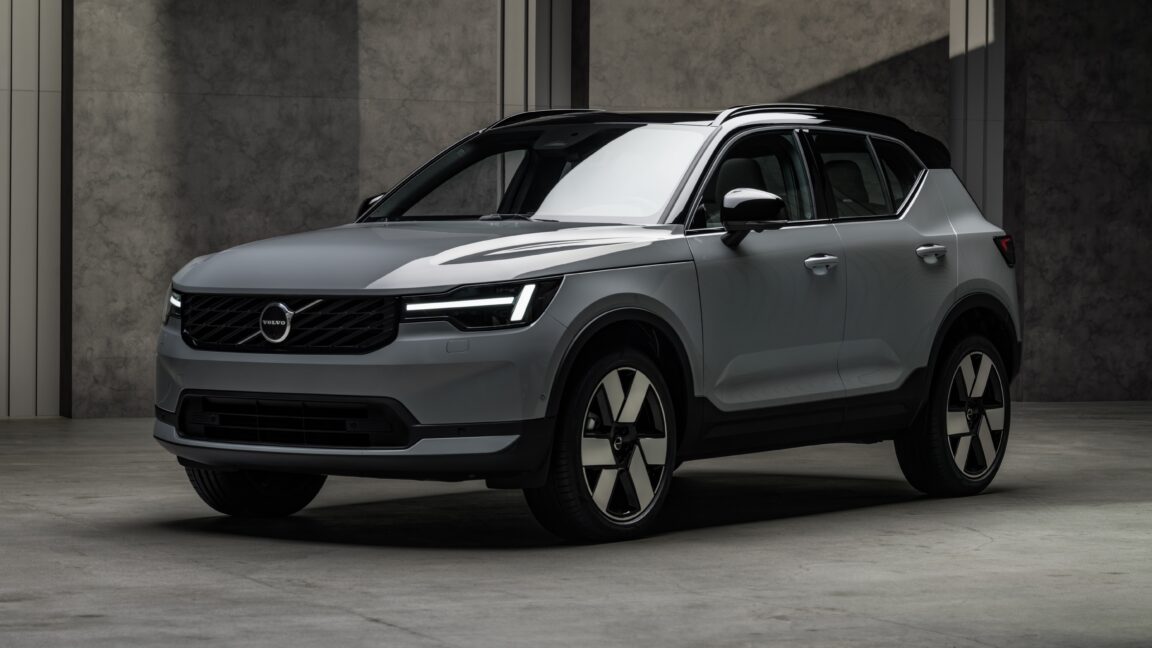
2028 Volvo XC40 Refresh Brings Updated Styling and AI Tech
Automakers typically adhere to a strict six-to-eight-year model lifespan, introducing a single midlife update roughly four years after a car's initial public debut. This routine facelift allows manufacturers to refresh external styling, modernise cabin technology, and implement minor mechanical enhancements. However, Volvo is breaking away from traditional automotive product cycles by preparing a second major refresh for its long-running compact crossover model.
Originally launched back in 2017, the Volvo XC40 received its first subtle aesthetic update for the 2023 model year. Rather than investing in a completely clean-sheet redesign for its next iteration, official company disclosures confirm that the Swedish manufacturer will release another comprehensive update for the 2028 model year, ensuring the popular luxury crossover remains competitive well into the current decade.
Sculpted Edges and Minimalist Lighting Define the Exterior
The visual updates for the 2028 Volvo XC40 are instantly recognizable, centered primarily around revised front and rear lighting signatures. Up front, the crossover retains its signature "Thor's Hammer" daytime running lights, but the main LED matrix clusters have been redesigned. The new light units feature a far more minimalist aesthetic, cleanly integrated into the front fascia while concealing internal technical components from view.
At the rear, updated LED tail lamps mirror this cleaner graphic language, granting the crossover a sleek, modern illumination signature after dark. Beyond lighting, Volvo designers executed subtle panel sculpting around the vehicle's corners. By carefully trimming the physical profile, designers have visually softened the outer edges of the compact crossover, giving it a tighter overall stance on the roadway.
Socially Conscious Proportions Stand Out in the SUV Segment
This subtle trimming of the vehicle’s corners yields a distinct psychological impact on surrounding road users and pedestrians. While many modern sport utility vehicles continue to grow progressively larger and more aggressive with every generation, Volvo has opted for a subtle reduction in spatial footprint. Shaving off small fractions of an inch at the perimeter makes the vehicle appear visually less intimidating in crowded urban environments.
From a pedestrian perspective, these shaved corners create an impression of increased distance from the vehicle’s outer edges. This design philosophy aligns closely with Volvo’s longstanding commitment to safety and social awareness, contrasting sharply with broader industry trends toward oversized grilles and imposing proportions. The refined silhouette preserves utility while emphasizing a softer, more considerate presence on public thoroughfares.
Android Automotive Upgrades Introduce Gemini AI Integration
Step inside the revised cabin, and the most prominent upgrade is an expansive 11.2-inch central touchscreen infotainment display. Volvo was an early adopter of Google’s built-in Android Automotive operating system, and this software architecture receives a major evolution for 2028. The infotainment display features sharper graphics, streamlined menu navigation, and faster operational response times tailored for everyday driver convenience and connectivity.
Crucially, the system now incorporates Google’s Gemini artificial intelligence engine directly into the vehicle’s operational framework. While integrating advanced AI into automotive dashboards often sparks debate among consumers, initial hands-on evaluations indicate a marked improvement in overall capability. Gemini acts as a far more intuitive voice assistant, processing complex conversational commands faster than the legacy software.
Alongside software enhancements, the interior receives refined tactile updates aimed at elevating cabin luxury. Buyers can opt for a new cardamom-colored leather upholstery paired directly with genuine open-grain wood trim accents across the dashboard and door panels. This warm color palette offers an inviting contrast to the digital interfaces, enhancing the premium Scandinavian aesthetic inside the updated XC40.
Advanced Sensor Arrays Elevate Benchmark Safety Standards
Unsurprisingly for a brand synonymous with occupant protection, Volvo has introduced a comprehensive suite of hardware and software safety enhancements for 2028. The updated crossover features a newly developed sensor network comprising next-generation front, rear, and corner radar units. These upgraded radar modules work continuously alongside an advanced forward-facing camera to monitor surrounding traffic conditions with greater precision.
Complementing the enhanced camera and radar systems is a fresh array of ultrasonic proximity sensors distributed around the body panels. The vehicle’s safety domain controllers utilize upgraded fusion software to synthesize data from all active onboard sensors simultaneously. This multi-sensor approach improves collision prevention systems, active driver assistance, and low-speed maneuvering support across diverse driving conditions.
Driver convenience during tight parking scenarios also benefits from these sensor upgrades through an updated 360-degree camera system. The fused camera setup provides high-definition 3D surrounding views on the central screen, making tight urban maneuvering significantly simpler. This comprehensive sensor overhaul highlights Volvo’s commitment to incremental safety innovations, even on established vehicle platforms undergoing mid-lifecycle enhancements.
Production Timelines and Global Market Availability Details
According to recent automotive industry filings, production for the revised 2028 Volvo XC40 is scheduled to commence later this year. Deliveries to dealerships and retail buyers are anticipated to begin early next year, ensuring a smooth transition into showrooms globally. The update aims to sustain strong sales momentum for what remains one of the brand's top-performing vehicles worldwide.
Additionally, corporate release notes reveal that the fully electric variant—now badged as the EX40—will receive the exact same exterior styling and interior technological updates. However, product allocation schedules confirm that the updated electric EX40 will not be exported to North American markets. US consumers seeking the newly refreshed model will be limited to the internal combustion and hybrid XC40 variants.
