
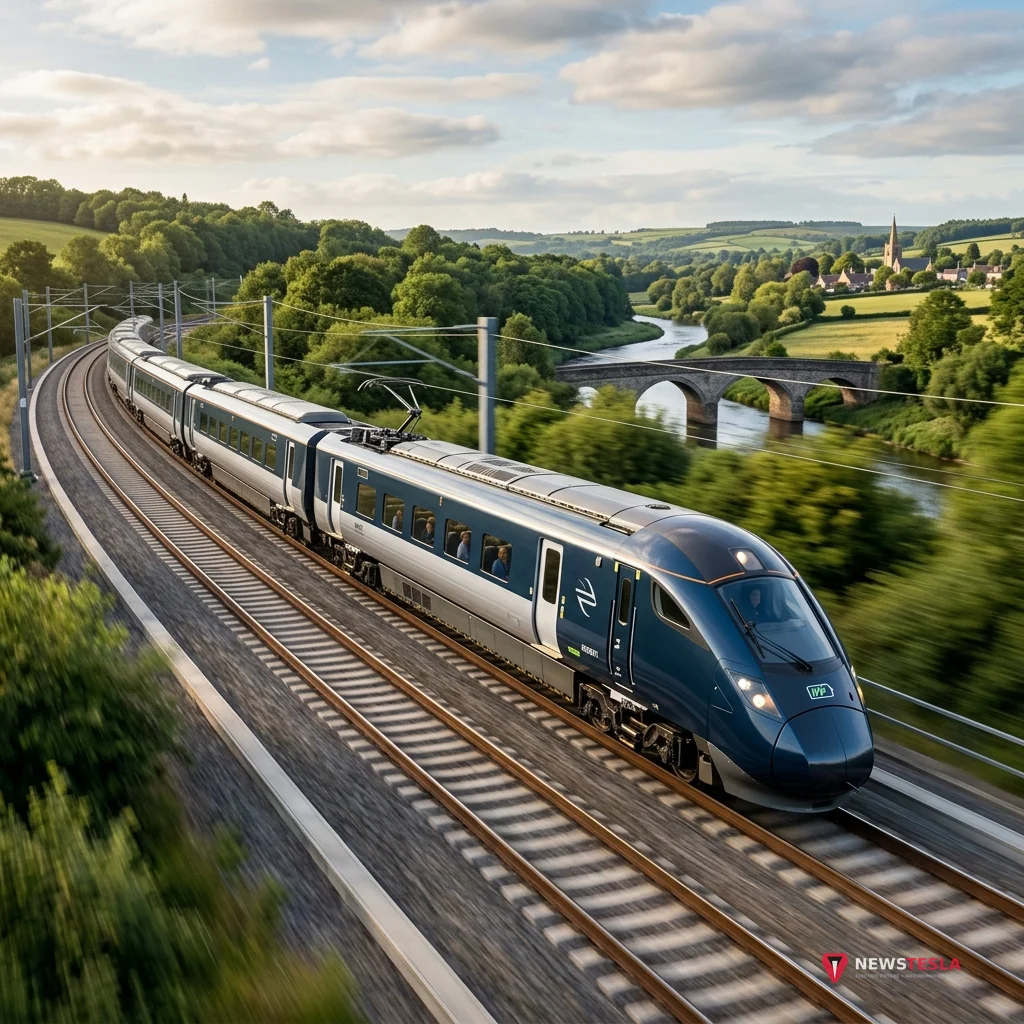
British-Built Battery Trains To Transform UK Rail Travel
A major shift is underway in British public transportation following the announcement of a landmark transit agreement valued at over €1.2 billion. As part of this comprehensive modernization strategy, regional rail operator TransPennine Express will deploy 29 fully electric Adessia Stream trains. These British-designed passenger vehicles represent the country’s first dedicated mainline fleet designed to run primarily on heavy-duty battery power.
For decades, passenger rail across Northern England has faced public criticism due to chronic delays, aging diesel fleets, and complex ticketing structures. The introduction of state-of-the-art battery-electric locomotives aims to eliminate these longstanding operational bottlenecks. By replacing traditional diesel equipment on key intercity routes, transport authorities plan to deliver significantly faster, quieter, and far more dependable transit for millions of daily commuters.
A Billion-Euro Investment in Clean Passenger Rail
The newly announced fleet agreement signals a major commitment to revitalizing regional rail infrastructure through sustainable mobility. Train manufacturer Alstom will lead the engineering and production effort, crafting the 29 specialized Adessia Stream units specifically for long-distance mainline operations. Industry disclosures indicate that the procurement contract forms the centerpiece of a wider regional investment designed to upgrade tracks, maintenance depots, and overall network efficiency.
Beyond transit improvements, the industrial impact of the project will resonate across the domestic manufacturing sector. Production of the entire fleet will take place at historic rail manufacturing facilities in Derby, securing vital supply chain operations. According to official government estimates, the multi-year contract will support more than 6,000 permanent skilled jobs across the United Kingdom, boosting advanced manufacturing capabilities and technical apprenticeship programs.
Executive statements from industrial leaders highlight the national pride embedded in the project. Officials noted that having Britain's first mainline battery-electric fleet built domestically represents a major industrial triumph. Stakeholders emphasize that the project showcases cutting-edge British engineering while simultaneously serving as a global benchmark for decarbonizing legacy passenger rail lines that lack full overhead wire electrification.
Engineering Innovation for Next-Generation Mainline Travel
Unlike earlier hybrid trains that relied heavily on auxiliary combustion engines, the Adessia Stream fleet is engineered from the ground up to operate as a primary battery-electric vehicle system. Capable of reaching operational speeds of up to 110 mph, these units combine high-density energy storage with high-efficiency traction motors. This configuration allows them to maintain top mainline speeds without drawing continuously from power grids.
This technological leap builds upon real-world testing that began in 2024. During preliminary trials, rail engineers retrofitted a Class 802 Nova 1 intercity train by replacing one of its standard diesel engines with a prototype battery system developed by Hitachi. The successful pilot proved that high-capacity battery technology could handle the rigorous demands, steep gradients, and high speeds required by commercial intercity passenger travel.
The production Adessia Stream models refine those initial experimental concepts into a fully integrated platform. By utilizing fast-charging energy storage systems, the trains can top up their batteries while operating under existing electrified catenary lines or at specialized terminal charging stations. This hybrid power flexibility eliminates the need for expensive, capital-intensive electrification overhead across every mile of rural track.
Elevating Passenger Comfort and Route Reliability
Beyond pure powertrain performance, the new trainsets feature significant upgrades to passenger amenities. Each train is designed to seat approximately 300 passengers comfortably in an optimized cabin layout. Modern interiors will include a dedicated First Class section equipped with premium seating, integrated device charging, and modern catering and dining facilities to elevate the overall travel experience for long-distance passengers.
Addressing service reliability remains the central objective of the fleet overhaul. Regional leadership and public transit advocates have consistently pointed out that historical delays lead to missed work shifts, cancelled medical appointments, and lost economic opportunities. The enhanced acceleration and mechanical reliability of electric traction motors will allow operators to maintain strict timetable schedules and dramatically reduce unexpected vehicle breakdowns.
The geographic focus of the rollout targets key travel corridors connecting major urban centers across Northern England. By establishing faster intercity connections between key economic hubs, transport planners anticipate a modal shift away from private automobiles and short-haul flights. Improved rail connectivity is expected to stimulate regional commerce, expand labor market access, and unite growing metropolitan economies across the North.
Decarbonizing Britain’s Transit Grid by 2034
The environmental advantages of replacing diesel traction with battery power are substantial. By removing direct tailpipe emissions along non-electrified track segments, the 29 Adessia Stream trains will drastically reduce nitrogen oxide particulates and carbon dioxide outputs. Regulatory disclosures confirm that the rollout aligns directly with national net-zero targets, helping lower the overall carbon intensity of the country’s transport sector.
While the fleet is scheduled to officially enter commercial service in 2034, the intervening decade will involve extensive safety certification, infrastructure prep work, and real-world durability testing. Fleet managers and engineers will utilize this lead time to construct dedicated battery charging infrastructure, train technical maintenance crews, and optimize energy management software across the entire route network for maximum efficiency.
As global transport networks accelerate their transition away from fossil fuels, the UK’s battery-electric mainline project represents a crucial proof-of-concept for international rail operators. By proving that heavy, high-speed passenger trains can operate reliably on battery energy across long distances, the initiative provides a practical roadmap for clean, efficient intercity transit worldwide.
