
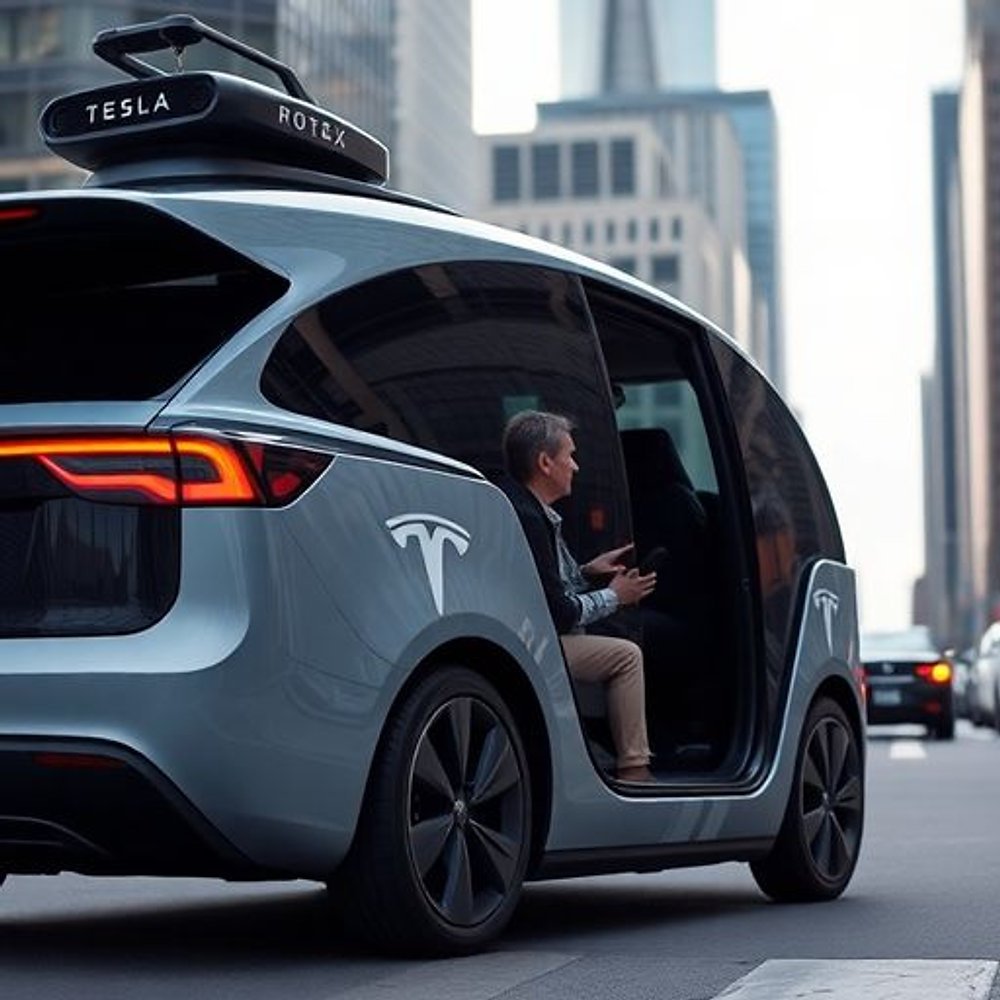
Tesla Robotaxi App Update Lets Passengers Choose Cybercab
A New Choice Emerges for Autonomous Ride-Hailing
Tesla has officially updated its proprietary Robotaxi application on mobile storefronts, introducing a major operational shift that allows prospective riders to select their preferred vehicle type prior to confirming a trip. Recent screenshots from App Store updates reveal a revamped interface displaying side-by-side choices for commuters, marking a critical transition from a single-model testing footprint to a tiered, multi-vehicle autonomous hailing network.
The updated application explicitly distinguishes between the overall platform and the specific vehicle models servicing requests. Under the new system, users navigating through Texas service zones can choose between a dedicated two-passenger Cybercab or a larger four-passenger Model Y. Industry filings indicate this dual-vehicle booking capability provides crucial operational flexibility while offering riders customized transport suited to group size.
In early testing zones across Austin, early adopters captured screenshots demonstrating the digital interface in action. The screen clearly highlights a striking gold Cybercab tailored for solitary travelers or couples, positioned beside the established Model Y option. This user-centric update confirms that driverless hailing services are moving away from randomized vehicle dispatching toward deliberate, passenger-driven selections.
Comparing the Purpose-Built Cybercab and Model Y
To understand the strategic significance of this update, observers must recognize the operational history of Tesla's ride-hailing venture. Since launching initial pilot programs in Austin in mid-2025 before expanding to Dallas, Houston, and select Florida markets, the platform relied exclusively on modified Model Y electric crossovers. These early commercial vehicles retained standard production features, including manual steering wheels, foot pedals, and traditional cabin layouts.
In contrast, the newly introduced Cybercab represents the automaker's first purpose-built fully autonomous vehicle designed strictly for ride-hailing operations. Built without traditional driver controls like steering wheels or pedals, the sleek two-seater features distinctive upward-opening butterfly doors. Its dedicated engineering focuses entirely on passenger comfort, safety, and streamlined aerodynamics rather than dual-purpose personal ownership capabilities.
Beyond exterior hardware, the digital experience inside the Cybercab diverges significantly from standard production cars. The updated mobile app integrates seamless cabin management tools, enabling passengers to control climate settings, adjust entertainment, and utilize phone-based door unlocking mechanisms upon arrival. In-cabin voice assistance further reduces physical contact points, creating an intuitive hands-free atmosphere for passengers during transit.
Fleet Optimization and Operational Efficiency
Giving passengers direct agency over vehicle selection allows the ride-hailing network to optimize fleet deployment efficiency dramatically. Statistical data from traditional ride-hailing operations reveals that the vast majority of urban trips involve only one or two passengers. By deploying a compact two-seat vehicle specifically for smaller occupant counts, energy consumption per passenger mile drops substantially compared to traditional SUVs.
Automotive industry analysts emphasize that smaller, purpose-built vehicles lower per-mile operating costs significantly for platform operators. Cybercab’s lightweight structure and targeted battery sizing optimize power efficiency during stop-and-go city driving. Meanwhile, larger parties of three or four passengers, along with riders carrying extensive luggage, retain the option to request the roomier Model Y platform without interrupting service continuity.
Regulatory disclosures filed with Texas transportation authorities show dozens of new Cybercab units registered in the days leading up to September launch events. These filings highlight a rapid ramping phase for the specialized vehicle. Integrating these units into existing active fleets allows dispatch algorithms to balance demand, ensuring high-capacity vehicles remain available for larger groups while compact units handle solo commutes.
Accessibility Features Lead Purpose-Built Design
Tesla’s updated application descriptions highlight that the Cybercab was built around core principles of accessibility, safety, and modern comfort. Unlike standard production electric vehicles, the Cybercab features an intentionally lowered seat height engineered specifically to accommodate riders transferring from wheelchairs. This structural adjustment simplifies ingress and egress, addressing long-standing mobility challenges associated with elevated crossover SUVs.
Complementing the low-profile chassis, the vehicle includes enlarged trunk capacity engineered to store mobility scooters, folded wheelchairs, and assistive medical equipment effortlessly. Furthermore, interior exterior door handles incorporate integrated Braille lettering, providing tactile guidance for visually impaired passengers. These inclusive design choices demonstrate a concerted effort to meet universal design standards within commercial autonomous fleets.
Industry observers note that integrating accessibility hardware directly into vehicle architecture avoids costly aftermarket retrofits commonly required for conventional taxi operations. By designing the Cybercab from the ground up to support diverse mobility needs, the operator establishes an inclusive platform capable of serving demographic segments that often face transport barriers in legacy ride-hailing ecosystems.
Expanding Beyond Texas into a Multi-Vehicle Fleet
While the App Store update confirms dual-vehicle selection functionality, availability remains constrained by regional fleet composition. Regulatory disclosures indicate that Cybercab selection will launch first in Austin before expanding to auxiliary Texas and Florida markets. Consequently, users in secondary service areas will temporarily continue operating under Model Y-only dispatches until local purpose-built vehicle counts increase.
The transition to a multi-vehicle booking model reflects a maturing autonomous transport strategy. Moving beyond initial proof-of-concept testing with converted production vehicles, the platform is actively building out specialized hardware designed for scalable commercial transit. Allowing users to choose between compact efficiency and full-size space represents a pivotal step toward modernizing urban mobility infrastructure.
