
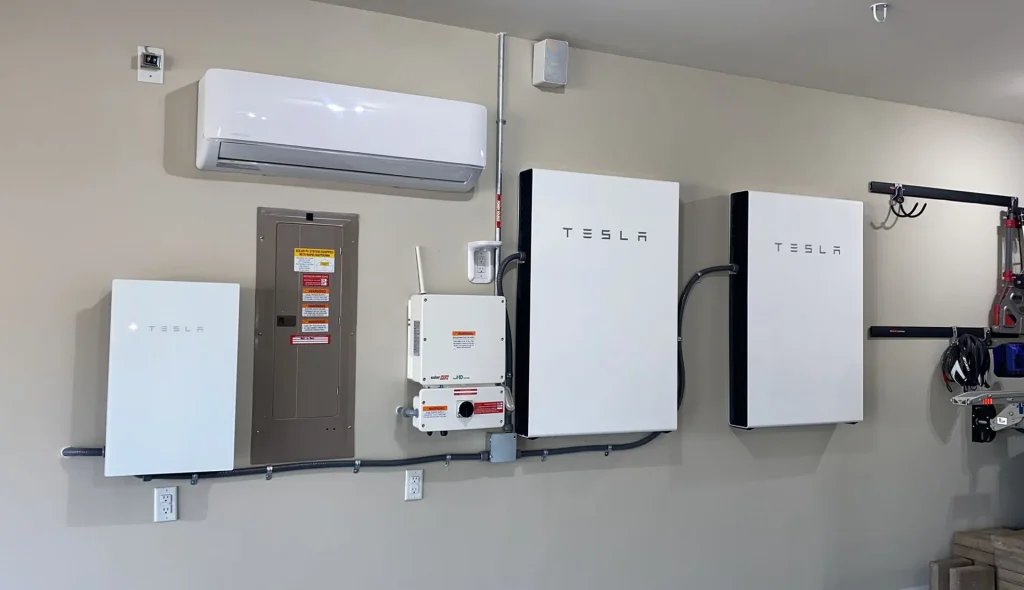
Tesla has officially launched its next-generation solar inverter, establishing new benchmarks for energy conversion performance across residential energy systems. Freshly released regulatory filings highlight substantial architectural upgrades designed to streamline home power ecosystems. The updated hardware integrates seamlessly into existing residential installations while maximizing energy yield under variable solar irradiance conditions across global energy markets.
According to official company disclosures, the system achieves a peak efficiency of 98.6 percent and a California Energy Commission weighted efficiency of 98.1 percent. Engineering data indicates that this performance boost stems from proprietary power electronics and refined thermal dissipation designs. This improvement allows homeowners to capture significantly more solar energy during marginal lighting conditions like early mornings and late afternoons.
Advanced Silicon Carbide Architecture
The technological foundation of the new inverter relies on advanced silicon carbide semiconductor switches that dramatically lower thermal power losses. Official company disclosures explain that these wide-bandgap components enable higher switching frequencies without triggering excessive heat buildup. Consequently, the inverter unit operates reliably under sustained peak solar loads while maintaining a compact, light structural form factor.
Engineering data reveals that active liquid-assisted passive cooling channels further enhance the unit’s power density and longevity. By removing mechanical cooling fans, hardware engineers eliminated a primary point of historical mechanical failure in outdoor residential electrical equipment. The simplified physical architecture lowers internal ambient operating temperatures, guaranteeing steady performance even in harsh desert climates.
Revised Warranty Terms and Durability Benchmarks
Alongside efficiency improvements, updated regulatory filings reveal a extended standard warranty coverage program for all newly manufactured inverter units. The manufacturer now provides a comprehensive 15-year baseline warranty covering parts and labor, replacing the previous 12.5-year limit. Furthermore, homeowners can purchase an optional factory warranty extension that extends total hardware coverage to 25 full operational years.
Industry analysts note that this expanded coverage reflects growing confidence in automated manufacturing processes and component selection. The new warranty guarantees that the unit will retain at least 95 percent of its baseline conversion efficiency after ten years of continuous operation. If efficiency degrades beyond specified thresholds, official company disclosures promise direct hardware replacement or remote field service remedies.
Grid Integration and Virtual Power Plant Metrics
Beyond standalone power conversion, engineering data shows that the inverter functions as an active grid-support engine. The unit incorporates dynamic grid-forming capabilities that stabilize local voltage and frequency fluctuations during local power outages. Through rapid wireless telemetry, the system communicates directly with local utility networks to execute precise demand-response instructions during regional demand peaks.
Regulatory filings highlight that the inverter seamlessly orchestrates energy routing between rooftop panels, stationary batteries, and electric vehicles. Advanced onboard compute hardware calculates real-time electricity pricing metrics to optimize household power usage patterns dynamically. This integrated software stack allows homes to automatically export surplus solar power to grid networks when wholesale compensation rates reach peak pricing levels.
Comparative Efficiency and Industry Standards
When measured against competing microinverter and string inverter systems, engineering data demonstrates superior high-temperature conversion curves for the new unit. Conventional inverters typically experience severe efficiency thermal throttling when internal casing temperatures exceed 45 degrees Celsius. In contrast, the updated design retains greater than 97.5 percent efficiency across ambient temperatures reaching up to 60 degrees Celsius.
Industry analysts observe that this thermal resistance gives solar installers far greater flexibility during residential system placement. Equipment can now be mounted safely in unconditioned attics or direct sunlight without requiring complex secondary shading devices. This operational tolerance directly lowers total system installation costs while preserving long-term electrical reliability across varied climate zones.
Financial Impact and Market Adoption
Industry analysts highlight that the inverter's elevated efficiency and expanded warranty significantly enhance the net present value of residential solar assets. Lower hardware failure rates reduce long-term maintenance overhead costs for system owners and leasing platforms alike. Consequently, third-party solar financiers are offering lower capital interest rates for installations utilizing the upgraded hardware technology.
Official company disclosures emphasize that manufacturing scaled dramatically across regional gigafactories to meet surging worldwide deployment demands. Streamlined assembly automation has allowed the company to keep hardware pricing competitive despite incorporating costly silicon carbide components. Lower unit costs coupled with higher efficiency metrics position the hardware as a market leader across key international energy sectors.
Regulatory filings also verify complete compliance with updated National Electrical Code safety mandates, including rapid shutdown and arc-fault protection standards. Integrated safety shutoff switches isolate solar arrays within milliseconds during grid anomalies or emergency situations. These certified safety metrics streamline residential municipal permitting processes, cutting installation approval timelines for homeowners across participating states.
As residential energy storage and electric vehicle adoption accelerate throughout 2026, high-efficiency solar inverters remain central to grid decarbonization strategies. Engineering data and extended warranty benchmarks confirm that modern power electronics can offer both high performance and multi-decade structural durability. This combination of efficiency and long-term customer protection sets a crucial standard for the future clean energy industry.
