
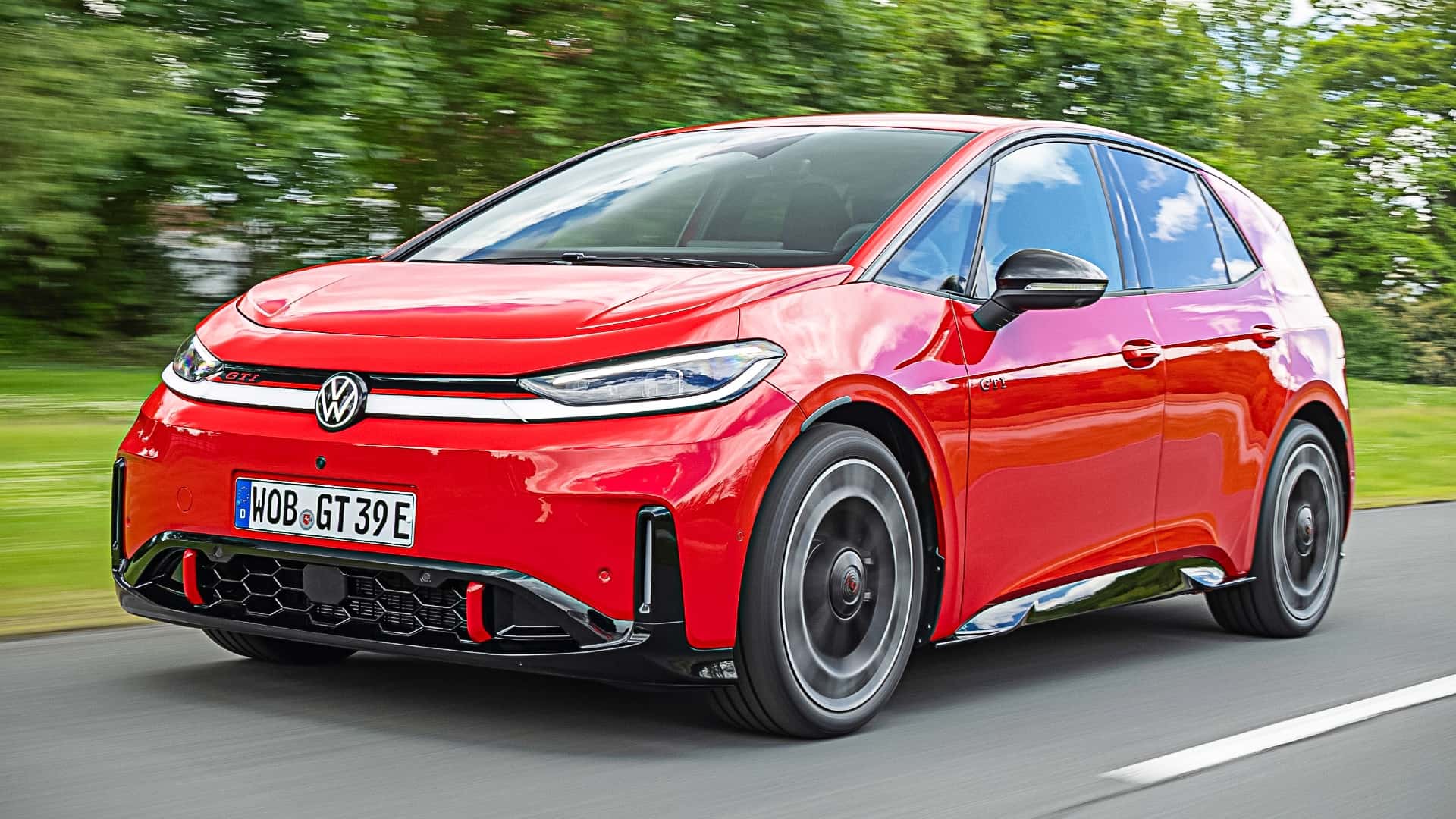
Volkswagen Debuts 322-HP ID.3 GTI As Its First RWD Hot Hatch
Volkswagen has officially ushered its iconic performance moniker into a new zero-emission era with the reveal of the ID.3 GTI. Built upon the recently updated ID.3 Neo architecture, this electric hot hatch represents a pivotal moment for the German brand. It formally separates the historic badge from its exclusive ties to internal combustion engines, signaling a permanent evolution for high-performance compact vehicles across global markets.
While the letter "I" originally stood for "Injection" during the nameplate's debut half a century ago, its meaning has shifted over five decades. Company disclosures emphasize that the GTI moniker now reflects accessible, driver-focused performance rather than a specific fueling method. The new hatchback becomes Volkswagen's second all-electric GTI, building upon momentum established by the smaller ID. Polo GTI to expand the electric performance portfolio.
For enthusiasts, the ID.3 has long been positioned as the modular electric counterpart to the world-renowned Golf hatchback. By granting the ID.3 full GTI status, Volkswagen aims to bridge the gap between traditional hot hatch culture and modern electric mobility. While the vehicle represents a major marketing statement for the brand, industry filings reveal that its core mechanical package leans heavily on proven electric vehicle hardware.
Redefining Legendary Performance for the Electric Era
Despite its fresh aesthetic and revised branding, the ID.3 GTI shares fundamental engineering roots with the now-discontinued ID.3 GTX. Volkswagen has repackaged the powertrain components previously used in the GTX flagship, refining the software and thermal management systems. The result is a refined electric hot hatch that blends familiar underlying hardware with modern exterior styling elements and updated cabin ergonomics.
Mounted to the rear axle, the single electric motor generates an impressive 322 horsepower and 402 pound-feet (545 Newton-meters) of torque. These output figures officially grant the vehicle the title of the most powerful production GTI model in the brand’s history. That output allows the electric vehicle to narrowly surpass the petrol-powered Golf GTI Edition 50 by a margin of a single horsepower.
Performance benchmarks provided in official technical documentation confirm that the hot hatch can accelerate from zero to 62 mph (100 km/h) in 5.6 seconds. The vehicle's top speed remains electronically capped at 124 mph (200 km/h) to preserve battery health and overall driving efficiency. Acceleration matches the outgoing GTX Performance model, offering linear power delivery tailored for dynamic everyday driving.
Unmatched Power and Rear-Wheel-Drive Dynamics
A defining characteristic of the new model is its drive layout. Built on Volkswagen’s rear-wheel-drive-biased MEB modular platform, the car stands as the first rear-wheel-drive GTI ever produced. This distinguishes it from the smaller ID. Polo GTI, which utilizes the front-wheel-drive MEB+ platform architecture. The rear-drive setup provides distinct dynamic traits, delivering improved traction during aggressive acceleration and traditional sport-hatch handling feedback.
To maximize cornering capability, engineers fitted the hot hatch with broad rolling stock as standard equipment. Factory specifications confirm the car comes equipped with 20-inch alloy wheels wrapped in 225-millimeter performance tires. For drivers seeking additional lateral grip on track or twisting roads, Volkswagen offers optional 235-millimeter rubber, paired with tuned suspension geometry designed to minimize body roll during high-speed cornering maneuvers.
Enhanced Battery Efficiency and Real-World Range
Energy is stored in a 79-kilowatt-hour usable capacity lithium-ion battery pack integrated beneath the passenger floorboard. Software recalibrations and improved aerodynamic efficiency yield a WLTP-rated driving range of up to 373 miles (601 km) on a full charge. According to engineering disclosures, this represents an operational increase of roughly six miles (10 km) compared to the outgoing ID.3 GTX model.
Fast-charging capabilities have received minor adjustments to peak energy reception. Direct-current fast charging rates now reach up to 183 kW, up from the 175 kW maximum of its predecessor. However, technical datasheets indicate that a 10-to-80 percent charge replenishment cycle now takes 29 minutes. This represents a subtle three-minute increase over the 26-minute charging duration achieved by the discontinued model.
Interior Overhaul and Modernized Cabin Tech
Inside the cabin, the vehicle benefits from comprehensive hardware and software upgrades introduced across the refreshed ID.3 Neo family. Volkswagen responded to customer feedback by replacing capacitive touch controls with traditional physical buttons on the redesigned dual-spoke steering wheel. Furthermore, ergonomic complaints were resolved by reinstalling four dedicated, physical window switches on the driver’s door panel, eliminating the previous toggle setup.
The driver's cockpit sees a substantial technological transformation. A larger 10.25-inch digital instrument cluster replaces the compact display of the original model, providing high-resolution driver data directly behind the wheel. The center console is dominated by a 12.9-inch central touchscreen interface running the manufacturer’s latest infotainment software, offering responsive menu navigation, improved climate controls, and customizable display widgets for enhanced usability.
True to its performance heritage, the interior features deeply bolstered front sports seats designed for lateral support. Red contrast stitching and GTI branding span the seats, dashboard, and door trim. Drivers can select a dedicated GTI driving mode, which engages launch control software and activates a synthetic acoustic sound profile calibrated to simulate traditional engine feedback during dynamic driving.
Market Arrival and Commercial Outlook
The introduction of the electric hot hatch marks a broader commercial push by Volkswagen to electrify its performance heritage across European markets. Industry timelines reveal that order books and showroom deliveries for the vehicle are scheduled to open in the spring of 2027. Pricing details and market-specific standard equipment lists will be announced closer to the vehicle's official commercial launch date.
