NHTSA Orders Tesla to Explain Cybercab Safety Certification
Federal automotive safety regulators have significantly raised the pressure on Tesla regarding its newly launched autonomous Cybercab fleet. In a formal communication issued under a September 10 Special Order, the National Highway Traffic Safety Administration (NHTSA) has set a strict deadline of September 30 for the electric vehicle manufacturer to provide legally binding, sworn answers regarding how the vehicle meets existing safety standards.
The directive represents a major escalation in regulatory oversight following the commencement of commercial Cybercab passenger operations in Austin earlier this month. While the initial regulatory inquiry served as a notice that an audit was underway, this recent action forces Tesla to deliver granular technical documentation, engineering validation datasets, and specific legal justifications for its vehicle architecture.
Regulatory Scrutiny Reaches a Critical Junction
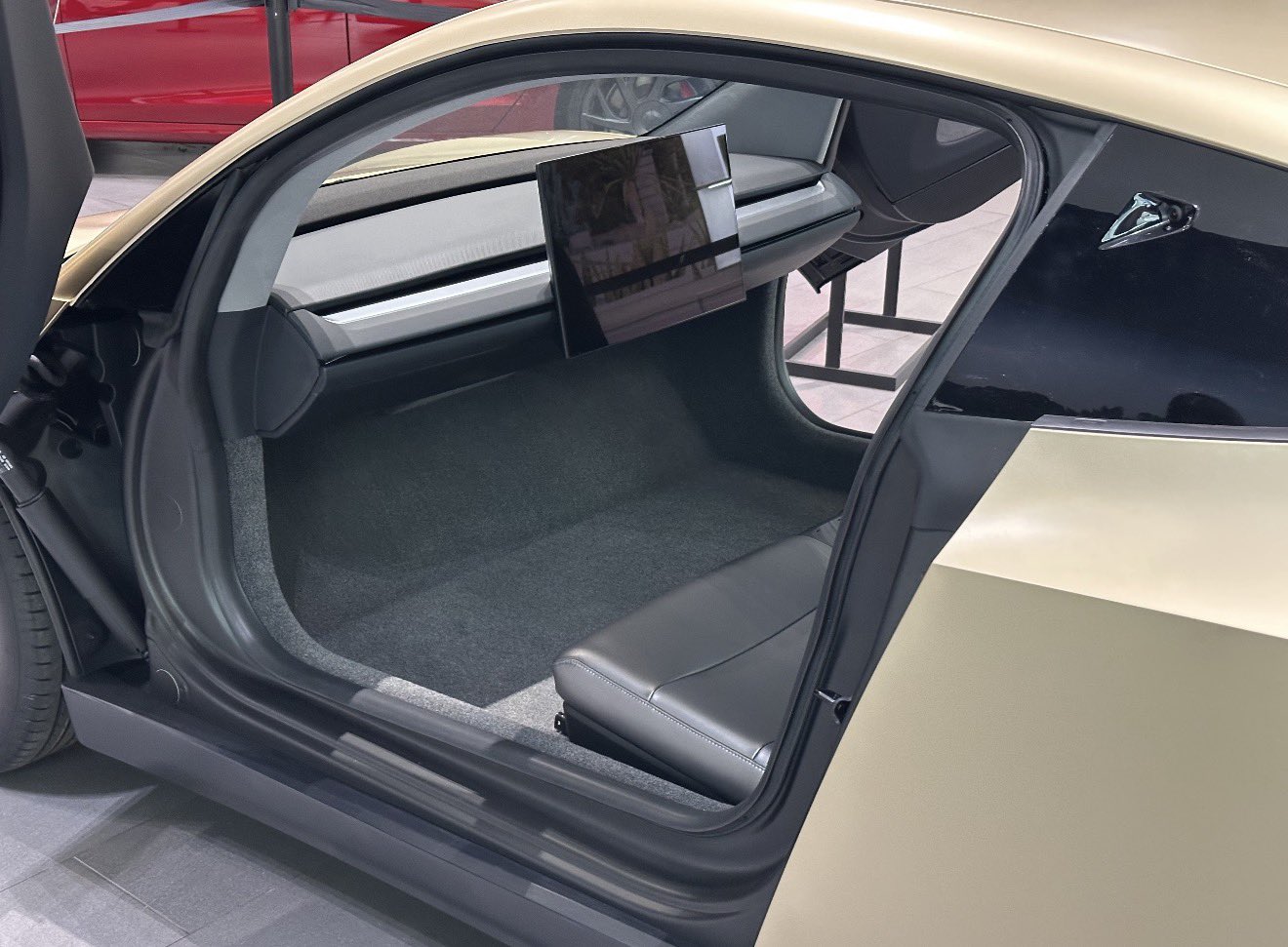
The core of the agency’s investigation, logged formally under Audit Query AQ26002, centers on how a vehicle designed entirely without traditional manual controls can comply with established federal safety rules. Federal Motor Vehicle Safety Standards (FMVSS) were originally drafted around human drivers, assuming the presence of physical interface components such as steering wheels, gear selectors, and brake pedals.
Regulatory filings reveal that the safety agency is particularly interested in whether Tesla utilized temporary driving mechanisms to navigate standard crash testing and safety evaluations. Investigators are demanding details on how the temporary installation and subsequent removal of physical steering or braking apparatuses post-testing align with federal laws governing vehicle production compliance.
While federal authorities are actively working to update and modernize rulebooks to accommodate next-generation autonomous vehicle designs, officials have maintained a firm stance on current enforcement. Safety agencies have repeatedly emphasized that until revised rules are officially codified and enacted, legacy safety standards remain fully enforceable for all vehicles operating on public roads.
The Core Dilemma of Hardware and Controls
One of the primary legal hurdles detailed in the inquiry revolves around the Cybercab's complete omission of a physical brake pedal. Under existing federal regulations, vehicle braking systems are explicitly mandated to feature primary service brakes that are activated by a foot-operated control mechanism. Tesla must now legally explain how its pedal-less system satisfies this requirement.
Beyond the primary control interfaces, the government's 21 detailed questions extend to a broad range of legacy vehicle hardware requirements. Investigators are asking Tesla to clarify how the Cybercab accounts for regulations governing side-view mirrors, signal indicators, visual driver displays, and electronic stability control systems, all of which historically required human-accessible interfaces.
The inquiry also requires the carmaker to explicitly identify every standard it believes is rendered non-applicable due to the vehicle's automated design. By establishing this list, federal investigators aim to evaluate whether Tesla’s self-certification process overlooked statutory safety mandates or relied on interpretations that bypass federal safety intent without official authorization.
Engineering Validation Under Federal Standards
To assess the vehicle's operational safety claims, federal regulators are demanding full transparency regarding Tesla’s internal validation procedures. The automaker must submit extensive engineering documentation, including real-world crash test results, computer simulations, software redundancies, and physical testing protocols used to verify that the Cybercab provides equivalent or superior safety protection.
Industry analysts note that automakers developing driverless vehicles historically sought formal exemptions from federal safety standards before deploying fleets commercially. Such exemption petitions allow companies to operate non-conforming vehicles under strict supervision while regulatory agencies assess safety equivalence. Tesla, however, chose to self-certify the Cybercab without submitting a prior exemption petition.
The decision to forgo an exemption application has drawn intense interest from regulatory experts and rival technology developers. The agency’s questioning specifically demands that Tesla defend this path, explaining the legal and engineering rationale that allowed the vehicle to hit commercial streets in Texas without seeking an explicit waiver from established vehicle safety mandates.
Implications for Autonomous Vehicle Commercialization
The outcome of Audit Query AQ26002 could establish a major precedent for the entire autonomous transportation sector. If regulators determine that Tesla’s self-certification methodology falls short of federal requirements, the agency possesses the authority to order fleet modifications, halt commercial operations, or mandate comprehensive recall procedures until full compliance is achieved.
Tesla’s commercial deployment in Austin served as a high-profile milestone for the company’s vision of driverless mobility. However, operating within Texas state guidelines does not insulate the platform from federal vehicle manufacturing rules. The federal government retains strict jurisdiction over vehicle design standards, regardless of localized municipal or state-level testing permits.
With the September 30 submission deadline fast approaching, Tesla engineers and legal advisors are tasked with compiling a definitive defense of their vehicle certification strategy. The responses provided under oath will determine whether the Cybercab can continue its commercial expansion uninterrupted or face regulatory roadblocks that reshape autonomous vehicle deployment strategies across North America.
