
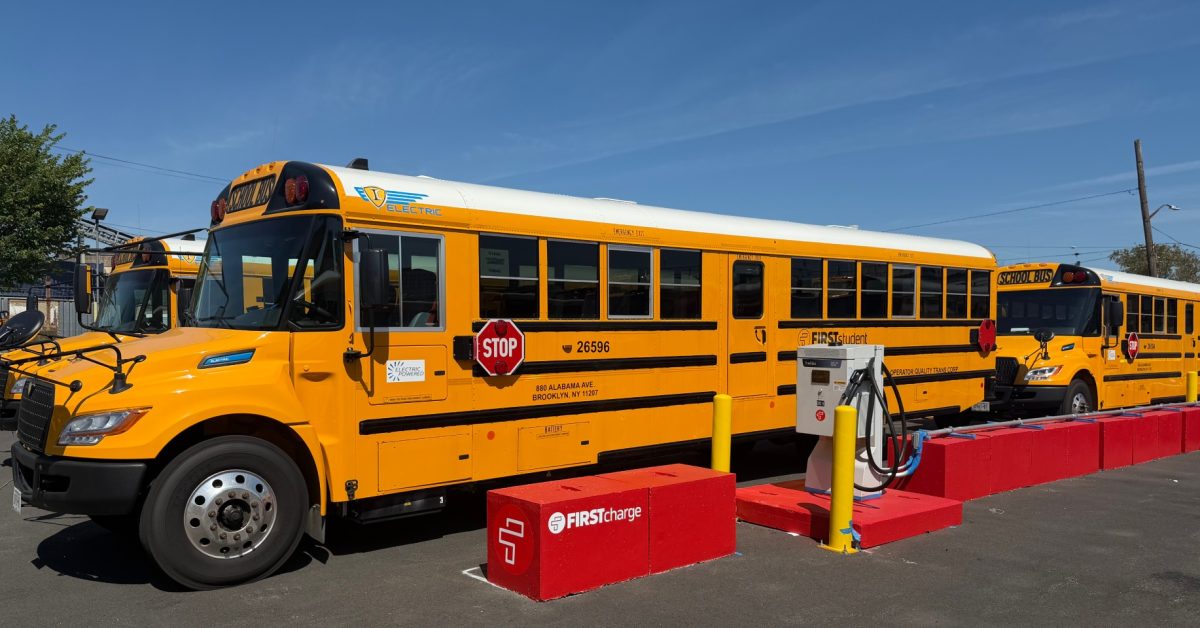
NYC Electric School Buses Cut Costs With Overhead Charging
New York City Public Schools are officially expanding their zero-emission transportation fleet through a new deployment of 40 electric school buses across Brooklyn and Queens. Operated by fleet management provider First Student, the expanded fleet represents a significant step forward in decarbonizing student transportation across the nation's largest urban school system, setting a clean energy benchmark for dense metropolitan transit operations nationwide.
The deployment marks the successful completion of an initial infrastructure pilot project that demonstrated a 20 percent reduction in capital installation costs. By rethinking traditional grid-connection methods, project planners managed to bypass the complex, time-consuming subterranean construction that typically inflates the cost of municipal electrification efforts, establishing a far more scalable framework for urban fleet electrification.
Innovative Above-Ground Charging Bypasses Urban Trenching
Central to this infrastructure efficiency is First Student’s proprietary "First Charge" system, an innovative above-ground charging design tailored specifically for space-constrained bus yards. Rather than undertaking extensive civil engineering projects to dig deep underground trenches for heavy electrical conduit, the system routes power distribution lines overhead directly to suspended charging dispensers mounted above vehicle parking bays.
By eliminating subterranean excavation, the overhead infrastructure dramatically reduces upfront construction expenses while accelerating project timelines. Industry representatives noted that bypassing the need to bury high-voltage electrical service lines lowers initial financial barriers significantly, creating a practical blueprint that commercial and municipal fleet operators across the country can easily copy to fast-track their own electrification initiatives.
This non-disruptive installation methodology offers immediate advantages in congested urban environments like New York City. Digging up heavily paved bus depots in dense boroughs typically involves navigating labyrinthine underground utility networks, securing costly municipal permits, and enduring prolonged facility operational downtime. Overhead charging delivery effectively sidesteps these urban engineering headaches while preserving precious ground space.
Utility Support and Funding Catalyze Zero-Emission Transit
The successful rollout of the high-efficiency charging site relied heavily on collaboration with local utility Con Edison and regional clean energy authorities. Through joint demonstration programs, the state and utility provided strategic grant funding and technical assistance designed to test less invasive, highly adaptable electrical distribution methods tailored specifically to high-density city infrastructure constraints.
Project financing drew upon financial incentives managed by the New York State Energy Research and Development Authority. The funding package incorporated six zero-emission school bus vouchers awarded through the state incentive program, along with dedicated capital support used to convert four legacy diesel school buses into fully electric powertrains, maximizing the environmental impact of available public clean-energy grants.
Public-private partnerships remain essential for bridging the financial gap during the early phases of heavy-duty fleet transformation. Combining state vehicle vouchers with utility-backed infrastructure grants enables school bus operators to achieve total cost parity with conventional internal combustion vehicles much earlier in the deployment cycle, accelerating the retirement of older, polluting diesel-powered school buses.
Intelligent Energy Management Optimizes Fleet Charging
Beyond physical infrastructure innovations, the newly deployed Brooklyn charging installation leverages advanced load-management software to optimize energy consumption. By coordinating vehicle plug-in schedules around fleet route requirements, the automated management platform ensures that school buses draw power primarily during off-peak hours when demand on the local electrical grid is significantly lower and wholesale electricity rates are cheaper.
Intelligent charging management serves a dual purpose for large-scale fleet operations. Financially, charging during off-peak hours substantially reduces utility demand charges and overall electricity costs. Operationally, controlled energy drawdown prevents local distribution transformers from experiencing sudden power surges, maintaining grid stability across the surrounding neighborhood without requiring costly utility substation upgrades.
Electrification executives emphasizing fleet scale note that successfully transitioning heavy-duty transport requires far more than simply procuring battery-electric vehicles. Integrating custom hardware designs with smart load-balancing software and close utility collaboration creates a comprehensive ecosystem capable of overcoming the severe space, power, and cost constraints historically associated with urban vehicle electrification.
Future-Proofing NYC Depots for State Mandates
Building upon the initial success in Brooklyn, fleet operators are actively evaluating additional clean-energy technology upgrades for regional bus yards. Future facility improvements under consideration include integrating on-site solar photovoltaic generation and battery energy storage systems, effectively transforming standard parking yards into resilient, self-sustaining smart energy hubs capable of providing emergency back-up power.
These proactive infrastructure upgrades directly align with aggressive environmental regulations established by New York State lawmakers. Under existing state mandates, every new school bus purchased by school districts must be zero-emission by 2027. Furthermore, regulatory frameworks dictate that all school buses operating on New York roadways must achieve complete zero-emission transition by 2035.
As metropolitan areas nationwide work to reduce localized air pollution near schools and residential neighborhoods, New York City’s streamlined overhead charging model provides a compelling path forward. By combining cost-saving physical deployment techniques with intelligent energy management, urban bus operators can rapidly scale up zero-emission fleets while maintaining operational reliability and financial sustainability.
