
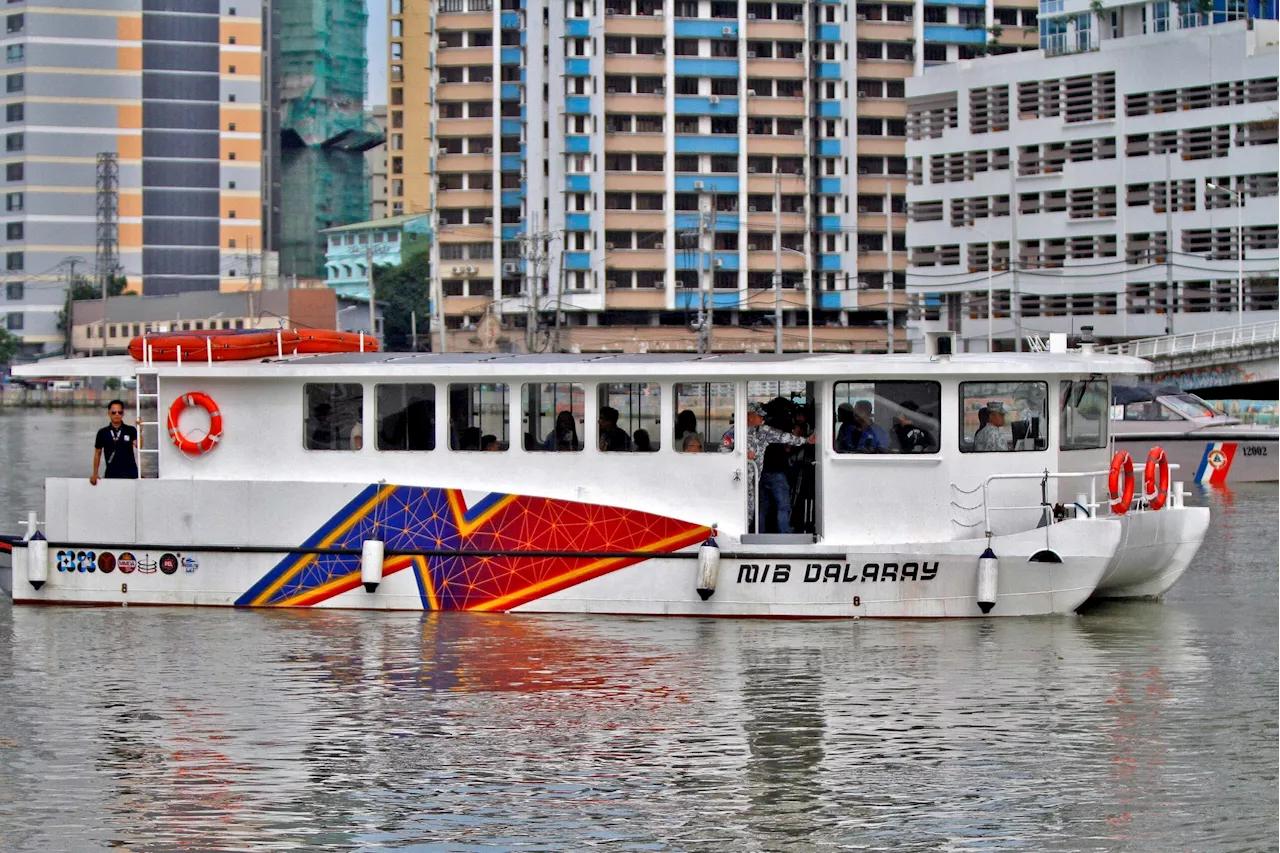
Philippines Electric Ferry Serves Thousands on Pasig River
A Major Milestone for Philippine Maritime Mobility
The Philippines’ first locally designed and manufactured electric passenger ferry has transitioned from a promising engineering demonstration into an active public transit asset. Operating along the congested Pasig River in Metro Manila, the vessel is carrying thousands of urban commuters. This milestone demonstrates how battery-electric propulsion can transform crowded metropolitan transit networks while reducing reliance on fossil fuels.
Known as the M/B Dalaray, the project was developed by research engineers at the University of the Philippines Diliman, supported by government funding. Following initial test trials after its unveiling in late 2025, official project updates confirm that the ferry entered active passenger operations by early 2026. It now maintains scheduled daily service connecting major commercial districts across the capital.
The vessel runs scheduled trips from Monday through Saturday, bridging key transportation hubs between the Guadalupe and Escolta ferry stations. While the current deployment represents a modest fleet size, industry observers view it as a critical proof-of-concept. It successfully demonstrates domestic clean-energy manufacturing capability beyond imported electric cars, land-based motorcycles, and urban buses.
Engineering and Specifications of the M/B Dalaray
Designed specifically for inland waterway navigation, the M/B Dalaray features a lightweight 13-meter aluminum catamaran hull. Local shipbuilders fabricated the vessel at a specialized shipyard in Navotas within metropolitan Manila. The spacious deck architecture accommodates up to 40 passengers along with three crew members, meeting strict maritime safety standards for high-density passenger transport.
Underneath its deck, the catamaran relies on a 160-kilowatt-hour lithium-ion battery system driving twin 50-kilowatt electric motors. Marine trial data indicates the vessel can travel over 45 kilometers on a single charge while maintaining a steady cruising speed of 8 knots. Replenishing the main battery pack requires approximately two to three hours using specialized land-based fast chargers.
The ferry also incorporates rooftop solar panels, though project lead engineers emphasize that the vessel remains fundamentally a battery-electric craft. The onboard solar array does not feed the main propulsion system directly. Instead, it handles auxiliary electrical loads, powering interior cabin air conditioning, onboard navigation electronics, and LED lighting systems to optimize overall energy efficiency.
Strategic Infrastructure and Urban Integration
To support continuous daily passenger operations, dedicated charging infrastructure was installed at strategic riverfront locations. Terminals at Escolta in Manila, Guadalupe in Makati, and Napindan in Pasig now feature high-capacity charging equipment. This shore-based charging framework allows the vessel to top up its energy reserves during turnaround times without disrupting published passenger schedules.
This operational model highlights the inherent efficiency of urban watercraft design. Because the vessel operates along a fixed, predictable municipal corridor, it does not require an excessively large, heavy battery pack to achieve hundreds of miles of range. By recharging at established route terminals, the ferry optimizes its energy storage ratio while maximizing passenger payload capacity.
The project launched in 2024 through the University of the Philippines Diliman’s Electrical and Electronics Engineering Institute. Developing the ferry required extensive inter-agency cooperation, aligning the Department of Science and Technology, the Metropolitan Manila Development Authority, and the Maritime Industry Authority. Crucially, the ship was fabricated entirely within the country rather than imported as a turnkey foreign product.
Economic Viability and Operational Advantage
Financial assessments released during the vessel’s operational launch showcase clear energy cost advantages over conventional marine transport. Project disclosures report energy operating costs of approximately 45 Philippine pesos per kilometer for the electric ferry. In contrast, standard diesel-powered river ferries incur energy expenditures between 130 and 135 pesos per kilometer along identical operating routes.
At current foreign exchange rates, these operational figures translate to roughly 80 cents per mile for the electric vessel compared to $2.25 to $2.40 per mile for diesel craft. Although these metrics reflect direct energy consumption rather than complete total-cost-of-ownership models, the operational savings are significant for watercraft conducting dozens of short-hop urban trips daily.
Environmental Impact and Future Urban Applications
Beyond financial benefits, electric marine propulsion dramatically improves the immediate environment around urban waterways. The M/B Dalaray produces zero direct exhaust emissions during operation, preventing carbon, particulate matter, and sulfur contamination along the Pasig River. Furthermore, the silent electric powertrain eliminates the harsh mechanical vibration and engine noise associated with legacy diesel marine vessels.
The Pasig River offers a vital alternative transit corridor through one of Southeast Asia's most densely populated urban landscapes. Metropolitan Manila suffers from severe surface road congestion, costing commuters hours of daily delay. Moving passenger traffic onto clean river ferries unlocks unused municipal transport capacity without adding additional land vehicles to choked highway systems.
Urban planning experts and government officials also recognize the strategic importance of electric waterborne transport during natural disasters or urban emergencies. When land-based road networks become impassable due to severe flooding or structural damage, quiet, zero-emission watercraft like the M/B Dalaray can provide essential emergency transport and emergency supply distribution along urban river corridors.
