
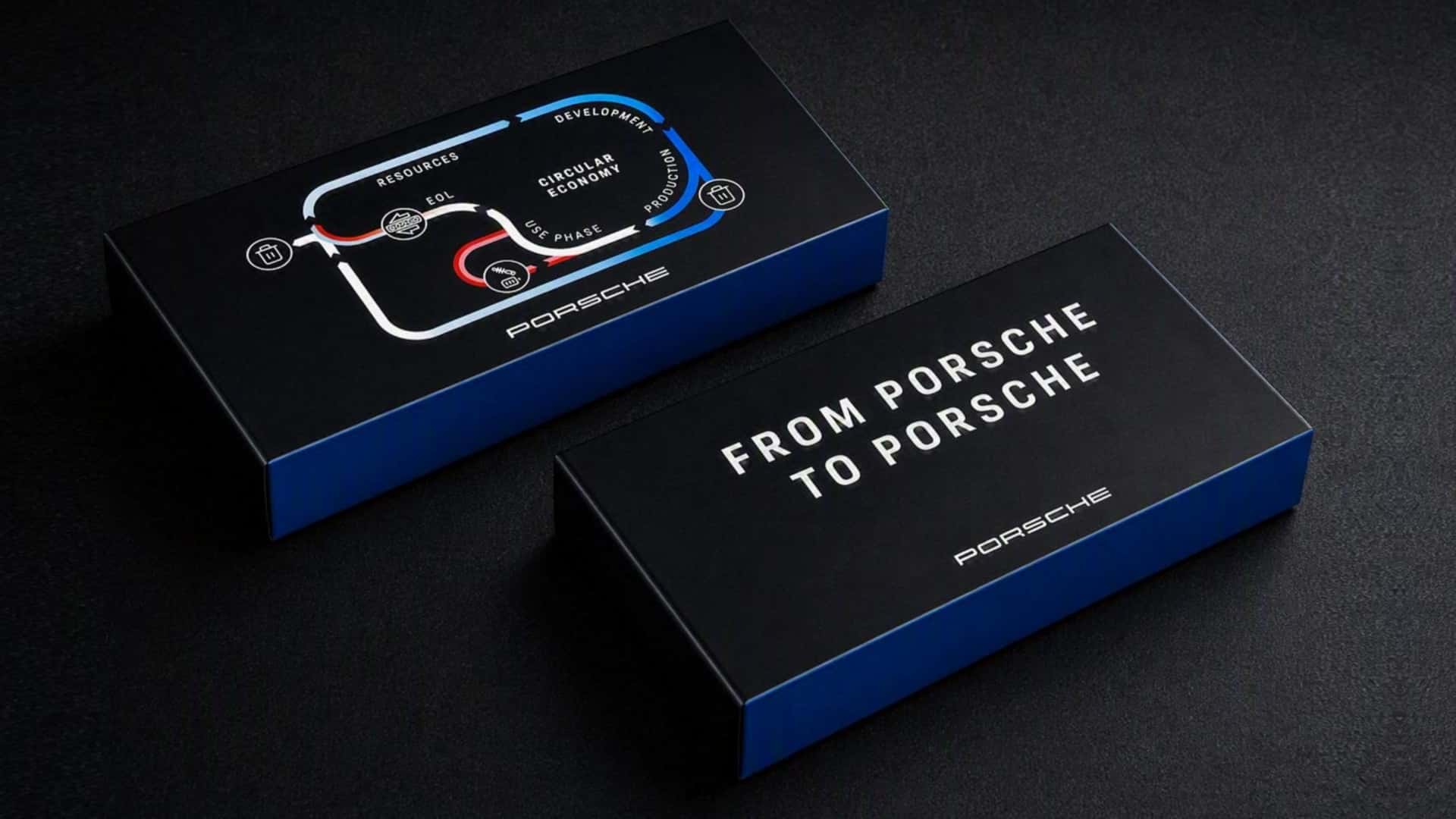
Porsche Unveils Closed Loop Recycling For Future Battery Cells
The rapid global transition toward electric mobility has forced luxury automakers to fundamentally rethink how raw materials are managed across vehicle lifecycles. Traditional battery manufacturing relies heavily on virgin elements like lithium, cobalt, and nickel, which carry substantial financial costs and environmental burdens. Creating truly sustainable supply chains requires moving beyond basic production efficiency to establish complete material circularity from start to finish.
Porsche has reached a significant technical milestone in its overarching sustainability strategy by executing a successful pilot project focused on end-to-end battery recycling. Partnering with German recycling innovator Cylib, the premium sports car manufacturer demonstrated that valuable minerals extracted from degraded power packs can be processed directly back into high-performance battery cells designed for future production vehicles.
This technological breakthrough validates a closed-loop framework that could alter how high-end electric vehicles are engineered and manufactured. By harvesting critical elements from end-of-life battery packs and refining them back into active cathode materials, the partnership proves that recycled inputs can seamlessly replace newly mined resources without sacrificing technical capability or cell longevity.
Achieving True Circularity in Electric Vehicle Battery Supply Chains
Recyclability has rapidly evolved from a niche environmental objective into a core structural requirement for modern electric vehicle architectures. The cathode represents the single most expensive and resource-intensive component inside a lithium-ion cell. Relying exclusively on primary mineral extraction exposes automakers to unpredictable global market fluctuations and intensive carbon footprints generated during traditional mining operations.
The collaborative project between Porsche and Cylib addresses these supply chain vulnerabilities by creating a comprehensive material recovery loop. Utilizing advanced hydrometallurgical recovery techniques, retired battery modules are systematically dismantled, shredded, and chemically separated. The resulting output produces highly refined secondary raw materials ready for immediate reintroduction into the active cathode manufacturing pipeline.
Project disclosures confirm that the pilot phase successfully isolated and recovered essential active cathode compounds from spent automotive battery cells. Laboratory analysis verified that raw materials recovered from first-generation electric car batteries met the exact chemical purity standards required for secondary manufacturing, demonstrating that localized circular loops are viable far beyond simple theoretical concepts.
Technical Feasibility Meets High Performance Automotive Demands
Developing a practical recycling process represents only half the challenge for a brand focused on high-performance sports cars. Premium vehicles command premium prices because buyers demand rapid acceleration, high peak charging rates, and minimal battery degradation over years of ownership. Any structural defect or chemical impurity in the cell cathode directly degrades power density and overall thermal resilience.
Automotive battery cells constructed from recycled compounds must match the rigorous performance curves of cells made with freshly mined materials. If recycled cathodes result in slower fast-charging sessions, reduced driving range, or accelerated power degradation, consumer adoption in the luxury segment will falter. Maintaining strict chemical tolerances is essential regardless of where the foundational minerals originate.
Pilot testing data indicates that the recycled cathode materials achieved performance metrics fully comparable to virgin battery components. Dr. Lilian Schwich, co-CEO and co-Founder of Cylib, confirmed in official announcements that the joint project proves materials from end-of-life Porsche batteries can potentially flow directly back into new high-performance batteries for future road vehicles.
Mitigating Volatility in Global Critical Mineral Procurement
Beyond environmental advantages, establishing localized closed-loop material recovery offers strategic economic protection. Global supply chains for critical battery minerals remain volatile and vulnerable to geopolitical tensions, trade disputes, and international shipping disruptions. Automakers capable of building self-sustaining material loops gain critical independence from external supply shocks and unpredictable raw material cost inflation.
Scaling secondary material integration allows vehicle manufacturers to reduce reliance on foreign mining operations and concentrated refining networks. Industry analyst reports emphasize that localized resource recovery will quickly become a key competitive differentiator, enabling brands to stabilize production costs while easily complying with increasingly strict international sustainability legislation and battery tracing mandates.
Porsche has consistently invested in forward-looking technology initiatives, including synthetic e-fuels aimed at preserving existing internal combustion platforms. However, perfecting closed-loop battery recycling yields immediate practical benefits for the company's expanding fleet of battery-electric models, providing a reliable source of high-purity battery materials for upcoming electric sports cars and crossover SUVs.
Setting a New Benchmark for Sustainable High End Mobility
Transitioning from small-scale pilot validation to broad commercial implementation will require expanding industrial processing facilities and organizing streamlined regional collection networks for end-of-life battery packs. As early electric vehicles complete their natural operational lifespans, growing return streams will provide the essential feedstocks needed to fuel full-scale circular battery production plants across Europe.
If scaled across future model lines, this closed-loop manufacturing strategy could push rival luxury automakers to accelerate their own sustainable material recovery initiatives. Demonstrating that high-efficiency recycling can co-exist with top-tier automotive performance proves that the future of luxury electric transport depends on complete resource stewardship and true circular economy design.
