
European Airport Expansion Plans Exceed Global Carbon Limits
Massive Capacity Growth Threatens European Climate Goals
Over twenty of Europe's largest airport hubs are pursuing aggressive infrastructure expansions that severely contradict international climate commitments. According to recent environmental policy studies, these planned increases in air traffic will cause each facility to overshoot its fair-share 1.7°C carbon budget by two to three times. The rapid scale of expansion presents an immediate challenge for continental policymakers striving to meet strict decarbonization targets.
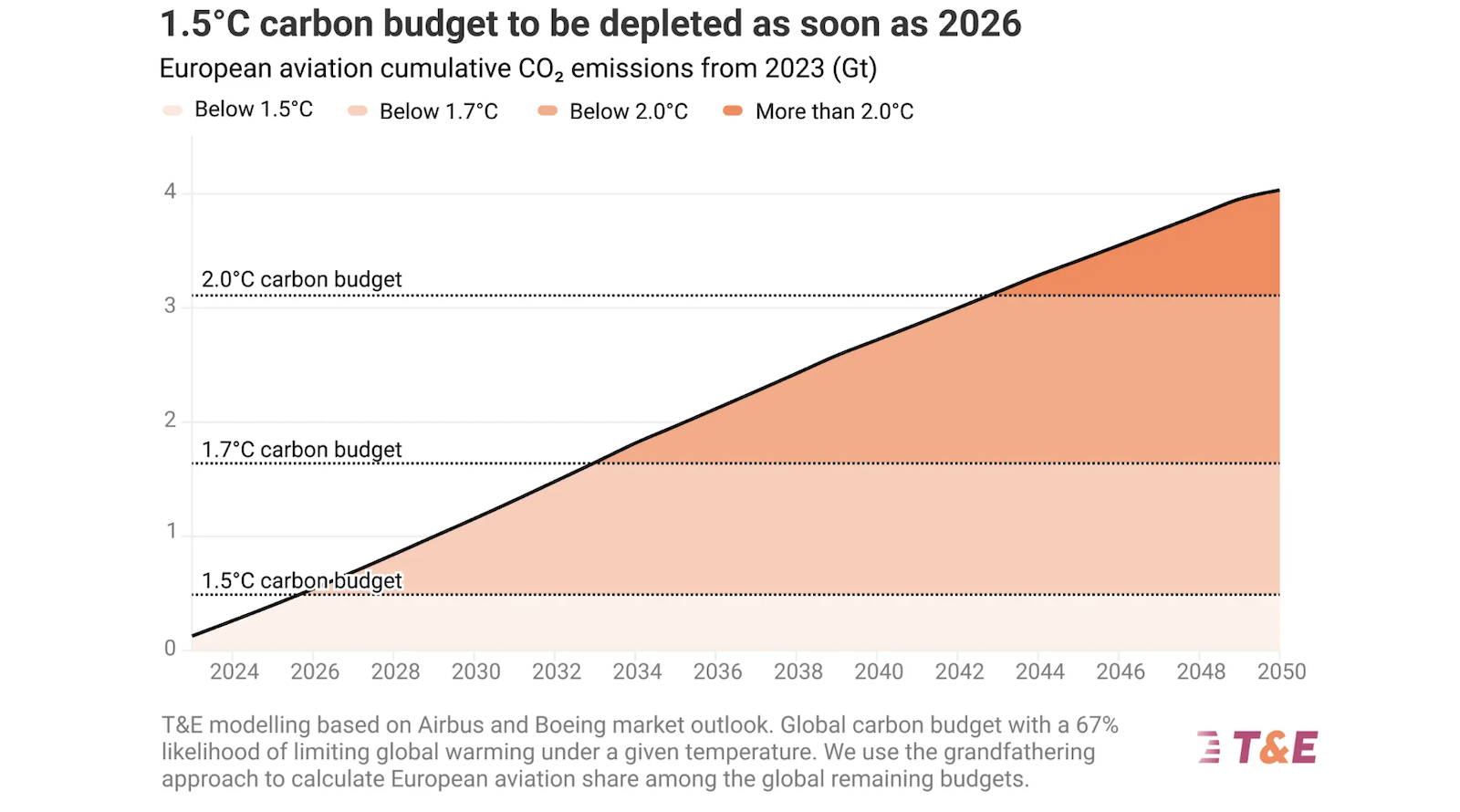
Current trajectory metrics indicate that European aviation is on track to exhaust its remaining 1.5°C carbon budget before the end of this year. Furthermore, the industry is projected to completely burn through its 1.7°C budget allocation by 2033. Despite these stark projections, major airport expansion projects are currently underway or officially proposed in major metropolitan hubs including London, Paris, Madrid, Lisbon, Dublin, Frankfurt, and Brussels.
Technological Solutions Fail to Offset Rising Passenger Volumes
Aviation executives and airport operators frequently argue that physical infrastructure growth can coexist with climate commitments through technological advancements. They point to the gradual adoption of Sustainable Aviation Fuel and the deployment of next-generation aircraft equipped with more efficient engines. However, independent climate research groups demonstrate that these efficiency gains are completely overwhelmed by the sheer volume of new flights enabled by expanded capacity.
Analysts emphasize that increasing passenger capacity by adding runways and expanding passenger terminals effectively cancels out any carbon reductions achieved through cleaner fuels. The timeline required to deploy zero-emission aviation technology at scale is far too slow to offset immediate flight volume increases. Consequently, even under the most optimistic technology adoption scenarios, every expanding airport is projected to breach its carbon limits.
Mediterranean and Atlantic Hubs Lead Overshoot Metrics
The most severe carbon budget breaches are concentrated in Southern and Western Europe, where regional air travel demand has rebounded sharply. Environmental policy research highlights Portugal as a primary hotspot, with planned terminal projects in Lisbon and Porto set to overshoot their fair-share carbon budgets by 2.8 times. Together, these two key hubs account for approximately 80 percent of Portugal’s total domestic and international aviation emissions.
To remain within national climate limits, Lisbon and Porto would need to decrease aviation emissions by 12 percent annually starting immediately, rather than expanding capacity. The proposed mega-airport project near Lisbon alone is projected to release an additional 18 million tonnes of carbon dioxide. This single project represents an emission volume equivalent to half a year of total economic activity across all sectors in Portugal.
Aviation emissions in Spain are growing faster than in any other major European country, yet regional authorities are seeking to expand twelve busiest airports simultaneously. Major expansion projects in Madrid, Barcelona, Palma, and Málaga will add an estimated 35 million tonnes of carbon dioxide. This increase matches the total annual carbon output of Portugal, with Madrid’s airport expansion alone adding 23 million tonnes over 25 years.
The Compounding Economic and Legal Consequences of Expansion
Infrastructure expansion plans in Northern Europe present similarly immense carbon burdens to regional carbon budgets. Industry filings reveal that constructing a third runway at London Heathrow would generate extra emissions between 2035 and 2050 equivalent to the total annual greenhouse gas output of Croatia’s entire economy. Such massive spikes force other domestic sectors, including agriculture, manufacturing, and residential heating, to absorb disproportionate decarbonization burdens.
Beyond environmental damage, economic impact reports indicate that the financial logic supporting European airport expansion no longer holds up under scrutiny. Historical tax exemptions continue to distort aviation market incentives, providing the commercial sector with untaxed jet fuel, value-added tax exemptions on passenger tickets, and minimal exposure to continental carbon pricing frameworks. These generous subsidies artificially inflate flight demand while creating significant long-term fiscal liabilities.
Municipalities and national governments approving airport expansions face mounting legal vulnerabilities. Climate litigation is accelerating across Europe, as citizen advocacy groups challenge infrastructure decisions that breach statutory decarbonization commitments. Approving projects that guarantee severe carbon budget overshoots exposes public authorities to court interventions, regulatory halts, and legal action for failing to uphold statutory environmental obligations outlined in binding national climate frameworks.
Establishing National Carbon Frameworks to Curb Aviation Growth
Policy experts stress that governments must move past voluntary corporate commitments and implement binding regulatory mechanisms. Precedents established in the United Kingdom and France demonstrate that countries can successfully define national aviation carbon budgets that incorporate international flights. By establishing hard emission caps, regulatory authorities can align sector operations with broader national climate targets without waiting for complex global international agreements.
Reining in airport expansion requires a fundamental realignment of transport policy toward sustainable regional mobility. Reallocating public capital from runway extensions to high-speed rail networks offers a viable alternative for intra-European transport demands. Without decisive governmental action to cap airport infrastructure growth, European nations risk breaching their binding carbon budgets and severely undercutting continental efforts to achieve net-zero emissions targets.
