
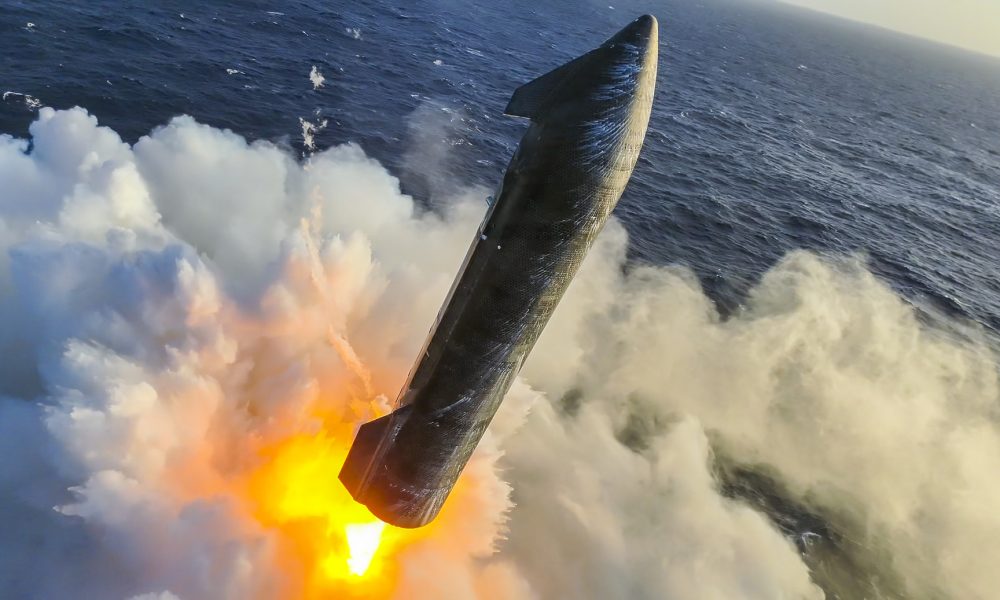
SpaceX Targets First Orbital Reach With Starship Flight 14
SpaceX is preparing for a monumental milestone in space exploration as it targets September 22 for the upcoming launch of Starship Flight 14. Operating out of the company’s Starbase facility located in South Texas, the launch window is slated to open at 7:15 a.m. Central time for a 75-minute duration. This upcoming test flight represents a fundamental shift in operational goals compared to previous missions.
For the first time since the development program began, SpaceX aims to propel the massive upper-stage vehicle into a genuine orbital trajectory around Earth. Every prior test mission executed by the aerospace manufacturer relied on suborbital ballistic arcs, designed to intentionally reenter the atmosphere within an hour of liftoff. Flight 14 breaks that paradigm by targeting an insertion that demonstrates full orbital capability.
Transitioning From Test Profiles to True Orbital Flight
According to recent regulatory filings, the planned trajectory will see Starship complete roughly six full orbits around Earth at an altitude near 275 kilometers. The entire orbital phase is expected to last approximately ten hours. This prolonged duration will allow flight controllers to gather critical operational telemetry regarding system endurance, thermal control, and navigation performance in sustained orbital space before initiating reentry.
Achieving sustained orbit is a necessary milestone for transforming Starship into an operational launch vehicle. Moving beyond high-altitude suborbital hops enables SpaceX to validate complex in-space maneuvers, payload deployments, and long-duration flight systems. Industry analysts note that reaching orbit lays the foundation for future long-duration missions, including orbital refueling tests and planned lunar lander operations under NASA contracts.
Deploying the Next Generation of Satellite Connectivity
Beyond reaching orbit, Flight 14 marks the initial attempt to deploy an active batch of next-generation Starlink V3 satellites into operational service. During the previous test, Flight 13 carried 20 of these upgraded satellites in July. However, because that mission remained on a suborbital path, the payload reentered the atmosphere alongside the vehicle rather than separating into a stable deployment orbit.
These newly designed Starlink V3 satellites represent a dramatic leap forward in network infrastructure. Each V3 unit is rated for approximately one terabit per second of downlink capacity, offering unprecedented throughput. Industry filings indicate that a successful payload deployment during Flight 14 would deliver SpaceX’s largest single increase in global network bandwidth since the constellation began flying aboard Falcon 9 rockets.
Deploying such massive hardware requires a reliable payload bay dispenser mechanism operating smoothly within a microgravity environment. Validating this critical separation sequence during active orbit is vital for SpaceX’s long-term commercial strategy. Expanding constellation capacity through high-volume Starship launches is expected to significantly reduce per-gigabit deployment costs while expanding high-speed broadband reach worldwide.
Reentry Strategy and Pacific Ocean Recovery Targets
The mission profile for Flight 14 introduces significant changes to the terminal phase of the upper stage’s journey. After completing its orbital sequence, Starship will execute a precise deorbit burn to initiate atmospheric reentry. Unlike recent test flights that targeted recovery locations in the Indian Ocean, Flight 14 is directed toward a controlled splashdown in the Pacific Ocean, situated west of Chile.
Meanwhile, the Super Heavy booster will follow a separate recovery path shortly after stage separation. The massive first-stage booster aims to execute a controlled descent and offshore soft landing in the Gulf of Mexico, mirroring successful recovery maneuvers performed on recent missions. This dual-recovery approach ensures both stages provide high-value diagnostic data to refine structural resilience and trajectory control.
Notable by its absence on Flight 14 is any attempt to catch the upper-stage vehicle using the launch tower’s mechanical arms. While company leadership briefly considered testing a ship catch on this flight, updated schedules pushed that objective back by several months. Prioritizing orbital insertion and safe payload release over experimental recovery techniques minimizes mission risks while achieving key functional goals.
Building on Reusability Milestones and Heat Shield Data
Flight 14 builds directly upon technical breakthroughs achieved during Flight 13 in July. That previous mission subjected Starship to a deliberately stressful reentry profile to evaluate heat shield durability under extreme atmospheric conditions. The vehicle survived its softest water landing to date, remaining sufficiently intact for detailed inspection by autonomous sea craft shortly after touchdown.
Executive updates following Flight 13 confirmed that the flight yielded extensive thermal protection data, validating recent design modifications to the heat shield tiles. Thermal management has long been viewed as one of the primary hurdles to full vehicle reusability. The high-altitude data gathered from Flight 13 gave engineers the necessary confidence to transition from protective test profiles to an actual orbital path.
Sustaining thermal protection across six full orbits presents distinct challenges compared to short suborbital descents. Starship must withstand prolonged exposure to solar radiation and extreme temperature shifts in vacuum prior to atmospheric entry. The thermal endurance demonstrated during Flight 14 will serve as a definitive baseline for future operational reentries carrying high-value commercial payloads.
Regulatory Approvals and Launch Schedule Dynamics
While September 22 remains the primary target date, launch operations depend entirely on securing formal clearance from regulatory authorities. Federal approvals and airspace restrictions must be finalized before the 75-minute window opens at Starbase. Historical patterns indicate that complex flight tests often experience schedule shifts due to technical checks, localized weather constraints, or pending license modifications.
Regardless of potential timing adjustments, the mission plan reflects a decisive pivot for the Starship program. Transitioning from experimental suborbital trajectories to functional orbital deployments signals that the platform is maturing rapidly. As SpaceX prepares for this crucial flight, the aerospace industry is watching closely to see if Starship can successfully open its next chapter in orbital logistics.
