
Tesla And SpaceX Take Terafab Trademark Fight To Federal Court
Tesla and SpaceX have launched a preemptive legal strike against an Illinois-based nanotechnology firm over the rights to the "Terafab" brand name. The electric vehicle giant and aerospace defense contractor filed a lawsuit seeking a declaratory judgment in the U.S. District Court for the Western District of Texas to secure trademark rights for their planned semiconductor complex.
The high-stakes legal clash began following formal intellectual property submissions earlier this year. According to regulatory filings, Tesla submitted three U.S. trademark applications on May 18 covering the names "Terafab" and "Tesla Terafab." These filings targeted broad commercial categories, including silicon microchips and chip-manufacturing services to power next-generation artificial intelligence infrastructure across both companies.
The Escalation of the Terafab Naming Dispute
The commercial applications quickly drew resistance from TERA-print LLC, a specialized nanotechnology company in Illinois. TERA-print has maintained a registered federal trademark for "Tera-Fab" since 2021, associated with desktop photolithography printers designed for lab research. Just five days after Tesla submitted its paperwork, TERA-print issued a formal cease and desist letter alleging that Tesla’s branding would cause widespread consumer confusion.
Court documents reveal a controversial timeline surrounding the intellectual property dispute. One day prior to issuing its cease and desist notice, TERA-print filed an application to expand its existing trademark protection. This expansion sought coverage for semiconductor materials, silicon microchips, nanoelectronics, and AI design services—categories that the Illinois firm had not previously claimed under its original registration.
Tesla and SpaceX labeled TERA-print's expanded trademark submission as an opportunistic tactic in their complaint. The lawsuit emphasizes that the small nanotechnology firm filed for broader protection months after public announcements revealed Tesla’s semiconductor ambitions. Plaintiffs argue that TERA-print sought to artificially expand its legal standing after learning of the impending multi-billion-dollar enterprise and its branding plans.
Breakdown of Private Settlement Negotiations
Escalating the conflict in June, TERA-print threatened a federal lawsuit alleging trademark infringement, unfair competition, and false designation of origin. In response to the looming litigation, executive teams from Tesla, SpaceX, and their affiliated AI ventures initiated direct discussions. The corporate partners sought an amicable resolution to prevent a protracted and costly courtroom battle over the brand moniker.
Between June and August, opposing leadership engaged in six separate settlement conferences aimed at establishing acceptable brand boundaries. Despite extensive negotiations, the settlement talks ultimately collapsed. Facing an impasse and repeated legal threats from the Illinois firm, Tesla and SpaceX took the offensive by filing for a judicial determination to establish that no trademark infringement had occurred.
By bringing the matter to federal court, Tesla and SpaceX hope to resolve the naming dispute before TERA-print can file an independent lawsuit. Representatives for TERA-print indicated that talks continued into early September before breaking down completely. The company expressed disappointment over the court action, confirming it plans to vigorously defend its established brand identity in legal proceedings.
Industrial Scale versus Desktop Nanotechnology
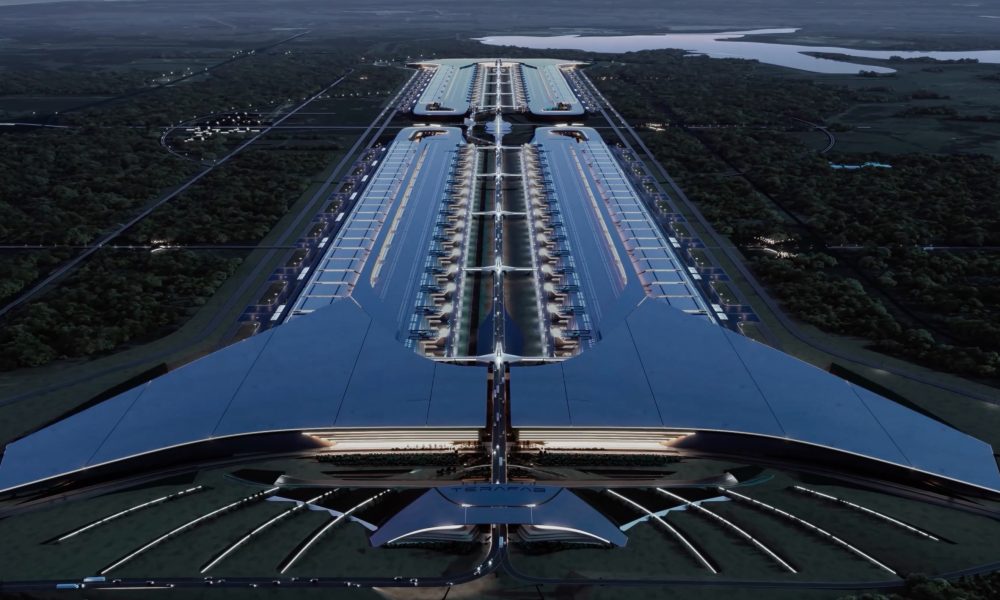
Central to the lawsuit is the argument that no reasonable consumer would confuse the two distinct businesses. Tesla and SpaceX contend that the market footprint of their proposed Terafab facility is fundamentally different from TERA-print’s research equipment. The planned semiconductor complex is a massive $16.8 billion industrial site spanning roughly 100 million square feet in Grimes County, Texas.
The massive hub is designed to fabricate custom microprocessors at an unprecedented scale. Output from the Texas facility will directly supply chips for Tesla’s Optimus humanoid robots, internal AI supercomputing systems, and SpaceX’s orbital data center infrastructure. Plaintiffs argue that this heavy industrial enterprise operates in a completely separate commercial sphere than desktop laboratory printing devices.
Conversely, TERA-print’s commercial operations center on compact lithography tools used by academic institutions and research scientists. These specialized instruments facilitate micro-patterning for biological research and chemical sensor fabrication. Tesla and SpaceX contend that this stark contrast in product functionality, customer demographics, and production scale renders claims of consumer confusion legally baseless under federal trademark standards.
TERA-print Defends Its Intellectual Property Rights
Despite the massive disparity in corporate size, TERA-print maintains that its commercial rights in microelectronics are legitimate and long-standing. Chief Technology Officer Andrey Ivankin noted that the firm holds active semiconductor fabrication contracts with the U.S. Department of Defense. TERA-print argues its technical capabilities extend beyond laboratory equipment into specialized microchip fabrication for defense and industrial applications.
Additionally, TERA-print highlights its strategic equity stake in Mattiq Inc., an artificial intelligence company built upon TERA-print’s core nanotechnology platform. Because its underlying technology supports commercial AI hardware development, TERA-print asserts that Tesla’s entry into AI chip production under a similar name directly impacts its growing commercial ecosystem, justifying its firm legal defense of its trademark mark.
Broader Legal Context for the Terafab Project
This trademark dispute marks the second legal challenge surrounding the Texas chip production facility in recent weeks. SpaceX recently filed a separate lawsuit aimed at preventing local government disclosures regarding site development records in Grimes County. Securing proprietary operational details and resolving corporate identity disputes remain pivotal operational hurdles as site preparation and project planning advance.
The future of the "Terafab" name now rests with a federal judge in Austin, Texas. Should the court rule in favor of Tesla and SpaceX, the companies will proceed unhindered with their corporate branding strategy. However, an adverse decision could force the tech giants to rebrand their landmark semiconductor facility, underscoring the complex legal challenges inherent in massive hardware expansions.
