
Tesla Debuts Cybercab in China Without Launch Plans or Sales
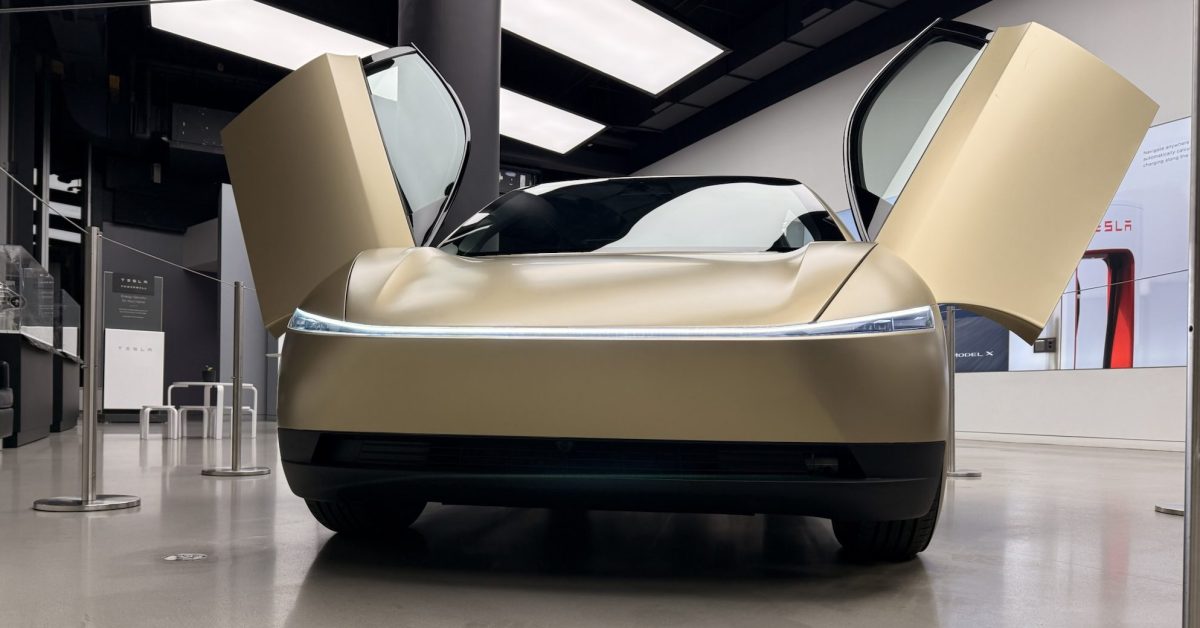
Tesla has officially brought its futuristic Cybercab to public display in China, marking the vehicle's first public appearance in the Asian market. The high-profile exhibition features static displays set up in high-end retail locations across Beijing and Shanghai. However, automotive executives are taking immediate steps to clarify consumer expectations regarding the vehicle's actual commercial availability within the world’s largest electric vehicle market.
According to official regulatory statements issued alongside the tour, the showcase is purely promotional. Tesla confirmed that the display does not involve selling the Cybercab to Chinese consumers, nor does it signal an impending launch of a commercial driverless ride-hailing service. The company is framing the multi-city tour exclusively as a demonstration of its futuristic product design and automated technological concepts.
Static Cybercab Displays Open in Beijing and Shanghai
The public displays kicked off on September 17, providing consumers in China with their first up-close view of the experimental vehicle. The Cybercab is scheduled to remain at Tesla’s Huamao experience store in Beijing through September 27. Simultaneously, a parallel exhibit runs in the LG1 north hall of the HKRI Taikoo Hui shopping center in Shanghai through September 21.
The Cybercab stands out due to its radical engineering choices, featuring a sleek two-seat cabin entirely devoid of traditional driver controls. The vehicle lacks both a steering wheel and acceleration or brake pedals, relying entirely on autonomous navigation software. This design choice underscores Tesla's vision of fully automated transportation, though it presents immediate commercial challenges under current vehicle homologation laws.
Regulatory Barriers for Steering Wheel Free Vehicles
Under existing vehicle safety regulations in China, personal passenger cars registered for public roads must include manual steering controls and mechanical braking systems. Without traditional controls, the Cybercab currently cannot receive standard road-homologation approval or consumer registration. Consequently, Chinese car buyers visiting the promotional exhibits can examine the prototype but are entirely unable to place orders or reserve a production unit.
The regulatory path for commercial autonomous ride-hailing services presents an equally steep hill for the American automaker. Industry filings indicate that Tesla only recently introduced a supervised version of its Full Self-Driving software to select vehicles in China in early 2025. The company has not yet secured regulatory clearances required to operate fully unsupervised, driverless ride-hailing fleets in the country.
In contrast to its strategy in North America, where Tesla leverages deregulated testing environments in states like Texas and Florida, China maintains strict centralized oversight. Chinese transport authorities enforce comprehensive safety validation frameworks before granting driverless operational permits. Tesla's current software stack remains subject to ongoing regulatory evaluation, keeping full commercial deployment out of reach for the immediate future.
China's Ultra-Competitive Autonomous Vehicle Landscape
Tesla’s static display arrives during a period of rapid expansion for native autonomous driving companies across major Chinese metropolitan areas. Local mobility operators, including Baidu’s Apollo Go, Pony.ai, and WeRide, already manage extensive commercial robotaxi networks. These platforms currently serve thousands of paid driverless rides daily across cities such as Beijing, Shanghai, Guangzhou, and Shenzhen without human safety drivers.
Domestic players have spent years gathering localized mapping data, refining complex urban navigation algorithms, and working closely with municipal regulators. Analysts report that China now represents the most commercially mature driverless ride-hailing market globally. This established domestic ecosystem creates a challenging competitive environment for foreign automakers attempting to introduce unproven autonomous platforms without extensive local operational history.
The stark contrast between operational local fleets and Tesla’s static display highlights the automaker's current position in the region's autonomous race. While domestic platforms continue scaling commercial robotaxi operations across expanding urban zones, Tesla is effectively showing up with a concept vehicle that it cannot legally sell to consumers or operate on commercial routes anywhere in the country.
Strategic Marketing Behind the High-Profile Tour
Given these significant regulatory and commercial hurdles, market analysts view the Cybercab tour primarily as a high-visibility marketing initiative. By placing the eye-catching vehicle inside high-foot-traffic luxury shopping centers, Tesla aims to draw curious consumers into its retail spaces. The ultimate goal is to convert showroom visitors into buyers for available production models like the Model Y.
Generating store foot traffic is critical for Tesla as competition in China's electric vehicle market reaches unprecedented levels. Domestic automakers are launching heavily subsidized, feature-packed electric vehicles at aggressive price points. Leveraging an exotic halo vehicle like the Cybercab helps Tesla maintain brand excitement and reinforce its image as a technology leader, even if the vehicle itself remains unavailable for purchase.
Moving forward, Tesla’s autonomous ambitions in China will depend heavily on securing official approvals for its software infrastructure. Until local regulators grant commercial driverless licenses, public showcases will serve as the primary medium for Chinese consumers to experience the automaker's vision. Industry observers will be watching closely to see if Tesla can translate design showcases into tangible regulatory progress in the coming years.
