
Tesla Cybercab Austin Detour Exposes Major Highway Limits
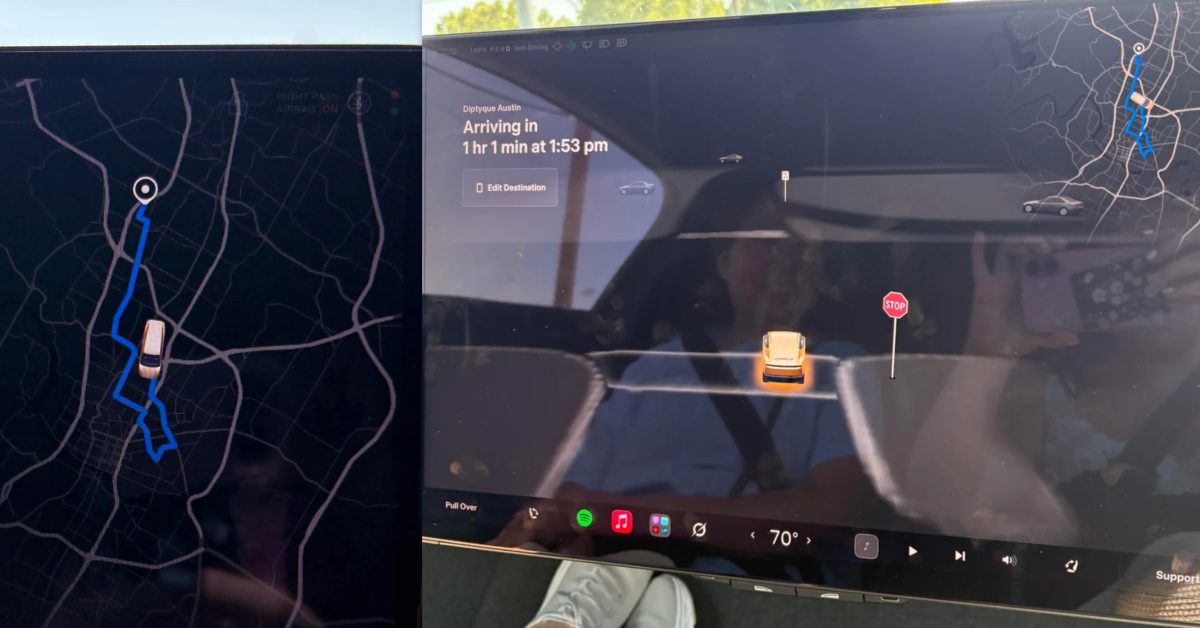
Tesla's ongoing effort to commercialize fully autonomous ride-hailing services hit a visible bump in Austin, Texas. A routine trip across town recently turned into an extended local tour when a Tesla Cybercab routed around primary transit corridors. What should have taken ten minutes stretched into a seventy-minute journey across surface streets.
The incident underscores significant operational boundaries currently built into Tesla’s autonomous driving software stack. While the ride-hailing app provided an initial fare estimate, it omitted time calculations, leaving the passenger unaware of the lengthy detour until the vehicle was underway. The situation has highlighted the contrast between commercial promises and current operational capabilities.
An Unexpected Winding Route Through North Austin
According to community forums and rider accounts, the journey began at 99 Ranch Market in north Austin with a destination at the Domain. Under standard driving conditions, a human motorist or competing autonomous vehicle would typically take U.S. Route 183 or the MoPac Expressway straight north, completing the five-mile trip in roughly ten minutes.
Instead of taking the direct highway route, the vehicle navigated far south through East Austin before turning back toward north Austin. Passengers noted that while riders can terminate trips at any time through the smartphone interface, the lack of advance route timing meant the extended path caught the rider completely off guard despite a reasonable final fare.
Local observers quickly deduced why the vehicle selected such an indirect path across the city. Tesla’s autonomous platform currently avoids major highways in Austin, while also steering clear of at-grade railroad crossings. Navigating around these active railway lines forced the vehicle to travel parallel to regional transit tracks until finding an elevated bridge.
Why Tesla Avoids Freeways and Railroad Tracks
Navigational limitations like highway avoidance highlight key architectural choices in Tesla’s autonomous platform. Unlike competitors that rely heavily on high-definition mapping, LiDAR sensors, and radar hardware, Tesla relies exclusively on vision-based cameras. This approach creates distinct constraints when managing complex, high-speed merging maneuvers or unpredictable grade-level train crossings.
High-speed corridors like Texas freeways require rapid object classification, precise speed matching, and long-range perception across multiple lanes. On surface streets, lower driving speeds give camera systems more time to process visual data and react to obstacles. Restricting operations to slower thoroughfares reduces kinetic energy during potential collisions, lowering catastrophic risk.
Grade-level railroad tracks present another unique challenge for optical perception systems. Shadows, metallic reflections, unique signal light setups, and uneven road surface angles can confuse vision-only models. By mandating reroutes around ground-level train tracks, system designers prioritize safety over navigational efficiency, leading to circuitous detours through urban neighborhoods.
Software Bottlenecks and Safety Record Challenges
Industry filings and safety metrics reveal why Tesla maintains conservative operational boundaries for its autonomous testing fleet. Independent safety analysts note that navigating urban surface streets at lower speeds provides a critical margin of error, as mistakes made at thirty-five miles per hour carry drastically lower consequences than errors occurring at highway speeds.
Industry benchmark data suggests that Tesla’s driver-assist and autonomous systems experience safety-critical events significantly more frequently than average human drivers. With crash metrics pointing to bottlenecks in vision-based decision making, software engineers must establish strict geofencing rules and strict route parameters to prevent system confusion in complex traffic environments.
In contrast, rival autonomous taxi operators like Waymo have already secured regulatory approval and demonstrated operational capability on high-speed freeways in major urban markets. Competing systems leverage multi-sensor redundancy to safely handle sixty-five mile per hour highway traffic, leaving Tesla working to close the operational gap on high-speed transit infrastructure.
Regulatory Scrutiny Surrounds Commercial Rollout
The timing of this navigation incident coincides with heightened scrutiny from federal safety officials. Tesla officially launched public rides for its steering-wheel-free Cybercab in Austin on September 3. That very same day, federal regulators at the National Highway Traffic Safety Administration opened an audit into the self-certification process for the vehicle.
Regulatory disclosures highlight growing concern over how a two-seater vehicle operating without manual controls, pedals, or traditional steering mechanisms meets existing federal motor vehicle safety standards. The audit aims to verify whether self-certified safety protocols adequately protect passengers in complex mixed-traffic conditions across growing metropolitan areas.
Operational hiccups have added to regulator concerns during the initial pilot launch phase. Reports show that days prior to the public pilot launch, an autonomous Tesla test vehicle collided with traffic bollards in Austin. Such events reinforce why engineers maintain strict operational limits on current software builds.
Real World Capabilities versus Driverless Promises
The structural limitations seen in Austin affect the entire robotaxi fleet, not just newly introduced Cybercab vehicles. Tesla runs identical surface-street routing software across its modified Model Y vehicles and dedicated Cybercabs. Consequently, any rider booking a cross-town trip faces identical potential detours if the route intersects freeways or train lines.
For consumers and industry observers, the gap between long-promised capabilities and real-world performance remains evident. Executive statements have long depicted fully autonomous taxis capable of operating anywhere a human driver can, at lower costs. However, current deployments demonstrate a platform that requires tight geofencing and substantial navigational compromises.
