
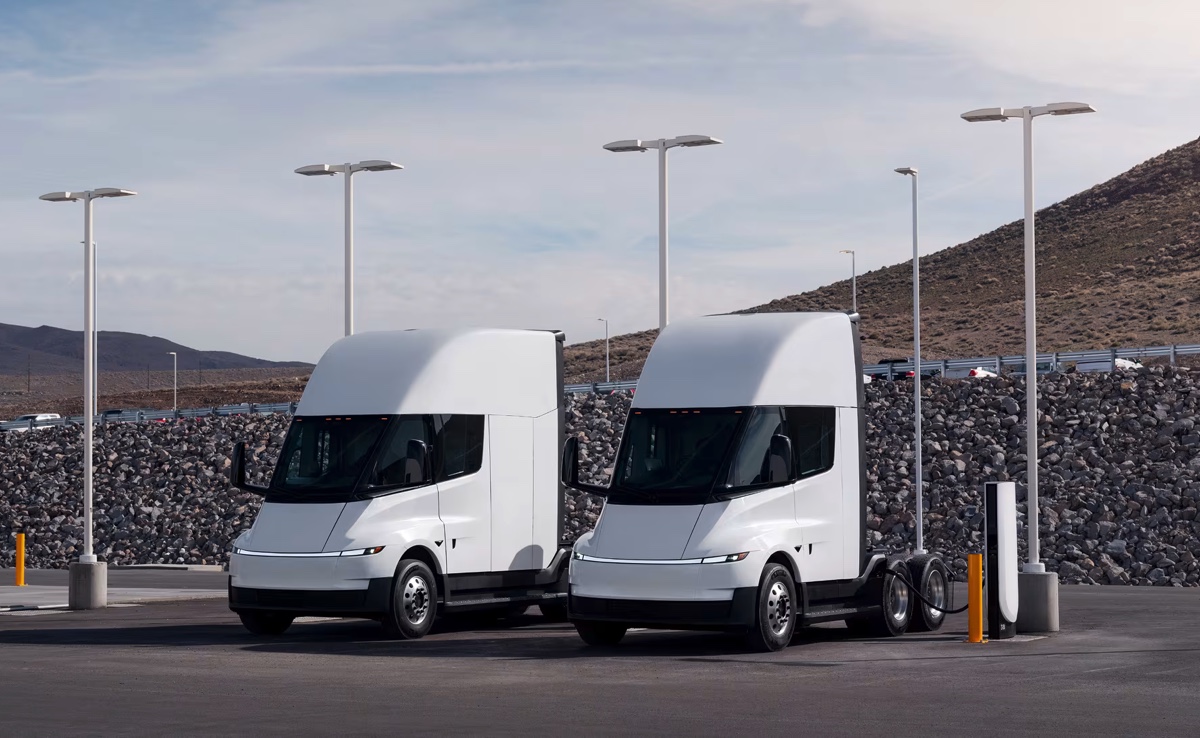
Tesla Expands Commercial Semi Charging Infrastructure to Europe
Tesla has officially opened its commercial heavy-vehicle charging portal to European business operators, marking a major strategic step forward in its regional logistics strategy. The rollout coincided directly with the official public debut of the European-spec Tesla Semi electric truck at the prestigious IAA Transportation trade exhibition held in Hannover, Germany.
The expanding enterprise program, known officially as Semi Charging for Business, is now live across five key European transport markets: Germany, the Netherlands, Belgium, France, and the United Kingdom. This expansion allows commercial fleet operators and logistics companies to directly procure dedicated depot-charging equipment specifically engineered to handle heavy high-capacity freight operations.
Preparing European Fleet Operators for High-Power Megacharging
The European expansion follows the successful initial launch of the hardware program in North America, where Tesla introduced two distinct tier levels for enterprise fleet customers. Commercial buyers can select between the ultra-high-powered Megacharger system designed for rapid turnaround times and the lower-cost Basecharger hardware option meant for overnight depot charging schedules.
By establishing order portals across key Western European logistics corridors, Tesla aims to solve the primary operational bottleneck facing heavy vehicle electrification: private depot infrastructure. Logistics managers can now begin site engineering, grid interconnection applications, and overall depot layout integration well ahead of physical vehicle deliveries scheduled to commence across the region.
Industry disclosures highlight that establishing private charging infrastructure is critical for commercial freight companies seeking to maintain operational efficiency without relying solely on public highway networks. Tesla's direct-to-business sales model for high-power charging equipment streamlines equipment procurement, permitting process coordination, and depot installation timelines across complex multinational transport networks.
European-Spec Tesla Semi Takes Center Stage in Hannover
The public debut of the European-spec Semi at the IAA Transportation event gave commercial fleet operators their first detailed look at the localized version of the electric Class 8 tractor. Engineered specifically to comply with stringent European transport mandates, the vehicle incorporates key structural and technical modifications tailored to regional highway standards.
Technical specifications released during the event reveal that the European Semi targets an estimated driving range of 550 kilometers under full load conditions. This range capability assumes a gross combination weight of 40 metric tonnes, matching the standard maximum weight allowance across primary freight transit corridors within European Union member states.
Official efficiency metrics released alongside the reveal indicate an average energy consumption rate of approximately 1.0 kilowatt-hour per kilometer. Combined with a total curb weight under 9,100 kilograms, the electric tractor aims to maximize payload capacity while offering substantial operational cost advantages over traditional diesel powerplants across mid-range haulage routes.
Next-Generation Megawatt Charging and Hardware Specs
Fast-charging capabilities remain a pivotal selling point for the commercial truck platform, with maximum power acceptance rated at up to 800 kilowatts. According to corporate technical briefings, the system allows the vehicle to replenish approximately 60 percent of its total battery capacity in just 30 minutes during mandatory driver rest breaks.
This rapid replenishment cycle aligns closely with European driving time rules, which mandate a 45-minute rest period after four and a half hours of continuous driving. By pairing 800 kW charging hardware with standardized rest windows, fleet operators can maintain high vehicle utilization rates without compromising long-distance freight schedules.
Additionally, the European iteration introduces several notable aerodynamic and technological redesigns. Most prominently, standard physical side mirrors have been completely replaced with digital camera stalks, a regulatory dispensation allowed under European safety frameworks to significantly reduce aerodynamic drag, minimize hazardous blind spots, and enhance night-vision visibility for commercial drivers.
Autonomous Driving Architecture and Market Expectations
Beyond its advanced electric powertrain, the commercial vehicle features an extensive sensor suite consisting of ten external optical cameras integrated directly into the cab bodywork. Official filings suggest this comprehensive sensor package provides complete 360-degree coverage around the tractor and trailer, forming the core hardware foundation required for future autonomous driver-assist software deployments.
Transport analysts view the camera-centric architecture as a key differentiator for the vehicle platform as European regulatory bodies evaluate semi-autonomous commercial convoying and highway pilot programs. The integrated hardware suite positions the electric truck to adopt advanced software updates that could incrementally reduce driver fatigue and optimize fleet energy consumption over long haul routes.
Long-Term Roadmap for Heavy Commercial Transport
While infrastructure ordering is now active across major European economies, commercial customer deliveries of the localized vehicle are currently slated to begin in 2027. This extended timeline provides logistics providers ample runway to install high-voltage electrical connections, integrate proprietary fleet management software, and conduct comprehensive route feasibility assessments before vehicle delivery.
Tesla's proactive push into European commercial charging infrastructure highlights the accelerating global race to fully decarbonize heavy-duty road transport. As national zero-emission mandates tighten across the European continent, establishing dedicated private depot charging capabilities will serve as a critical foundational element for enterprise fleets transitioning away from legacy fossil fuel infrastructure.
