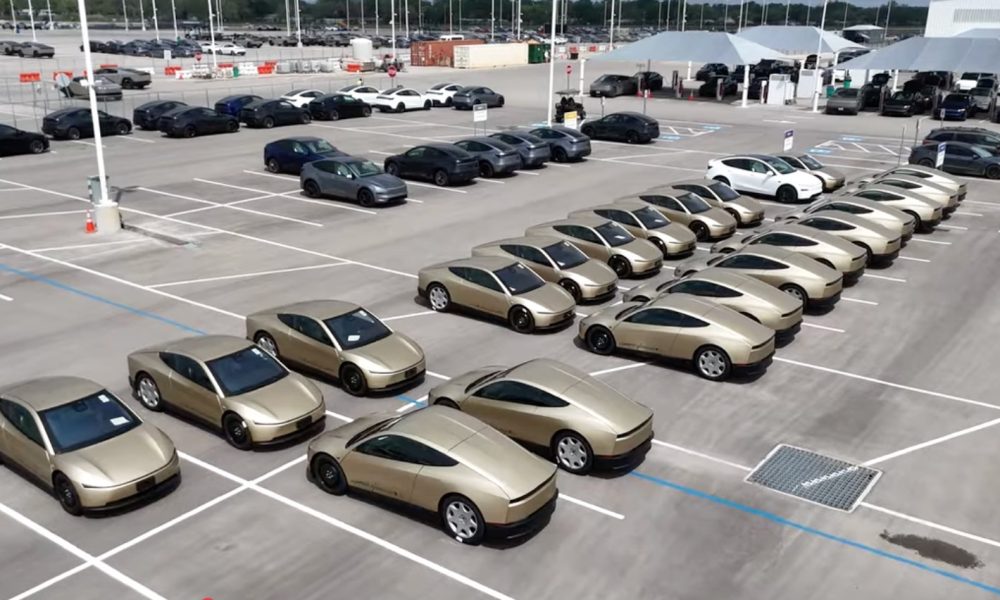
Tesla Opens Commercial Fleet Interest Forms for Cybercab
Tesla has officially launched a commercial registration portal targeting business partners, fleet managers, and infrastructure operators looking to acquire its purpose-built Cybercab. The dedicated portal marks the first formal intake mechanism for commercial buyers since the two-seater autonomous vehicle was first unveiled as a concept. The strategic move signals a broader blueprint to scale driverless ride-hailing operations rapidly through third-party commercial capital.
The online portal, headlined with an invitation to help build the expanding autonomous transportation network, collects detailed operational logistics from interested business entities. Applicants provide contact credentials, organization details, and targeted regional deployment zones. Crucially, the system prompts respondents to select primary participation categories, spanning direct fleet vehicle purchasing, supporting mobility hub infrastructure, and regional event collaborations.
Until now, commercial enterprises lacked a direct, structured path to register purchasing intent for the purpose-built vehicle. By establishing a formalized intake process, corporate leaders are laying the essential foundation to convert speculative buyer interest into organized partner networks. Dedicated company representatives are scheduled to initiate direct follow-up discussions with qualifying commercial applicants based on localized market priorities.
A Strategic Shift Toward Third-Party Fleet Operators
The decision to invite third-party commercial fleet buyers marks a pivotal evolution in the automaker's overall autonomous mobility deployment strategy. Rather than financing, owning, and maintaining every operational vehicle on internal balance sheets, the company is preparing an asset-light expansion model. This commercial framework allows independent operators to purchase vehicle batches while integrating them seamlessly into a centralized dispatch network.
Industry analyst reports highlight that this dual-track deployment strategy mirrors successful software platform models. By enabling private fleet buyers and enterprise logistics operators to purchase hardware, the company can accelerate geographical scaling without bearing overwhelming capital expenditures. The primary platform provider retains highly lucrative revenue streams through software licensing fees, network management charges, and per-ride commission structures.
Interest from prospective fleet owners has built steadily since initial autonomous vehicle previews. Private investor groups and commercial transport operators have publicly expressed plans to deploy autonomous vehicle groups across high-density urban corridors. The new intake portal gives these prospective operators a direct channel to secure early positions as regional production allocation and commercial availability expand.
Key Specifications and Autonomous Vehicle Hardware
Recent regulatory filings offer a far clearer picture of the Cybercab's underlying technical foundation and hardware engineering parameters. Designed from the ground up without conventional mechanical controls, the vehicle completely omits the traditional steering wheel, accelerator pedals, and manual brake assembly. The entire interior cabin layout prioritizes maximum passenger space, ergonomics, and seamless digital interaction during unsupervised rides.
Underneath the minimalist structural cabin, official documentation confirms the integration of a streamlined 48-kilowatt-hour battery pack paired with a single 219-horsepower electric drive motor. Despite its compact physical footprint, the vehicle platform delivers an EPA-adjusted driving range approaching 290 to 300 miles. The vehicle maintains a total curb weight of 3,113 pounds, optimizing overall energy efficiency during urban cycles.
Active road testing has intensified significantly around manufacturing facilities in Austin, Texas, where dozens of prototype units have been officially registered with state regulatory authorities. Initial autonomous vehicle validation efforts originally relied on modified Model Y platforms operating across select pilot regions in Texas and Florida. The dedicated Cybercab vehicle architecture will gradually supplant these interim testing units as factory output scales.
Building Out Infrastructure and Regional Mobility Hubs
Scaling a global autonomous taxi fleet requires far more than simply deploying passenger vehicles onto public roadways. The commercial registration portal specifically highlights regional mobility hubs and charging infrastructure as key focus areas for potential partners. Operating thousands of driverless vehicles effectively necessitates specialized commercial service stations equipped with automated cleaning, high-speed wireless charging systems, and rapid turn-around maintenance facilities.
By recruiting regional infrastructure partners early in the rollout, the company aims to construct localized operational ecosystems alongside initial vehicle deliveries. Local real estate developers, parking management firms, and municipal utility operators could convert underutilized urban parking assets into dedicated autonomous staging areas. These decentralized infrastructure nodes will ensure high overall fleet uptime and streamlined vehicle maintenance without bottlenecking central hubs.
Furthermore, localized event collaboration represents another strategic operational vector explicitly identified on the commercial interest form. Temporary high-demand traffic scenarios, such as major sporting events, music festivals, and large corporate conventions, present ideal real-world environments for dense fleet staging. Partnering with regional event organizers allows the mobility network to capture concentrated ride demand while demonstrating autonomous reliability under pressure.
Regulatory Hurdles and the Timeline to Commercialization
Despite the opening of commercial interest registration channels, substantial regulatory approval hurdles remain across various state and federal jurisdictions. Municipal permits for fully unsupervised autonomous operations vary widely across the country, requiring extensive safety validation datasets and operational testing logs. Establishing fleet intake forms ensures commercial demand is properly cataloged, though final delivery schedules remain strictly tied to localized regulatory approvals.
Target vehicle pricing for the production robotaxi has previously been discussed in the range of $25,000 to $30,000, presenting an attractive unit cost proposition for commercial fleet operators. However, formal binding purchase agreements and finalized customer delivery timelines have not yet been distributed to applicants. For now, the portal serves as a vital strategic bridge connecting autonomous vehicle engineering with commercial market deployment.