
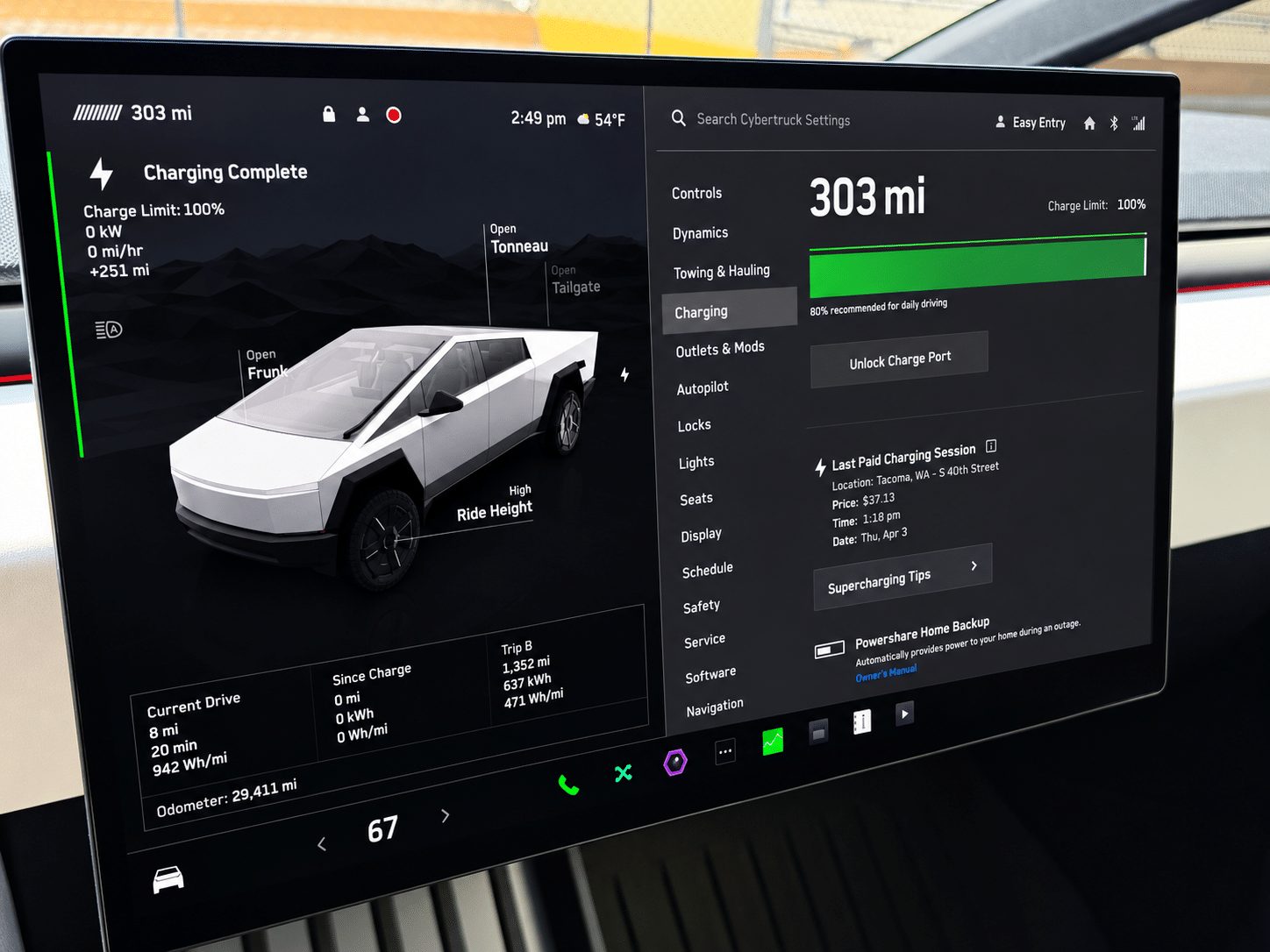
Tesla Cybertruck Charging Speed Improves Via 4680 Cell Update
Tesla has quietly introduced a series of charging performance enhancements to its all-electric Cybertruck pickup. Through a combination of iterative physical updates to its proprietary 4680 battery cells and refined thermal management control software, the vehicle now spends noticeably less time connected to fast chargers. These updates highlight the company's established practice of continuous rolling engineering changes rather than traditional annual vehicle model refreshes.
Recent disclosures from the pickup’s engineering leadership indicate that these combined hardware and software revisions have successfully shaved several minutes off the standard 10% to 80% charging window. While reaching maximum charging rates near 500kW remains a prominent benchmark, engineering teams stress that maintaining higher sustained power levels throughout the entire charging cycle offers far greater practical utility for owners traveling long distances.
Optimizing the 4680 Battery Architecture
The primary foundation for this charging evolution lies in incremental manufacturing and chemistry improvements within Tesla’s in-house 4680 cylindrical cell platform. Since volume assembly began at Gigafactory Texas, the cell design has undergone multiple unannounced revisions. These internal refinements have effectively reduced cell impedance, enabling the high-voltage pack to accept elevated electrical currents without suffering from excessive thermal accumulation during aggressive high-power charging events.
Reducing internal cell resistance is critical for high-capacity battery packs used in heavy utility vehicles. When battery cells resist incoming current, they generate heat that forces charging management systems to throttle back power to protect pack longevity. By continually refining cathode formulations, tabless current collectors, and structural cell geometry, recent 4680 production runs sustain intense power levels much longer before triggering safety-driven thermal throttling protocols.
Firmware Refinements Unlock Faster Charging
Parallel to physical battery revisions, updated firmware algorithms have significantly enhanced how the vehicle manages energy transfer. Advanced software routines now optimize how the thermal control system prepares the battery pack before arriving at a charging station. Proper pre-conditioning brings the lithium-ion chemistry to its ideal temperature window, allowing the battery to safely absorb high initial power inputs immediately upon plugging into high-output charging stalls.
Furthermore, updated control algorithms continuously monitor individual cell temperatures, pack resistance, and voltage distribution during active sessions. By employing more accurate predictive modeling, the vehicle can execute a more aggressive charge curve. Instead of experiencing a sharp drop in power shortly after hitting initial peak rates, the pickup maintains a higher average kilowatt intake across a much broader portion of the charging session.
Sustained High-Power Charging Performance
The real-world outcome of these hardware and software adjustments is a noticeable reduction in overall downtime for drivers. Trimming critical minutes off a 10% to 80% charging stop directly translates to faster turnarounds during highway trips and heavy towing operations. High-capacity DC fast charging hardware operating on 800-volt architectures can now be utilized more effectively, maximizing the energy delivered during short stopovers at public charging hubs.
Rapid fast-charging capability is particularly essential for electric pickups, which typically consume more energy per mile than standard passenger sedans due to their weight and frontal surface area. By reducing total plug-in duration, the updated charging curve enhances overall productivity for commercial operators and recreational haulers alike. Shorter charging breaks improve long-distance usability while reducing congestion at busy public charging locations during peak travel periods.
Continuous Hardware Enhancements on the Line
These battery charging updates reflect a broader philosophy of rapid, ongoing vehicle iterations on the factory floor. Recent manufacturing disclosures point to several structural and aerodynamic refinements made to the Cybertruck assembly line. For instance, production models now feature redesigned composite underbody panels that replace original metallic components, reducing overall vehicle mass while smoothing under-chassis airflow to improve high-speed driving efficiency.
Additionally, subtle functional changes have been applied to peripheral exterior trim components. The side repeater camera housings have received an updated aerodynamic profile specifically designed to channel airflow directly across the lens surface. This passive air curtain diverts rainwater spray, road grime, and debris away from the camera, ensuring clearer visibility for driver-assist systems and surround-view monitoring during adverse weather conditions.
Vertical Integration and Domestic Supply Chains
The ongoing maturation of the 4680 cell program coincides with major milestones in raw material localized supply chains. Industry filings confirm that recent vehicle builds have begun incorporating 4680 cells manufactured with lithium refined at Tesla's own Gulf Coast Lithium Refinery near Corpus Christi, Texas. This achievement marks a significant step toward controlling the entire battery manufacturing pipeline from raw ore processing to finished pack assembly.
Establishing in-house refining capabilities provides engineering teams with unprecedented control over chemical purity and raw material consistency. By directly managing the chemical specification of battery-grade lithium hydroxide, metallurgists can optimize material characteristics specifically for the 4680 cell format. This tight integration between chemical processing, cell fabrication, and software tuning creates a rapid feedback loop that accelerates battery performance and reliability improvements.
As manufacturing volume continues to expand, these cumulative upgrades highlight how electric vehicle technology can rapidly progress without waiting for traditional multi-year product cycles. Through synchronized enhancements in battery chemistry, aerodynamic detailing, and dynamic control firmware, the Cybertruck continues to evolve into a more capable and efficient platform, setting new benchmarks for fast-charging utility vehicles in the evolving electric truck market.
