
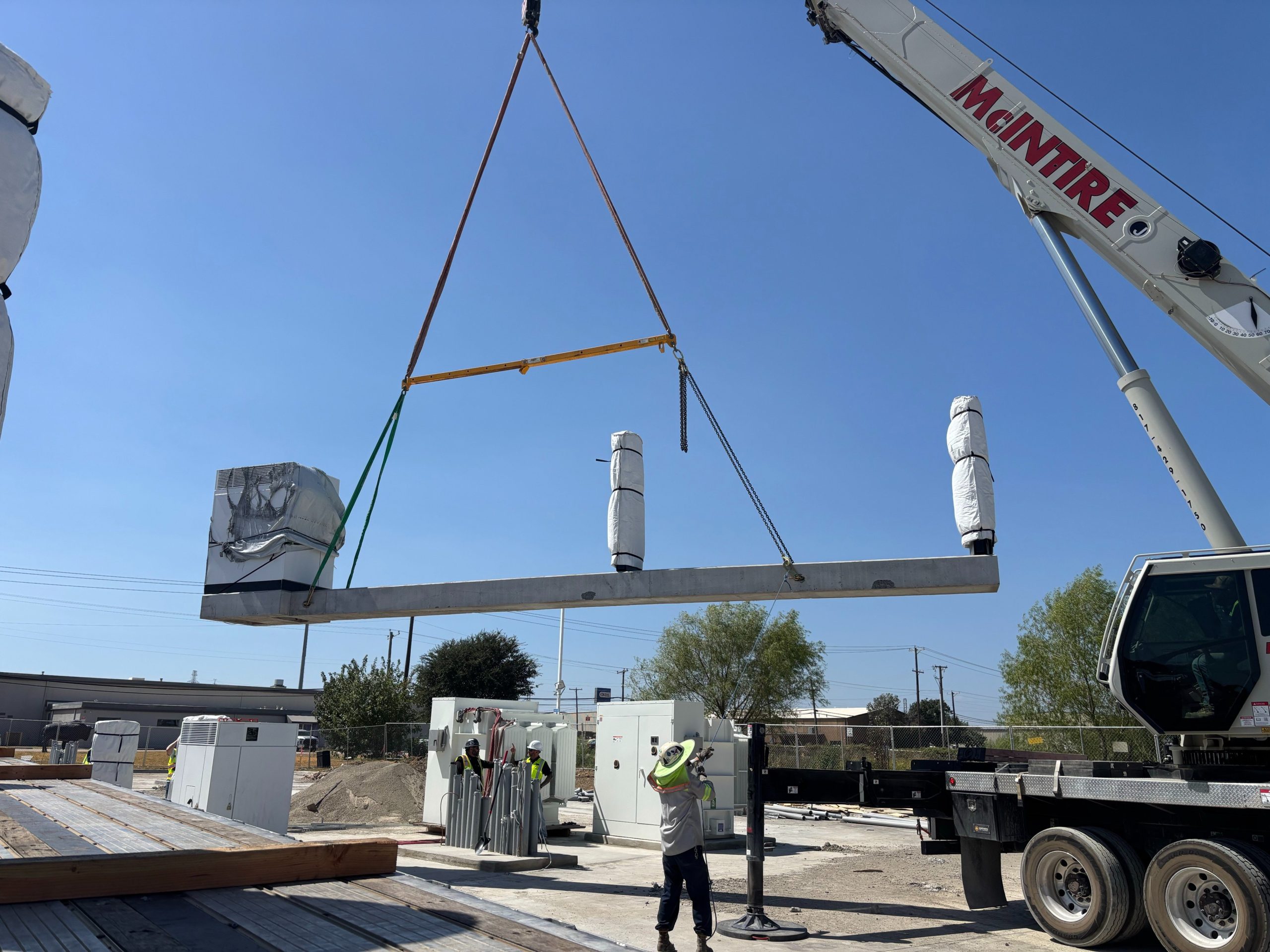
Tesla Installs First Pre-Assembled Megachargers for Semi
Tesla has officially deployed its first pre-assembled Megacharger units, marking a major milestone in the company’s efforts to scale charging infrastructure for its electric Class 8 Semi. The strategic deployment leverages modular prefabrication techniques honed during the expansion of its passenger vehicle network. By shipping factory-assembled charging structures directly to installation sites, the automaker aims to drastically reduce civil engineering timelines and site development overhead.
Industry communications confirm that these newly installed units are specifically designed to support the upcoming production expansion of the Tesla Semi. Rather than assembling individual power cabinets, wiring harnesses, and charging dispensers piece by piece in the field, technicians can now position fully integrated structural skid units using heavy cranes. This streamlined approach minimizes onsite labor demands while ensuring higher quality control during factory assembly.
High-Power V4 Hardware and Modular Engineering
The technical architecture of the pre-assembled Megacharger incorporates Tesla’s latest V4 cabinet hardware paired with dual high-output charging posts. Each skid configuration consolidates one centralized V4 power distribution cabinet with two dedicated dispenser units. This setup delivers immense energy transfer capability, allowing each individual post to supply up to 1.2 megawatts of direct current power to heavy-duty commercial electric vehicles during charging sessions.
To accommodate diverse real-world property constraints, engineering disclosures indicate that Tesla developed two distinct pre-assembled form factors. The modular hardware comes in both long and short layout variants, engineered specifically to optimize spatial arrangements relative to existing electrical substations. By offering adaptable geometries, site planners can significantly shorten the physical distance between power cabinets, utility transformers, and vehicle parking bays.
Reducing Construction Bottlenecks and Trenching
Minimizing conductor length is critical when dealing with megawatt-scale power distribution due to thermal dissipation and voltage drop challenges. The pre-assembled design drastically reduces the need for extensive underground conduit trenching, which often represents the most time-consuming and expensive phase of high-power charger installations. Decreased excavation requirements allow property owners and fleet operators to bring high-capacity charging corridors online with minimal ground disruption.
Corporate updates emphasized the unprecedented speed of the hardware development cycle, noting that the project transitioned from initial concept sketches to physical units deployed on site in under three months. This rapid prototyping and deployment capability highlights a key competitive advantage in grid-scale infrastructure development. The prefabrication strategy bypasses conventional supply chain delays by standardizing components long before ground breaking occurs.
Strategic Deployment Locations and Infrastructure
While early regulatory filings suggested initial prefabricated installations might occur in southeastern states such as Florida, recent imagery indicates the first operational units were installed near established commercial freight corridors in California. California currently houses the primary public Megacharger stations servicing prototype and pilot fleet operations. Positioning these initial V4 pre-assembled units near existing freight routes allows real-world validation under heavy fleet usage patterns.
As commercial transport operators transition from diesel fleets to zero-emission heavy-duty trucks, charging speed remains the single most critical factor for operational feasibility. Freight logistics rely on tight scheduling, where unnecessary vehicle downtime directly translates into financial losses. High-power Megachargers address this challenge by delivering energy replenishments aligned with mandatory driver rest periods mandated by federal transportation safety regulations.
Solving Downtime Constraints for Freight Logistics
With an output capacity of 1.2 megawatts per stall, the new Megacharger architecture can replenish up to 60 percent of the Tesla Semi battery pack within approximately 30 minutes. This charging rate enables long-haul drivers to add hundreds of miles of range during standard half-hour rest breaks. Consequently, fleet managers can maintain operational throughput comparable to traditional internal combustion vehicles without altering established logistics routes.
The standardized skid design also simplifies future upgrades as utility interconnections expand and grid capacities increase. By isolating complex high-voltage switching gear inside factory-tested modular cabinets, onsite technicians can replace or upgrade component blocks without re-excavating site foundations. This future-proofed approach guarantees that charging hubs can scale seamlessly as commercial electric truck traffic increases over the coming decade.
Global Expansion Across European Trade Corridors
The rollout of prefabricated Megachargers is not limited to North American freight corridors. Regulatory filings and regional announcements reveal plans to construct over 100 Megacharger stalls across key European logistics hubs. Target markets include Germany, France, the United Kingdom, Sweden, the Netherlands, and Belgium. This coordinated infrastructure expansion lays the foundation for introducing heavy-duty electric transport across major transatlantic trade routes.
Deploying high-power charging infrastructure in Europe requires navigating complex grid requirements and diverse municipal planning codes. The compact, pre-assembled footprint offers a distinct advantage in densely populated European logistics centers where land availability is severely restricted. By standardizing the equipment skid, local contractors can install charging stalls rapidly while meeting rigorous European safety and electrical compliance standards.
Industry analysts note that mastering rapid infrastructure deployment is essential for securing market leadership in the heavy electric commercial vehicle sector. As competitors enter the Class 8 space, access to reliable, megawatt-class fast charging will serve as a primary differentiator for fleet purchasing decisions. Pre-assembled Megachargers position the automaker to rapidly scale its network in tandem with vehicle mass production.
