
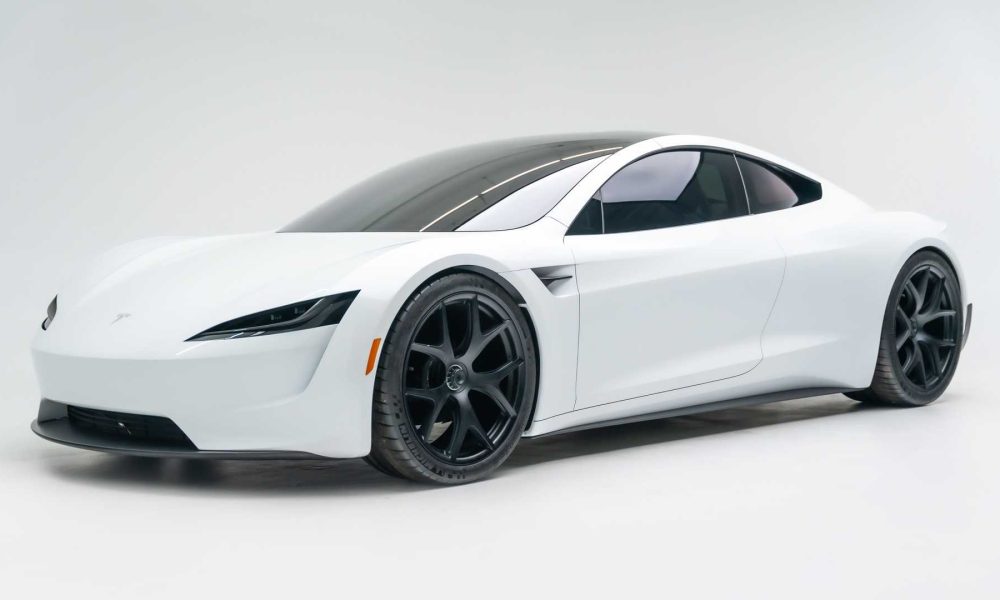
Tesla Prepares October Unveiling For The Next-Gen Roadster
A Decade in the Making: The Road to Waco
Tesla has officially set October 1 for the grand unveiling of its next-generation Roadster, choosing Waco, Texas, as the stage for one of the most anticipated events in modern automotive history. Company announcements confirmed the date after years of speculation, promising to showcase a vehicle that aims to redefine high-performance engineering. For enthusiasts, this event marks a major milestone after nearly a decade of waiting.
The all-electric supercar was initially revealed as a concept prototype back in 2017, captivating the market with astronomical performance claims. However, production timelines repeatedly slipped as the automaker adjusted its manufacturing strategy and focused on scaling mass-market electric vehicles. Now, company leadership promises that the prolonged wait will yield an unforgettable product that completely disrupts traditional vehicle expectations.
Executive communications leading up to the Waco event indicate that the presentation will feature technology never before seen in production automobiles. Chief Executive Elon Musk recently teased that the reveal will be out of this world, suggesting that the final design goes far beyond the original prototype. Industry observers expect a theatrical showcase aimed at setting a new benchmark for automotive reveals.
Pushing the Boundaries of Supercar Performance
Performance specs for the new Roadster have been a central driver of consumer fascination. Initial figures cited a 0-60 mph acceleration time under two seconds, but updated developer targets suggest a blistering 1.1-second sprint. Achieving such rapid acceleration requires radical engineering solutions that push the absolute limits of tire friction, electric motor torque, and power distribution systems.
Beyond raw speed, executive statements have hinted at exotic technological additions, including specialized cold-gas thrusters developed in collaboration with aerospace engineers. These thrusters are designed to dramatically improve acceleration, braking, and cornering handling. Musk famously noted that the vehicle would combine features reminiscent of famous fictional spy cars, elevating it far beyond conventional supercars.
The concept of a vehicle capable of short bursts of levitation or hover functionality has also been repeatedly teased in public commentary. While regulatory approvals for such features remain uncertain, technical filings suggest advanced pneumatic and propulsion integration. If realized, these innovations would mark a historic shift from pure road-bound transport to hybrid ground-aerospace mobility solutions.
Strategic Delays and Shifting Corporate Priorities
The long delay between the 2017 reveal and the upcoming production version stems largely from shifting internal priorities at the automaker. Industry filings reveal that resources were redirected to high-volume vehicle manufacturing, battery cell development, and global factory expansion. As a low-volume halo product, the supercar took a back seat to models essential for company profitability.
Crucially, the company placed immense engineering emphasis on full self-driving technology and artificial intelligence development during this period. Leadership repeatedly emphasized that enhancing vehicle safety and autonomous capabilities offered a far higher societal impact than delivering a niche luxury sports car. Consequently, the engineering team waited until core software architecture matured before finalizing the sports car.
Despite these delays, engineers continued refining the supercar in secret, integrating updated battery architecture and structural innovations learned from higher-volume vehicle production. The resulting vehicle benefits from years of real-world battery degradation data and motor efficiency gains, making the commercial version significantly more capable than the initial 2017 demonstration prototype.
High Expectations and Reservation Holder Patience
Early adopters and reservation holders have demonstrated remarkable patience, with many placing significant cash deposits as far back as seven years ago. Additionally, several customers secured free or discounted vehicles through early referral incentive programs. For these loyal brand supporters, the upcoming Texas event represents the fulfillment of a long-overdue corporate commitment.
Analyst reports suggest that fulfilling these early reservations is vital for maintaining brand loyalty and investor confidence. As competition in the luxury electric vehicle sector intensifies, delivering a groundbreaking flagship model reinforces the manufacturer's position as a technological leader. Analysts emphasize that meeting or exceeding performance promises will solidify market sentiment.
The event is also expected to outline the final pricing structure, production timeline, and delivery sequence for reservation holders worldwide. Given inflation and advanced component integration, final retail pricing could differ from original estimates. Nevertheless, demand remains strong among collectors and high-net-worth buyers seeking unprecedented electric performance.
The Future of High-Performance Electric Vehicles
Musk has framed the new Roadster as a closing chapter for traditional internal combustion supercars, arguing that fossil-fuel hypercars can no longer compete with modern electric powertrains. By combining extreme safety, zero emissions, and hypercar performance, the vehicle is intended to render conventional gas-powered exotic cars obsolete across every measurable performance category.
As the October 1 event approaches, excitement within the automotive community continues to build to unprecedented levels. Whether the final production model delivers on its wildest claims, the presentation promises to showcase the absolute bleeding edge of electric mobility, setting a new standard for the next generation of performance transportation.
