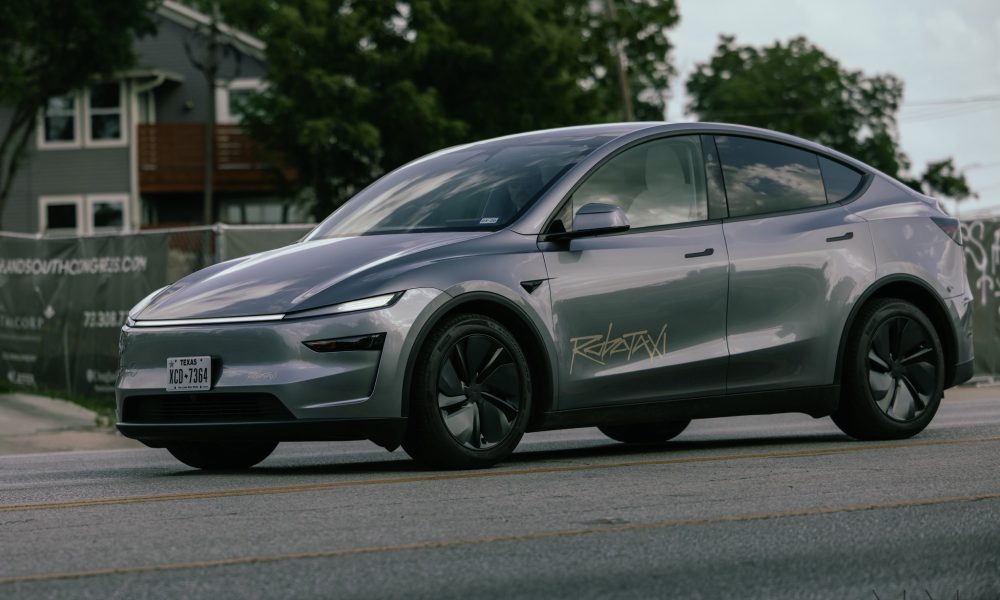
Tesla Robotaxi Will Expand To 24/7 Service In Coming Weeks
Extending Robotaxi Operations Beyond Daytime Hours
Tesla is preparing to transition its ride-hailing Robotaxi service into an all-hours transportation network. Official executive disclosures confirm that overnight operations are slated to begin within weeks. This shift marks the next evolution for the company's autonomous ride platform, moving past daytime constraints to provide around-the-clock driverless rides for public passengers across multiple active deployment markets.
Currently, the paid ride-hailing network operates on a restricted schedule from 6:00 a.m. to 10:00 p.m. local time across six major urban hubs in Texas and Florida. The coverage area includes Austin, Dallas, Houston, Miami, Orlando, and Tampa. This operating window reflects a slight reduction from previous testing parameters that stretched until 2:00 a.m.
The upcoming transition to 24/7 availability follows closely on the heels of public passenger deployments in purpose-built Cybercabs in Austin. While initial service hours were bounded to monitor early system behavior, operational leadership confirmed that full late-night and early-morning service will unlock as soon as crucial software updates are integrated into the primary vehicle code.
The Role of FSD Version 15 in Overnight Operations
The technical foundation enabling this schedule expansion relies on Full Self-Driving Version 15. Engineers have described this release as a step-change software architecture designed to handle complex edge cases. Featuring seven parallel neural network improvement tracks, the update expands the system's parameter capacity by roughly tenfold compared to previous autonomy builds.
Current Robotaxi vehicles operate on early builds of the Version 15 stack, which incorporate roughly 40 percent of the target optimization features. To safely eliminate operational curfews, the remaining modules must be fully merged into the vehicle fleet. The incoming code branch promises elevated driving confidence, allowing the neural networks to process unexpected hazards without remote intervention.
The rollout plan does not explicitly differentiate whether the 24-hour service update will deploy first to dedicated Cybercab models or to the existing fleet of Model Y vehicles. However, shared network architecture ensures that performance improvements across the core artificial intelligence model will benefit both vehicle form factors simultaneously during urban deployments.
Testing Camera-Based Vision Under Nighttime Conditions
Running autonomous vehicles overnight introduces distinct technical challenges, particularly for a vision-only approach. Unlike competitors relying on expensive LiDAR and radar suites, Tesla relies entirely on optical camera feeds and end-to-end neural processing. Transitioning to round-the-clock service will serve as a definitive real-world test for purely vision-based autonomous navigation.
Industry observers and riders have often questioned why additional software validation is required for darkness, given that production vehicles already travel at night. Engineering leadership notes that operating unmanned vehicles without safety drivers requires a substantially higher threshold of system reliability. Continuous operation demands flawless perception in low-light environments, glare, and dynamic severe weather conditions.
Achieving continuous overnight validation is critical before deploying thousands of unmonitored vehicles onto public streets simultaneously. By releasing software upgrades in calculated stages, the engineering team aims to prevent unnecessary system disengagements or operational halts while maintaining strict reliability standards as fleet density increases across participating metropolitan regions.
Economics and Charging Infrastructure For Autonomous Fleets
From a business perspective, shifting to a 24-hour operational model dramatically improves fleet unit economics. Autonomous ride-hailing services depend heavily on high vehicle utilization rates to maximize revenue per vehicle. Eliminating nighttime downtime allows operators to generate income during peak late-night social hours and early-morning airport transit windows.
To support continuous operation, specialized fleet infrastructure is actively being established. Autonomous vehicles are already utilizing public Supercharger stations during off-peak night hours to replenish battery capacity automatically. In addition, dedicated Robotaxi charging locations are being constructed to manage high-throughput vehicle turnarounds, cleaning, and automated servicing without disrupting human drivers.
Nighttime automated charging management aligns with broader electric grid balance efforts by drawing power during lower-tariff off-peak hours. By linking intelligent vehicle routing software with dynamic charging infrastructure, the driverless fleet can seamlessly balance passenger transport demands with routine battery maintenance throughout early-morning operating cycles across active territories.
Fleet Performance Metrics and Future Market Expansion
Preliminary performance data from driverless trials points to strong baseline safety results across initial test sites. By mid-2026, regulatory disclosures and operational summaries showed that the unsupervised driverless fleet had completed over 380,000 miles of public travel across Texas and Florida without any notable safety incidents attributed to the vehicle software.
Demonstrating sustained safety over hundreds of thousands of miles has provided the regulatory and technical foundation necessary to move forward with unconstrained schedules. As software capabilities advance, operating constraints like time-of-day limits are expected to drop away entirely, allowing the autonomous service to compete directly with traditional ride-hailing platforms on availability.
If the incoming software modules merge on schedule, 24-hour driverless service could launch in select markets as early as October 2026. Transitioning from a restricted daytime pilot to a fully operational 24/7 autonomous transport network marks a decisive operational milestone toward scaling commercial driverless mobility solutions across wider geographic regions.