
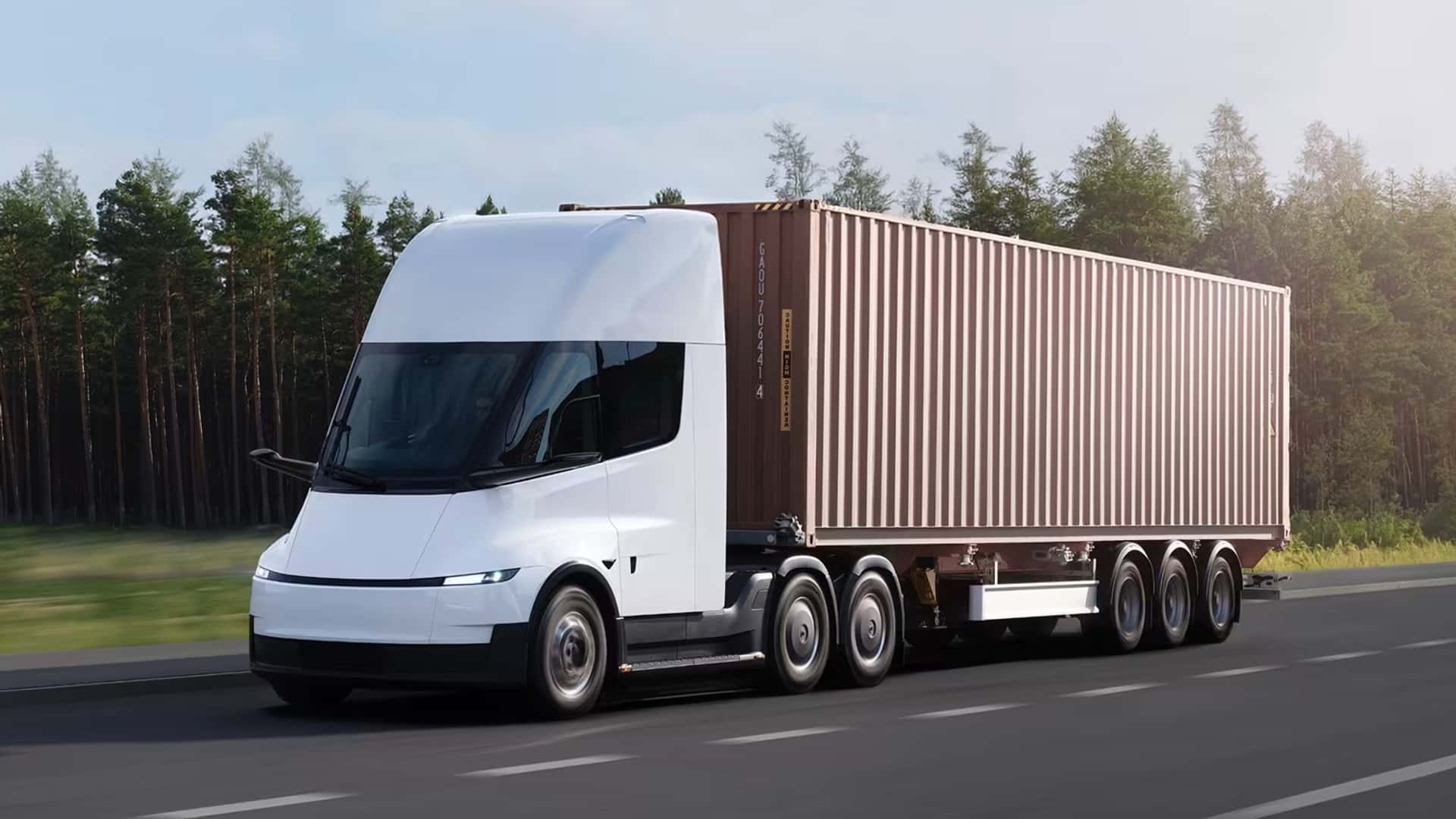
Tesla Semi Debuts In Europe Balancing Range And Payload
European Market Debut at IAA Transportation
The long-awaited expansion of Tesla's heavy-duty electric vehicle program has reached a major milestone as the company officially introduced the European specification of the Tesla Semi. Unveiled at the IAA Transportation event in Hanover, Germany, the commercial vehicle marks the brand's first formal push into the European logistics market four years after commercial prototypes first hit American roads.
Freight operators eager to integrate the American-built Class 8 tractor into their European fleets will need to exercise patience. Initial commercial deliveries across the continent are scheduled to begin next year, focusing primarily on the Standard Range variant. Industry filings indicate that the vehicle will be manufactured in North America before being exported to international customer sites.
Performance Specs and Operational Efficiency
The European-spec Tesla Semi Standard Range is rated to travel approximately 550 kilometers (341 miles) on a single charge. Official testing metrics indicate an average energy consumption of roughly 1 kilowatt-hour per kilometer, or 1.6 kWh per mile. These figures demonstrate a slight efficiency bump over the North American counterpart, which advertises a 325-mile driving range.
Both regional variants share identical powertrain hardware, featuring a 548 kilowatt-hour battery pack paired with a tri-motor system driving the rear axles. Technical analysis suggests the variance in quoted range stems from European testing protocols. These estimates reflect a constant highway speed of 80 km/h (50 mph) at ambient temperatures around 20 degrees Celsius, carrying a 40-tonne gross train weight limit.
Real-world energy consumption in commercial service will vary based on exterior aerodynamic hardware, tire compounds, and trailer configurations. Fleet managers must also consider local speed regulations, as European heavy goods vehicles face lower speed ceilings compared to North American highway corridors where commercial trucks frequently operate at speeds reaching up to 128 km/h.
Charging Infrastructure and Fleet Logistics
To support high-utilization commercial operations, the Tesla Semi supports ultra-fast charging capabilities up to 800 kilowatts. Utilizing high-power Megacharger stations, the truck's massive battery can recover up to 60 percent of its state of charge in approximately 30 minutes. This enables drivers to replenish range quickly during mandatory European rest breaks.
Deploying high-output charging stations remains a vital hurdle for European logistics networks. Regulatory disclosures reveal that specialized Megacharger infrastructure is currently non-existent across European freight routes. Tesla plans to build out dedicated heavy-vehicle charging hubs across key transport corridors in tandem with the initial customer fleet deliveries scheduled for next year.
For regional depot operations where vehicles remain parked overnight or during lengthy loading cycles, Tesla offers a lower-output Basecharger system. Capable of delivering up to 120 kilowatts, the Basecharger replenishes the Standard Range battery pack to 60 percent capacity in four hours, reducing electrical infrastructure costs for warehouse operators.
Payload Advantage Versus European Competitors
The European heavy-duty electric vehicle market presents fierce competition, led by established local manufacturers like Volvo. The rival Volvo FH Aero Electric Extended Range packs a massive 725 kilowatt-hour battery, yielding a maximum driving range of up to 700 kilometers (435 miles). It also supports high-power charging at up to 700 kilowatts via specialized connector stalls.
Despite its superior long-distance range, Volvo's extended-range flagship suffers a notable drawback in hauling capacity. Under German gross vehicle weight regulations capping total weight at 42 tonnes, the heavy battery pack restricts the FH Electric to a usable payload of roughly 22 tonnes. That represents a significant capacity penalty for freight companies prioritizing cargo weight over total distance.
By deploying a smaller 548 kWh pack, the Tesla Semi Standard Range achieves a vital payload advantage, carrying roughly five additional tonnes of freight compared to Volvo’s longest-range offering. Volvo does offer a short-range FH variant with a 25-tonne payload and 470 kilometers of range, but Tesla maintains the edge in maximum cargo capacity for this battery tier.
Operational Limitations and Market Challenges
Inside the cabin, the Tesla Semi retains its distinctive central seating position designed to optimize forward visibility for driver operations. The workspace incorporates premium amenities, including acoustic glass insulation, active sound deadening, and climate-controlled seating to reduce fatigue during extended long-haul routes. The sleek aerodynamic cab shell further reduces drag coefficients compared to traditional COE designs.
A major structural challenge for Tesla in Europe is drivetrain versatility. The Tesla Semi is currently built exclusively in a 6x4 axle configuration. In contrast, European commercial truck buyers traditionally favor 4x2 tractor units due to tighter turning radiuses and maneuverability constraints in historic urban logistics hubs. Regional competitors like Volvo offer diverse layouts, including 4x2, 6x4, and 8x4 chassis options.
Commercial pricing details for the European Standard Range Tesla Semi remain undisclosed, and company representatives have not confirmed whether the Long Range variant will eventually reach the European continent. As market evaluation continues, fleet operators will carefully weigh Tesla’s superior payload capacity metrics against established European distribution channels and robust service support networks.
