
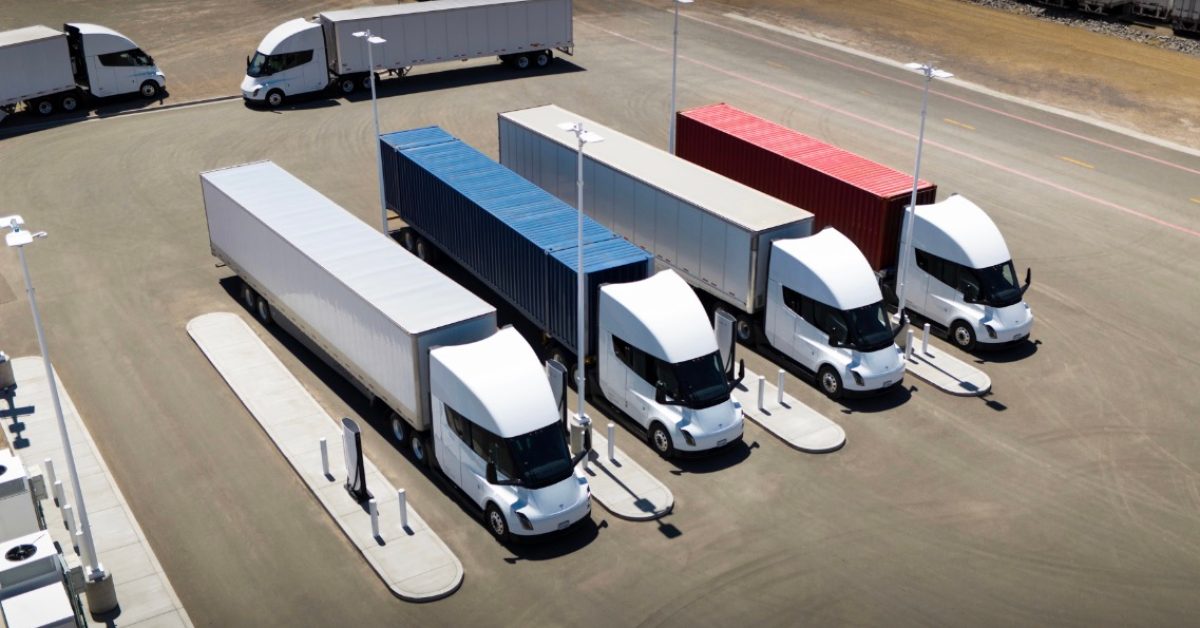
Tesla to Operate Public Megachargers at Forum Mobility Sites
Strategic Expansion of Heavy-Duty Charging Infrastructure
Tesla is preparing to operate public Megacharger stations at three upcoming electric truck depots owned by heavy-duty charging provider Forum Mobility. According to regulatory disclosures and company announcements, the electric vehicle manufacturer will run high-power charging systems at three of four new California facilities scheduled for immediate construction. The partnership highlights a major shift toward collaborative commercial infrastructure.
The expansion arrives as Forum Mobility brings an additional 30 megawatts of heavy-duty charging capacity online across key logistics corridors. The fleet operator currently holds vehicle reservations for more than 330 Tesla Semi units. This integration confirms that Tesla is increasingly leveraging third-party real estate operators to accelerate the deployment of its commercial vehicle charging network across North America.
By partnering with established real estate operators, Tesla can rapidly increase charging node density without bearing the full capital expenditure of land acquisition. Industry filings indicate this hybrid model allows the automaker to focus on hardware manufacturing and network management while local infrastructure developers manage facility construction and grid connections.
Depot Locations and High-Power Charging Specifications
The newly planned Megacharger installations will be situated at strategic freight hubs across California. Tesla will directly operate public charging hardware at Forum Mobility’s FM Francis location in Ontario, as well as the FM Adeline and FM Coliseum sites in Oakland. The Ontario station builds upon existing regional momentum, following Tesla's initial public Megacharger site launch in the same city earlier this year.
A fourth facility, the FM Santa Fe depot in Rancho Dominguez, has already locked in contracted fleet capacity dedicated to servicing over 330 Tesla Semis. Although dedicated primarily to contract haulers, project details confirm the site will remain accessible to the broader drayage trucking community, ensuring maximum utility for regional port traffic and short-haul logistics providers.
All four upcoming depots are engineered specifically for Class 8 commercial vehicles, featuring spacious pull-through lanes that allow drivers to recharge without disconnecting their trailers. The locations incorporate a hybrid charging layout, pairing traditional Combined Charging System (CCS) hardware alongside high-output Megawatt Charging System (MCS) ports capable of replenishing up to 60 percent of battery range within 30 minutes.
This deployment expands on earlier joint pilot initiatives between the two commercial transport entities. Forum Mobility previously integrated two Tesla MCS Megachargers into its FM Harbor facility at the Port of Long Beach. Operating since December 2024, that port depot features 9 megawatts of electrical capacity and 44 active CCS connections to serve heavy freight traffic.
Commercial Terms and Open Infrastructure Standards
The partnership highlights a distinct commercial operational structure compared to traditional consumer Supercharger locations. Tesla supplies the specialized Megacharger units, priced at approximately $188,000 each, and retains operational control of the charging process. In exchange for managing power distribution and user billing, Tesla collects an operational fee of $0.08 per kilowatt-hour from third-party depot sites.
Crucially, the Megacharger hardware operates on the standardized MCS 3.2 open architecture rather than a single proprietary protocol. This cross-platform compatibility ensures that the charging dispensers can service zero-emission heavy trucks manufactured by industry competitors, including Volvo, Daimler, and Scania, alongside the Tesla Semi, fostering broader commercial vehicle interoperability.
Analyst reports suggest that partner-led station rollouts will be critical for Tesla to achieve its public infrastructure goals. The company currently lists 66 planned Megacharger corridors on its development map, with a significant portion slated for operational deployment throughout the current calendar year to support accelerating commercial Class 8 deliveries.
Fleet Adoption and Regional Freight Electrification
Commercial demand for heavy-duty charging corridors continues to expand rapidly as fleet operators analyze fuel and maintenance economics. Matt LeDucq, chief executive officer and co-founder of Forum Mobility, noted in company statements that highly favorable total cost of ownership metrics for battery-electric Class 8 trucks are driving swift adoption among commercial motor carriers operating along high-volume corridors.
The strategic placement of these depots targets major port facilities in Oakland and Long Beach, where short drayage routes align exceptionally well with current battery-electric vehicle range capabilities. Municipal port authorities have welcomed the infrastructure investments, citing the necessity of advanced clean truck solutions to reduce regional emissions from heavy drayage operations.
Forum Mobility currently supports 25 contracted carrier customers and oversees more than 40 megawatts of heavy-duty charging capacity either active or in development. Supported by California state and regional clean transportation grants, the infrastructure developer is already planning subsequent depot expansions across the Inland Empire, Central Valley, Nevada, Arizona, Texas, Washington, and Illinois.
Accelerated Outlook for Class 8 Freight Electrification
The rapid expansion of high-megawatt charging nodes addresses one of the primary hurdles facing Class 8 commercial vehicle electrification: depot throughput and charging speed. By enabling megawatt-level power delivery in pull-through configurations, fleet managers can maintain tight logistical schedules without experiencing significant downtime during battery replenishment cycles.
As high-density freight corridors receive dedicated megawatt charging support, the commercial trucking sector is reaching a pivotal operational milestone. The collaboration between vehicle manufacturers and specialized depot operators establishes a scalable, asset-light blueprint for electrifying heavy transport networks, accelerating the transition away from diesel power in North American freight operations.
