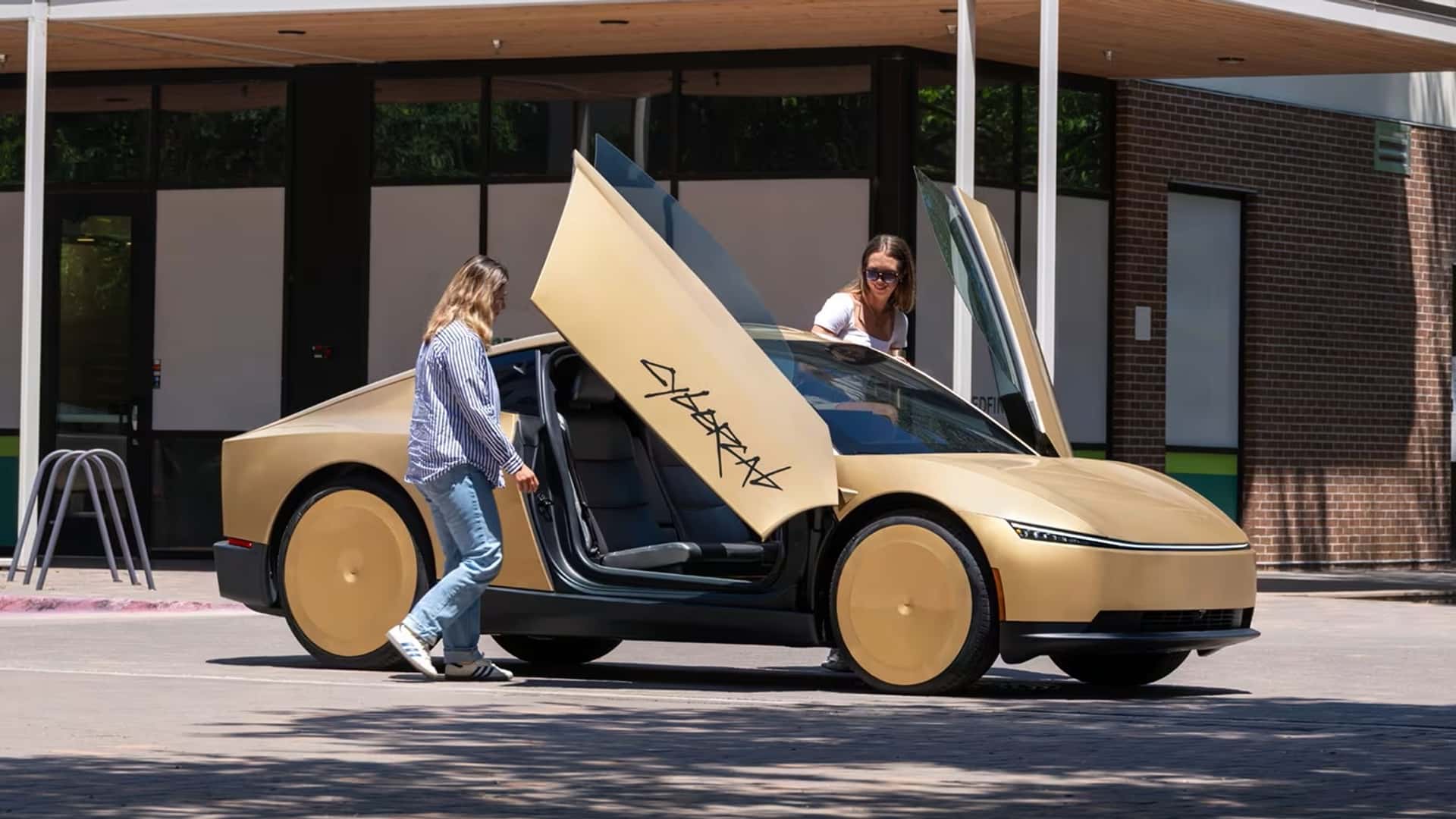
Tesla Cybercab Arrives As Robotaxi Competition Heats Up Fast
The Debut of the Purpose-Built Cybercab
Tesla has officially launched its Cybercab following a private showcase event in Austin, marking a major milestone for the automaker's autonomous ambitions. The distinct golden two-seater represents a fundamental shift in design, built entirely without traditional driving controls such as steering wheels, pedals, or side mirrors. Initial quasi-public demonstration rides were offered to select attendees before expanding to broader public availability alongside existing fleet vehicles.
The vehicle's commercial introduction comes after years of promises regarding fully autonomous fleets. For a decade, executive leadership pitched a future powered by scalable driverless transit. While early deployments utilized software updates on standard consumer vehicles like the Model Y, the Cybercab is engineered strictly as a dedicated robotaxi, serving as the physical cornerstone of Tesla's long-term autonomous mobility strategy.
Tesla is betting its autonomous future on a vertically integrated, vision-only approach that relies strictly on cameras rather than expensive radar and LiDAR hardware. According to Texas regulatory filings, the company has registered 420 autonomous test vehicles in the state, including 45 Cybercabs. However, questions remain regarding how many units are actively serving commercial passenger routes daily.
Alphabet’s Waymo Maintains the Autonomous Lead
As Tesla enters the purpose-built vehicle market, established autonomous operators continue to expand their footprint. Alphabet's Waymo currently leads the commercial sector by a wide margin, operating an active network across multiple major urban centers. The company has steadily transformed from an experimental project into a high-volume commercial rideshare service with proven daily operational reliability.
Waymo recently expanded driverless commercial service into three additional major markets: San Diego, Tampa, and Denver. The expansion into Denver represents a significant operational hurdle, forcing the platform to navigate challenging winter weather and snow conditions outside of controlled testing environments. This milestone brings Waymo’s commercial presence to 14 U.S. cities, far exceeding rival networks.
Scale remains Waymo's primary advantage in the emerging market. Analyst reports indicate the company currently operates more than 4,000 driverless Jaguar I-Pace vehicles and custom Zeekr vans nationwide. Logging roughly 500,000 paid rides per week, Waymo provides the benchmark for vehicle deployment, consumer safety metrics, and commercial revenue generation that competitors are now striving to match.
Amazon’s Zoox Takes On Complex Urban Corridors
Amazon subsidiary Zoox is rapidly accelerating its own custom robotaxi deployments after securing key commercial approvals. The company launched paid passenger operations using its unique, bidirectional autonomous pods in Las Vegas alongside free public rides in San Francisco. Zoox is focused on deploying vehicles designed specifically for dense urban environments without legacy controls.
To build operational scale, Zoox announced an expansion of its testing footprint into Houston and San Diego. These new locations lay the groundwork for commercial launches in additional high-density urban areas. By testing in diverse geographic environments, the company aims to validate its multi-sensor system across complex traffic patterns and varied weather conditions.
In a significant operational milestone, Zoox recently became the first autonomous provider permitted to transport passengers to and from the Las Vegas airport. Airport transit represents a lucrative revenue source for mobility providers, but navigating congested curb space and unpredictable terminal traffic poses unique technical challenges that test the limits of self-driving software.
Global Partnerships Accelerate Rideshare Integration
Beyond purpose-built vehicles, software developers and rideshare platforms are partnering to accelerate commercial deployment. In the United Kingdom, Uber and autonomous technology firm Wayve launched pilot passenger rides using sensor-equipped Ford Mustang Mach-E vehicles. During this initial launch phase, safety drivers remain behind the wheel to monitor autonomous software behavior in dense traffic.
The initiative represents the first phase of a broader commercial agreement aiming to deploy driverless vehicles on the Uber network across 12 global markets. The partnership plans to expand into Tokyo later this year, leveraging advanced hardware architecture provided by Nvidia. This strategy allows software developers to scale rapidly without building custom vehicle manufacturing capacity.
Uber is aggressively expanding its autonomous ecosystem through multiple strategic alliances worldwide. In addition to its work with Wayve, the mobility giant has established deployment agreements with vehicle developers including Lucid and Nuro. These collaborative models demonstrate how legacy ride-hailing networks are positioning themselves as central distribution platforms for diverse self-driving technologies.
The Escalating Battle for Driverless Dominance
The autonomous mobility sector is crowded with competing approaches and business models. Companies like Motional, Mobileye, Lyft, MOIA, May Mobility, and AVRide are all competing for market share in passenger transit. Each player is testing different combinations of sensor suites, operational zones, and vehicle formats to establish viable unit economics in commercial service.
Tesla’s strategy relies on low-cost hardware and computer vision to achieve rapid scaling, bypassing expensive sensor suites favored by competitors. However, rival operators have established a substantial lead in commercial ride volume and multi-city operations. As the Cybercab enters service, the coming months will reveal whether vision-only technology can successfully challenge established multi-sensor platforms.