
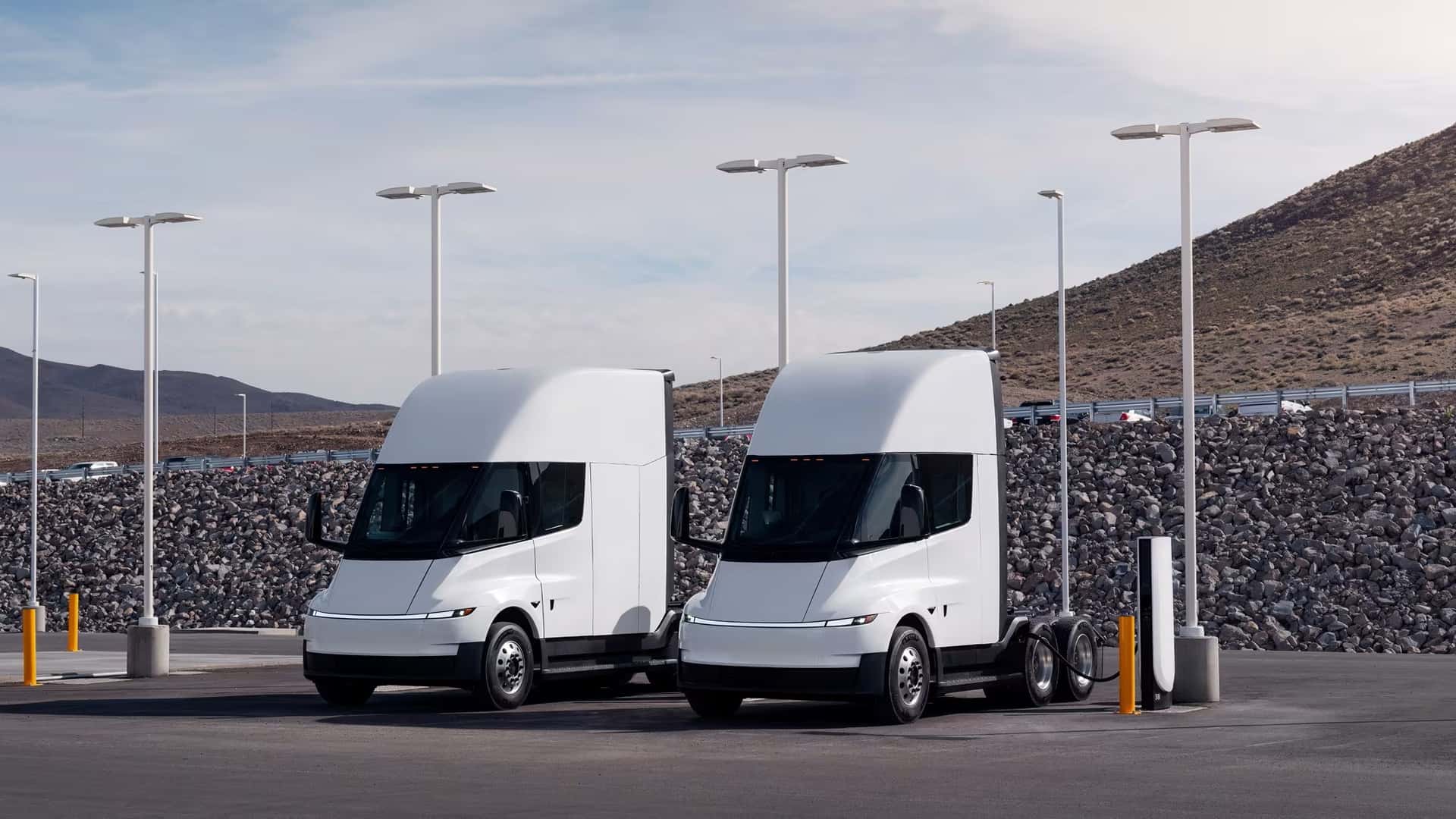
Tesla Prepares European Semi Launch With 100 Megachargers
As Tesla prepares to introduce its electric Semi tractor to the European commercial vehicle market next year, the company is tackling the most critical obstacle facing heavy EV transport: high-power charging infrastructure. Transitioning long-haul freight away from diesel requires far more output than standard passenger vehicle chargers can supply, forcing electric truck makers to deploy dedicated megawatt-class charging networks across freight routes.
To support its incoming fleet of heavy electric trucks, Tesla has mapped out an initial European charging network featuring over 100 Megachargers spread across 21 strategically placed stations. Executive presentations delivered at commercial transport expos confirm that the automaker is laying the structural foundation needed to convince logistics operators that electric long-haul trucking can match the operational uptime of traditional diesel rigs.
While a finalized installation timeline remains undisclosed, the preliminary layout demonstrates Tesla's commitment to building a robust backbone before vehicle deliveries commence. The initial rollout will prioritize high-density shipping routes connecting key industrial zones across Western and Northern Europe, establishing essential charging nodes where operators can replenish battery packs during mandatory driver rest breaks.
Laying the Groundwork Across Key Freight Corridors
The geographic focus of the initial Megacharger deployment targets Europe's most heavily traveled logistics corridors. According to technical disclosures at commercial transport events, seven key nations will receive the first wave of Tesla-branded megawatt stations. These initial launch markets include Germany, France, the United Kingdom, Sweden, Belgium, the Netherlands, and Luxembourg, covering the core economic heartland of European transit.
Concentrating the first 21 charging locations in these specific countries ensures maximum coverage along critical cross-border trade routes. Germany and the Benelux region host some of the continent's busiest ports and distribution hubs, making them ideal testing grounds for real-world heavy transport. Placing high-powered hubs near major shipping centers minimizes operational downtime and allows operators to seamlessly manage regional delivery routes.
Establishing this multi-nation network is crucial for overcoming cross-border operational barriers that have historically hindered early electric truck adoption. Industry analysts note that robust charging access along international shipping corridors will accelerate fleet electrification by eliminating range anxiety. Tesla’s strategy reflects lessons learned from its Supercharger network, establishing dedicated charging infrastructure ahead of widespread vehicle distribution to build commercial confidence.
Technical Specifications of the Megawatt Charging Network
The technology powering Tesla’s Megacharger network represents a dramatic leap forward in high-voltage charging architecture. Each European Megacharger station utilizes a specialized 1,000-volt power cabinet feeding twin stalls capable of delivering a massive 1,500 amperes to connected vehicles. Under optimal conditions, the system can output up to 1.2 megawatts of direct current, dwarfing the output of existing passenger EV charging stations.
This high power transfer capability is specifically tailored to charge the Semi’s large battery pack within timeframe windows that align with European driving regulations. Tesla projects that the 1.2-megawatt supply can replenish a Semi’s battery pack to 60 percent state-of-charge in roughly 30 minutes. This speed allows drivers to gain significant range during mandatory half-hour regulatory rest breaks.
Both the European-spec Tesla Semi and Megacharger dispensers feature the Megawatt Charging System (MCS) 3.2 connector interface. Because this standard is tailored for heavy transport, other electric vehicles cannot plug directly into Megacharger stalls. However, to maintain flexibility, Tesla will provide dual-standard CCS adapters to Semi customers, enabling drivers to utilize third-party CCS2 public charging points across the continent.
Private Fleet Solutions and Commercial Depot Hardware
Recognizing that commercial haulers conduct much of their vehicle charging at fleet depots rather than public stations, Tesla is opening direct hardware sales to commercial customers. Logistics companies and warehouse operators can now purchase complete Tesla charging systems to install at private depots. Order books have opened across Europe, with initial depot hardware deliveries scheduled for the middle of next year.
The commercial hardware catalog caters to varied operational requirements, ranging from high-turnaround cross-docks to long-term depot parking facilities. A complete high-output Megacharger bundle, consisting of a 1,000-volt power cabinet and two heavy-duty charging stalls, is priced at €163,000. Regulatory filings indicate this commercial hardware package is engineered for high-intensity logistics hubs requiring rapid turnarounds across multiple work shifts.
Dedicated Basechargers for Overnight Fleet Operations
For operations where trucks remain parked for extended periods, Tesla is introducing a lower-powered alternative designated as the Basecharger. Designed for depot facilities operating overnight charging schedules, the Basecharger consolidates power electronics into a compact, single-housing enclosure. This localized hardware solution eliminates extreme grid demand during daytime operational hours while offering fleet managers a lower-cost infrastructure investment.
The Basecharger unit provides a direct current output of 120 kW and an alternating current output of 125 kW. Technical disclosures indicate this output can charge a Tesla Semi battery pack up to 80 percent in approximately four hours. This charging rate suits logistics fleets whose vehicles return to central yards overnight, allowing full battery restoration without incurring heavy peak-demand electrical surcharges.
Tesla has set the purchase price for the standalone Basecharger unit at €17,000, though commercial buyers must purchase a mandatory minimum order of two units per order. By offering both megawatt-class chargers and cost-effective Basechargers, Tesla aims to accommodate different duty cycles across the freight industry, giving fleet operators tailored infrastructure options that match their specific logistical workflows.
