
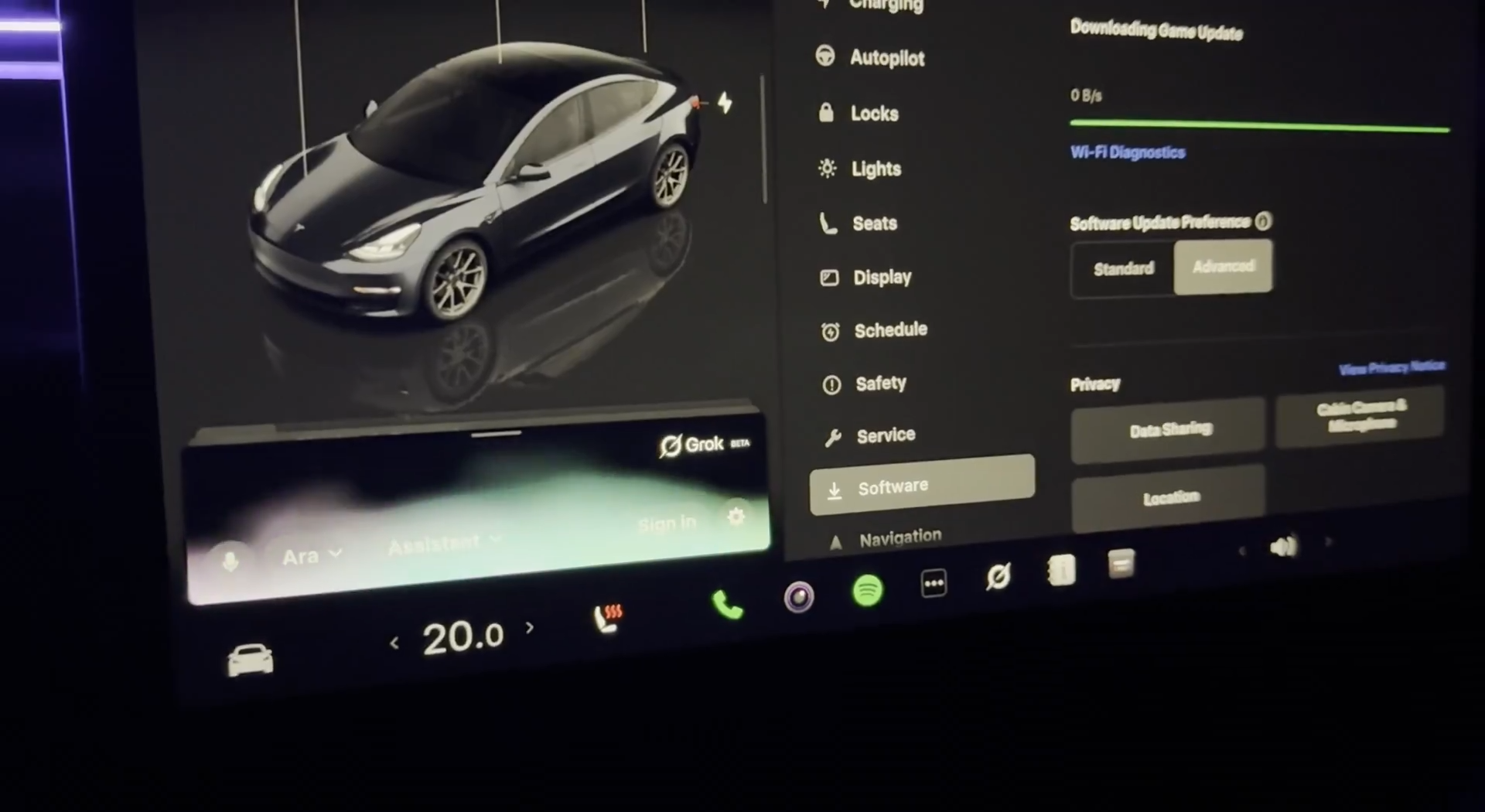
Tesla Integrates Hands-Free Texting Into Grok AI Assistant
Tesla is preparing a major upgrade to its native cabin assistant, expanding the capabilities of the xAI-powered chatbot Grok inside its electric vehicle fleet. Official owner documentation reveals that drivers will soon be able to compose and send text messages using natural voice commands. This addition addresses a long-standing point of friction regarding the automaker's built-in infotainment and voice recognition software stack.
The upcoming text messaging function appeared within recent documentation updates for the Model 3 and Model Y owner manual, tied to software build 2026.26. According to recent vehicle software manual disclosures, selecting the Assistant persona within the Grok interface unlocks the hands-free messaging tool. Users can instruct the system to message contacts directly without taking their eyes off the road or handling a smartphone.
For years, owners have voiced frustration with Tesla's legacy voice-to-text system. Drivers frequently reported delayed response times, audio processing glitches, and inaccurate word transcriptions while dictating messages on the go. Integrating Grok into the messaging pipeline is expected to dramatically increase transcription accuracy, contextual understanding, and response speed by leveraging modern large language model architecture.
Expanding Grok Capabilities to In-Car Messaging
While the text messaging feature is explicitly detailed in official documentation, the functionality remains unactivated in current vehicle builds. Automotive software analysts note that the company typically stages new features inside owner manuals weeks before releasing a final over-the-air firmware deployment or toggling a server-side switch. This signals that feature activation is likely imminent across supported vehicle regions worldwide.
Grok’s role inside the cockpit has expanded rapidly since its initial introduction. Originally deployed to U.S. vehicles in software version 2025.26, the assistant later expanded into additional markets, including Canada via update 2025.38. Initial iterations were largely limited to general knowledge queries, but recent updates have integrated the artificial intelligence model directly into hardware controls and core infotainment systems.
Overhauling In-Cabin Voice Controls
With recent summer software enhancements, Grok gained the ability to execute over one hundred distinct vehicle commands. Passengers can currently use natural phrasing to adjust dual-zone cabin temperatures, toggle seat heating and ventilation, adjust steering wheel warmers, and open the glovebox. The assistant can also locate specific configuration pages within the vehicle’s complex digital menu structure on command.
Beyond climate and vehicle comfort settings, Grok already handles core productivity tasks behind the wheel. Drivers currently utilize the system to place phone calls, search for specific destinations, adjust active navigation routes mid-trip, and manage audio media playback. The system can even parse owner manual documentation in real time to answer technical questions about vehicle operations and features.
Seamless Connectivity and Fleet-Wide Integration
Transitioning text messaging to Grok represents a broader push toward conversational vehicle computing. Traditional automotive voice systems require rigid syntax and exact key phrases to function properly, often frustrating users. By contrast, Grok’s conversational processing allows for contextual adjustments, enabling drivers to dictate complex text messages, revise sentences on the fly, and send communications with minimal cognitive overhead.
The transition also aligns with ongoing industry trends prioritizing hands-free safety behind the wheel. Distracted driving regulations worldwide have prompted automakers to refine voice interaction engines. By offering reliable text dictation, Tesla aims to keep drivers engaged with the road while maintaining seamless digital connectivity to personal and business communications networks without manual phone interaction.
Looking Ahead to Autonomous Navigation Integration
The addition of text messaging is only a stepping stone for Tesla’s broader AI roadmap within its vehicular lineup. Executive disclosures indicate that future updates will merge Grok’s conversational interface directly with the company’s Full Self-Driving autonomous software. This integration will transform how human occupants communicate intent to the autonomous vehicle stack in real time.
Future iterations of the system will reportedly allow occupants to issue complex routing commands using everyday language. Passengers could instruct the vehicle to avoid specific busy intersections, enter a commercial complex through a secondary service gate, or drop off passengers at a precise curbside location. Rather than manually altering touchscreen waypoints, drivers will simply convey preferences naturally.
Industry filings highlight that as vehicle hardware becomes increasingly automated, intuitiveness in human-machine interfaces becomes critical. Replacing static menu structures with a responsive, contextual voice assistant allows passengers to control complex vehicular behaviors effortlessly. The upcoming messaging capability highlights how rapidly conversational artificial intelligence is embedding itself into everyday driving experiences.
As Tesla continues to refine its software stack, the activation of Grok-based text messaging marks another step toward a fully voice-driven vehicle ecosystem. With documentation already public, owners of compatible vehicles can expect the capability to roll out in an upcoming software patch, further blurring the line between personal AI assistants and modern automotive engineering.
