
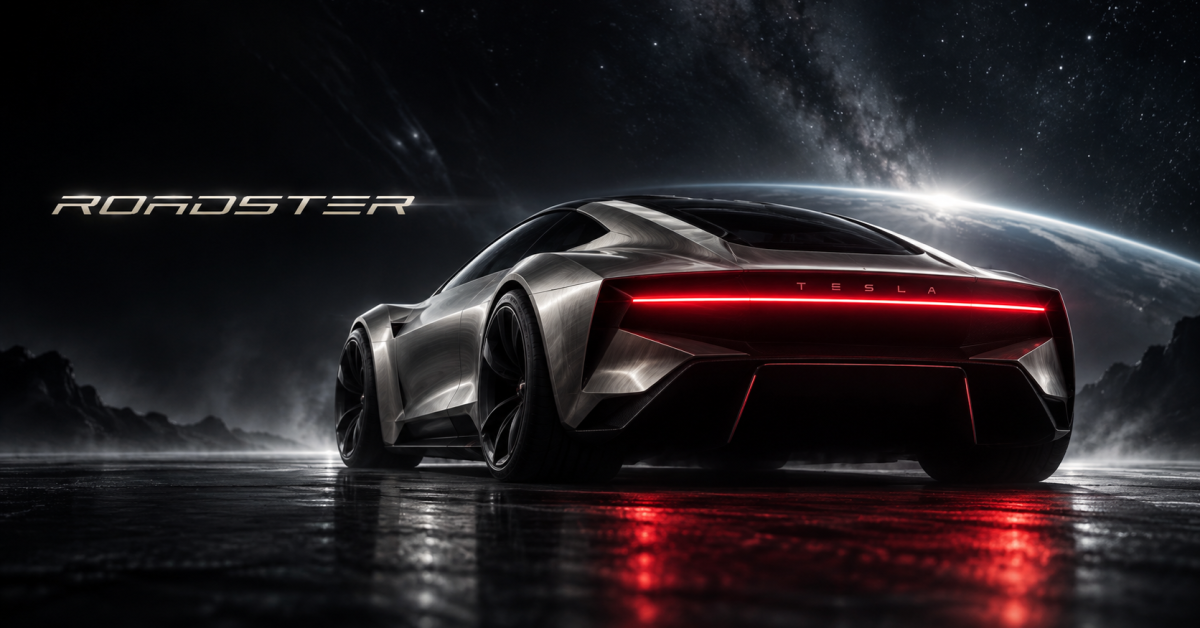
Tesla Roadster Cyber Redesign Teaser Raises Serious Questions
Tesla is finally preparing to unveil the production version of its long-awaited next-generation Roadster on October 1, ending an eight-year wait. However, initial teasers released ahead of the reveal suggest that the flagship supercar has undergone substantial aesthetic modifications. Regulatory disclosures indicate the vehicle appears to incorporate design cues heavily borrowed from the brand's sharp, low-polygon visual language.
The original prototype revealed in late 2017 earned widespread praise for its clean lines, low stance, and timeless sports car silhouette. It immediately established a high benchmark for electric sports cars when battery-powered vehicles were often criticized for awkward proportions. Yet nearly a decade later, industry filings suggest Tesla intends to alter that iconic shape rather than ship the proven concept.
The recent teaser video highlights full-width LED lighting signatures reminiscent of autonomous transport concepts. It also features integrated cold gas thruster nozzles mounted near the rear bumper. While these visual updates signal a high-tech reinvention, automotive analysts suggest applying aggressive futuristic lines to an already beautiful vehicle risks sacrificing timeless elegance for unnecessary visual shock value.
Tesla's Evolving Design Language and Aesthetic Rut
Following the debut of the Model 3 and Model Y, Tesla shifted its overall corporate styling philosophy. The commercial success of its mass-market crossovers allowed the brand to explore radical aesthetics, culminating in the sharp stainless-steel geometry of recent utility vehicles. Yet automotive design analysts note that this shift has gradually locked the electric automaker into a repetitive visual rut.
Rather than introducing varied aesthetics across different vehicle segments, recent concepts have relentlessly leaned into the same brutalist theme. Bolting angular panels and sharp edge profiles onto a dedicated halo supercar creates a clear visual disconnect. High-end sports car buyers typically seek sculpted aerodynamic efficiency rather than blocky motifs that mirror driverless urban fleet vehicles.
The original Roadster stunned the automotive world because it combined hypercar performance with elegant, classic proportions at a fraction of traditional exotic prices. Abandoning those sleek curves in favor of a divisive geometric theme risks alienating early deposit holders. Industry watchers argue that Tesla is confusing novelty with genuine improvement, altering a successful blueprint simply to generate news headlines.
Cold Gas Thrusters and the Promise of Flight
The primary focal point of the upcoming Texas reveal event centers around the optional SpaceX performance package. Incorporating compressed gas thrusters powered by high-pressure storage tanks, the system allegedly allows the vehicle to achieve zero-to-sixty acceleration times under one second. Company leadership has repeatedly touted this feature, hinting that the car might even briefly levitate above the asphalt.
However, technical documentation and preliminary testing logs reveal significant real-world limitations to this aerospace hardware. The extreme noise levels generated by high-velocity gas expulsion make the system unfeasible for residential environments. Consequently, demonstration runs will reportedly be operated via remote control without human occupants, confirming that the high-output thruster configuration remains far from street-legal for daily driving.
Beyond regulatory hurdles, cold gas thrusters present severe practical trade-offs for driver utility. The high-pressure tanks add substantial weight, reduce cargo space, and require long recharge cycles between brief bursts of thrust. For a road-going sports car, these heavy mechanical additions function primarily as an expensive track gimmick rather than a meaningful enhancement to performance or handling.
Eight Years of Delays and Moving Goalposts
When reservations first opened in 2017, customers were promised a revolutionary vehicle featuring a 620-mile driving range, a top speed exceeding 250 miles per hour, and four-seat practicality. Enticed by these specifications, buyers quickly paid fifty-thousand-dollar deposits, while an exclusive Founders Series run priced at two hundred fifty thousand dollars sold out under expectations of a 2020 delivery.
Instead of entering volume assembly, the vehicle faced at least eight distinct public timeline deferrals over the subsequent years. As deadlines slipped, prominent early reservation holders publicly canceled their orders, expressing frustration over shifting priorities. Industry filings indicate engineering resources were systematically diverted toward scaling mass-market assembly lines and developing commercial trucks instead of completing the halo supercar.
Financial analysts and former automotive executives suggest that the prolonged delay served a broader strategic purpose beyond technical hurdles. Periodically updating the halo car project allows the company to generate positive publicity cycles ahead of critical corporate milestones. By continuously raising performance claims and adding extravagant features, the brand maintains consumer excitement without committing low-volume assembly resources.
What Tesla Should Actually Deliver to Buyers
Rather than chasing extreme gimmicks like cold gas thrusters or radical sheet metal redesigns, automotive experts maintain that Tesla should simply fulfill its original vision. The core specifications announced nearly a decade ago—sub-two-second acceleration, massive battery range, and low-drag aerodynamics—remain highly competitive against modern electric hypercars, making major exterior revisions entirely unnecessary for commercial success.
Updating the 2017 design with modern battery chemistry, updated infotainment hardware, and advanced software would deliver the exact machine early backers paid to secure. Reservation holders signed up for a breathtaking, ultra-fast roadster that could outrun traditional internal combustion exotics. Delivering a production-ready version of that original concept would restore confidence among long-time brand loyalists.
Ultimately, the automotive market values real-world execution over perpetual reinvention. The electric vehicle landscape has evolved dramatically since 2017, with legacy competitors launching high-performance models of their own. To maintain its halo appeal, Tesla must focus on putting finished vehicles into customer garages. Stripping away unnecessary novelties and shipping the promised car is the only statement needed.
