
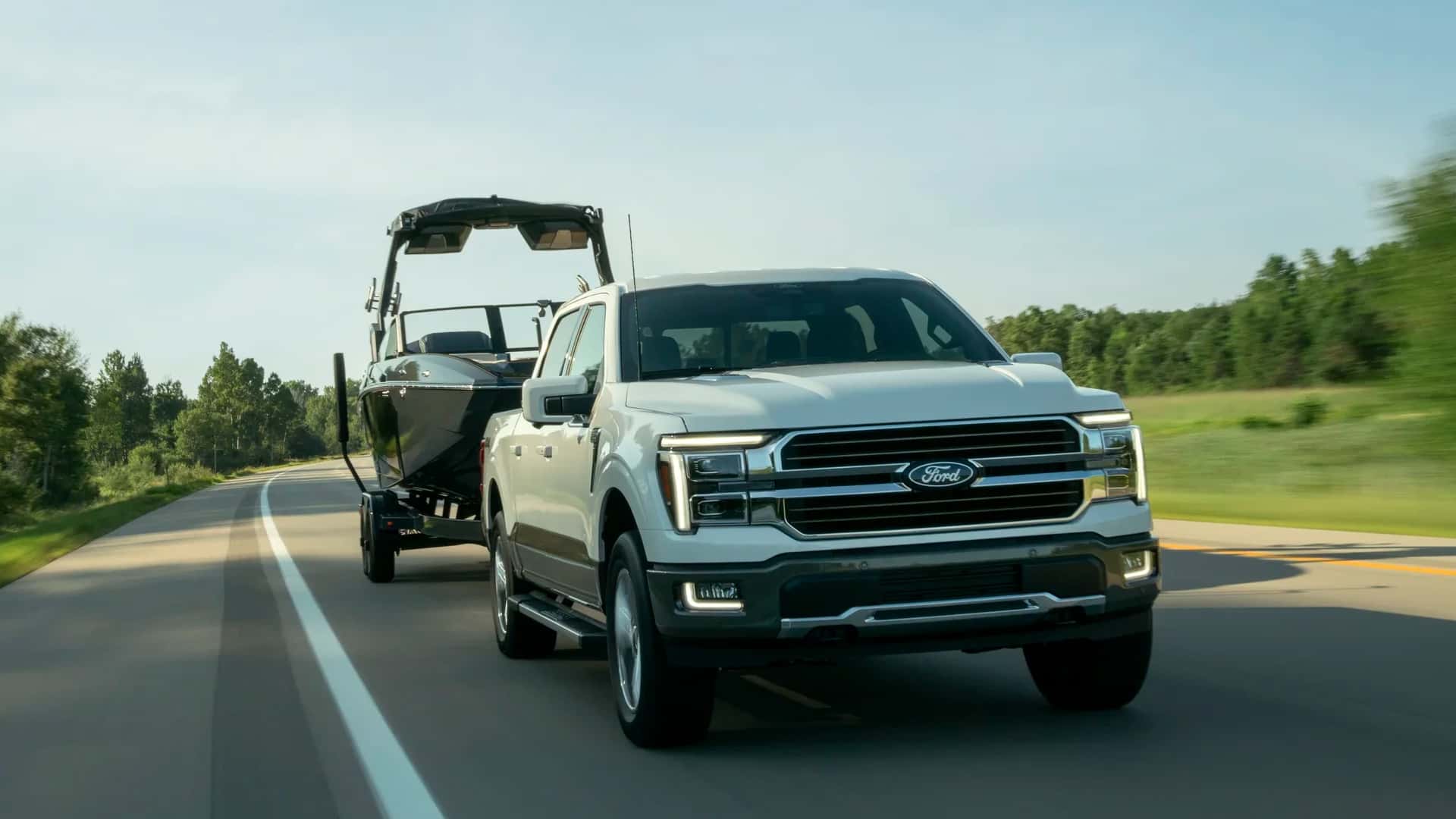
2027 Ford F-150 Introduces Hands-Free BlueCruise Towing
Ford has announced a significant evolution in its driver-assistance technology, bringing hands-free trailering capability to its flagship pickup truck. The 2027 Ford F-150 will feature an updated version of BlueCruise capable of managing vehicle steering, acceleration, and braking while hauling a heavy load. This long-awaited update addresses a core demand from truck buyers who regularly rely on their vehicles for heavy-duty transportation needs.
Towing represents a central function for pickup owners, making automated highway driving assistance a logical next step for vehicle development. Company disclosures reveal that over three-quarters of F-150 owners utilize their trucks for towing tasks. By expanding driver-assistance capabilities to include trailed loads, the automaker seeks to enhance long-distance driving comfort while maintaining rigorous vehicle control parameters.
Engineering Solutions for Complex Towing Dynamics
Integrating automated driving controls with a towed load required solving immense engineering and software challenges. According to technical briefs released by the manufacturer, developing BlueCruise with Towing was among the most complex software endeavors in the company's history. Engineers had to account for unpredictable forces like crosswinds, changing load distribution, and varying trailer lengths on highway stretches.
When pulling heavy equipment or recreational trailers, vehicle dynamics change dramatically compared to unladen driving. The upgraded system processes continuous sensor data to balance steering inputs and maintain precise lane centering. It also manages distance pacing, accounting for the extended stopping distances required when pulling up to 10,000 pounds of combined vehicle and cargo weight.
Advanced software algorithms continuously calculate real-time feedback from the chassis, steering column, and braking components. If the system detects dynamic instabilities such as trailer sway, it responds instantly by applying target wheel braking or instructing the driver to resume control. This constant monitoring ensures the vehicle operates within established stability limits without jeopardizing highway safety.
Essential Rules and Safety Boundaries for Drivers
Despite its advanced automated capabilities, the updated BlueCruise system remains classified as a Level 2 driver-assistance feature. Drivers must maintain active visual focus on the road ahead and be prepared to intervene at any moment. To prevent misuse, integrated infrared driver-monitoring cameras continuously track eye movement and head posture while the feature remains engaged.
Operating the hands-free trailering feature requires preliminary setup before engaging the automated system on eligible highways. Drivers must configure a dedicated trailer profile within the infotainment system, entering precise physical dimensions and tongue weight estimates. Without verified profile information, the software automatically restricts hands-free operation to ensure proper system calibration.
Operational limitations are strictly enforced to preserve highway safety during trailering maneuvers. The system automatically disengages or prevents activation in designated construction zones, tight curves, or adverse weather conditions. Furthermore, hands-free trailering is strictly capped at speeds up to 75 mph, and automatic lane changes are entirely disabled while towing.
Catching Up in the High-Stakes Truck Tech Race
The addition of hands-free towing capabilities brings Ford's driver-assist technology into direct competition with key industry rivals. Competitors in the full-size pickup segment have offered trailering support on mapped highways for several model years. Closing this feature gap allows the manufacturer to retain tech-focused buyers in an increasingly competitive truck market.
Industry analysts note that driver-assistance technologies are rapidly becoming critical purchasing factors for modern truck owners. Last year alone, users accumulated over 118 million hands-free miles using previous iterations of the software. Expanding the feature's operational envelope to encompass trailering directly serves a user base that spends extensive time on long-distance highway routes.
The ongoing technological arms race among major truck manufacturers emphasizes continuous over-the-air software updates and refined hardware integration. As highway driver aids mature, automakers are focusing on specialized commercial and recreational use cases. Providing hands-free trailering reinforces how deep software integration is transforming traditional utility vehicles into sophisticated tech platforms.
Widespread Availability Across Model Trims
Rather than restricting the feature exclusively to top-tier luxury packages, the manufacturer plans broad deployment across the lineup. Nearly every trim level of the 2027 F-150 will support hands-free trailering functionality. Only the entry-level XL work truck and STX trims will exclude the technology as standard or optional equipment.
Broad trim availability ensures that fleet buyers, mid-range consumers, and premium truck enthusiasts can access the technology. By democratizing advanced driver-assist tools across the model range, the company aims to accelerate widespread consumer adoption while collecting vast operational fleet data to continuously refine future autonomous driving capabilities.
As the 2027 model year approaches, hands-free towing highlights the ongoing convergence of heavy utility vehicles and autonomous software engineering. For truck owners traveling long distances with trailers, the enhanced system promises reduced driver fatigue, improved stability management, and a refined highway driving experience across North America’s expanding mapped highway networks.
