
The Boring Company Files New Permits for Giga Texas Tunnel
The Boring Company has officially submitted new site plans for an ambitious subterranean project located directly adjacent to Tesla’s major manufacturing hub in Central Texas. According to recent regulatory disclosures, the infrastructure firm intends to build a specialized passageway designed to navigate critical local geographical features. The submission highlights growing interest in expanding specialized transit options around the manufacturing facility.
Identified in public records as the Tesla Colorado River Tunnel, the proposed project focuses on establishing a dedicated conduit beneath regional waterways. The application indicates that the construction would be handled by TBC Project Development, a key subsidiary associated with the infrastructure firm. The filing marks a renewed effort to establish dedicated underground paths near the automotive manufacturing complex.
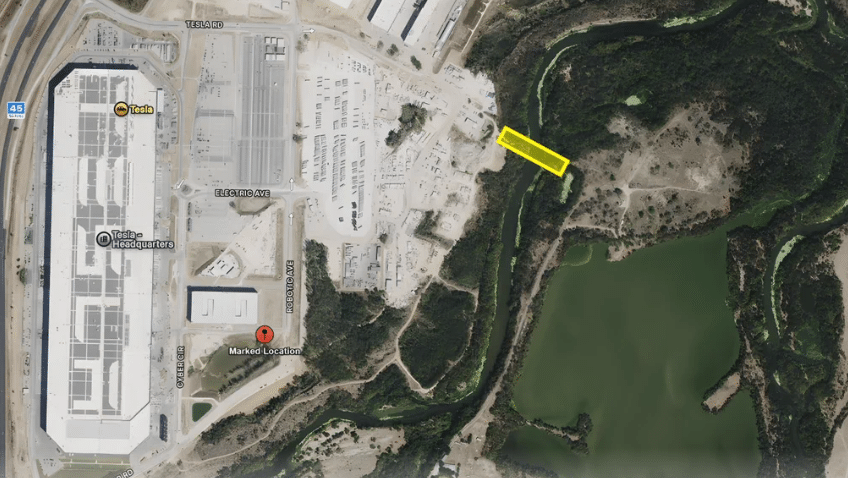
Local planning documentation reveals that the infrastructure proposal would create a direct connection beneath the Colorado River. This subterranean route is intended to link key zones surrounding the vehicle factory with neighboring real estate parcels. Industry analysts note that subterranean projects near major manufacturing sites often aim to streamline logistics and localized transit networks.
Engineering Specs and Colorado River Route Details
Detailed engineering diagrams included with the municipal filings outline a specific route designed to cross underneath the Colorado River. The application targets a key exit and entry terminus situated at 1000-1/2 Fallwell Lane. This specific geographic point highlights a targeted approach to connecting isolated parcels situated along opposite banks of the active riverway.
According to project documents, the proposed infrastructure will feature a single-lane connector tunnel built using customized subterranean boring technologies. By deploying a single-lane layout, the design prioritizes efficient, unidirectional or managed traffic flow beneath natural barriers. This focused configuration aligns with standard transit layouts previously deployed or planned by the subterranean infrastructure enterprise.
While the official site plans explicitly outline the subterranean path and surface connection points, the current permit application does not specify an exact overall length. Regulatory filings note that critical dimensional figures remain open as municipal authorities review the initial site plan concepts. Further technical amendments may clarify these metrics as engineering evaluations proceed.
Reviving and Updating the 2022 Tunnel Proposal
This recent regulatory submission represents the second time that The Boring Company has formally proposed a major tunneling initiative adjacent to Giga Texas. Local municipal records indicate that an earlier infrastructure concept was previously submitted for public review before development stalled. The renewed activity suggests a revived organizational focus on resolving local transit challenges.
The prior attempt, historically known as the Colorado River Connector Tunnel, was originally conceptualized as a private access passageway for industrial and operational use. However, that initial proposal failed to advance through the full regulatory approval pipeline and ultimately did not move forward into active construction. The initial project was shelved prior to ground breaking.
Despite the past delay, the latest filing appears to serve as an updated revision of the 2022 proposal. Comparative analysis of the municipal records shows nearly identical engineering plans, alignment markers, and technical drawings. The updated submission suggests the core structural design concepts developed during the initial planning phase remain active.
Structural Scope and Projected Path Dimensions
If the current engineering plans remain consistent with the original 2022 blueprints, the single-lane passageway would cover a significant geographic distance. Calculations derived from the underlying architectural drawings indicate that the tunnel would stretch roughly 2 miles from point to point. This multi-mile subterranean route would bridge significant distances beneath sensitive water features.
Establishing a two-mile subterranean corridor under a major waterway requires extensive geological assessments and municipal coordination. Site documentation shows that engineers are carefully planning the trajectory to safely pass underneath the riverbed while reaching surface access points cleanly. The scale underscores the technical complexity involved in executing private subterranean connections.
The decision to resubmit these engineering designs signals that site developers have refined their approach to navigating local land requirements. By leveraging existing spatial data and survey plans from the previous attempt, the project proponent seeks to streamline the administrative review process with city and county planning departments.
Unanswered Questions Regarding Operational Purpose
Despite the submission of detailed layout drawings, the documentation provided by TBC Project Development leaves several key operational details unaddressed. Crucially, the filing does not disclose what specific types of vehicles or transit systems will utilize the single-lane connector once finished. It remains unconfirmed whether automated transport or specialized freight transit is intended.
Furthermore, regulatory papers omit information regarding whether the electric vehicle manufacturer plans future industrial or commercial developments on the adjacent River Road site. The lack of detailed operational disclosures has left local observers uncertain about the exact functional relationship between the manufacturing complex and the newly targeted Fallwell Lane terminus.
As municipal agencies initiate their evaluation of the submitted site plans, additional public filings may be required to clarify operational safety and usage scope. Industry observers expect further disclosures to emerge as regulatory reviews progress, shedding light on how this specialized single-lane connector fits into broader regional infrastructure plans.
