The Boring Company Reaches $23B Valuation In UAE-Led Round
Elon Musk’s subterranean transit enterprise, The Boring Company, has officially secured a massive $3 billion Series D funding round. According to recent corporate disclosures, this major cash infusion skyrockets the infrastructure firm's post-money valuation to an unprecedented $23 billion. The capital raise marks a significant milestone for the venture as it shifts from localized domestic projects toward aggressive international expansions across global metropolitan corridors.
The newly secured funds will primarily back an ambitious international infrastructure campaign, with an emphasis on rapid deployment. Lead investors and strategic partners expect the cash injection to dramatically accelerate manufacturing timelines for Prufrock, the company’s proprietary high-speed tunnel boring machine designed to dig continuously while placing concrete tunnel lining.
Middle Eastern Infrastructure Push Takes Center Stage
The sovereign fund of the United Arab Emirates spearheaded the funding round, laying the groundwork for a transformative transit partnership. Corporate announcements confirm that the company plans to excavate more than 150 kilometers of underground tunnels within the Gulf nation. This mega-project represents the firm's largest physical commitment to date, eclipsing its current domestic transit networks.
Middle Eastern urban centers have increasingly turned to futuristic transit models to alleviate severe surface congestion caused by rapid population growth. By committing to over 90 miles of subterranean pathways, regional planners aim to connect key commercial hubs and airport terminals via zero-emission vehicle loops, establishing a scalable template for regional high-speed infrastructure.
This monumental commitment highlights a pivotal pivot in international transit investments. Sovereign funds in the region are prioritizing subterranean transport corridors that leave surface real estate untouched for commercial and residential development. Analysts note that successfully delivering 150 kilometers of functional tunnels could fundamentally alter standard urban planning frameworks across dense global cities.
Heavyweight Venture Backing Drives Sky-High Valuation
In addition to the anchor commitment from the Middle East, prominent Silicon Valley venture capital institutions joined the Series D syndicate. Longtime financial backers including Andreessen Horowitz, Sequoia Capital, Human Capital, Vy Capital, and Valor Equity Partners participated heavily in the transaction, signaling strong institutional confidence in the company’s underlying autonomous transport architecture.
Financial market disclosures previously indicated that the infrastructure firm had explored raising as much as $4 billion earlier in the year. Although the finalized figure landed at $3 billion, the resulting $23 billion valuation underscores immense investor appetite for disruptive transportation alternative assets despite broader macroeconomic headwinds in private tech capital markets.
The dramatic step-up in valuation reflects broader market enthusiasm for automated point-to-point transit systems over traditional, capital-intensive light rail developments. Investors view the company's proprietary excavation hardware as a potential dual-revenue mechanism, generating substantial returns through both municipal infrastructure contracts and ongoing operational fees derived from high-frequency commuter shuttle networks.
Expanding Domestic Operations Beyond Las Vegas
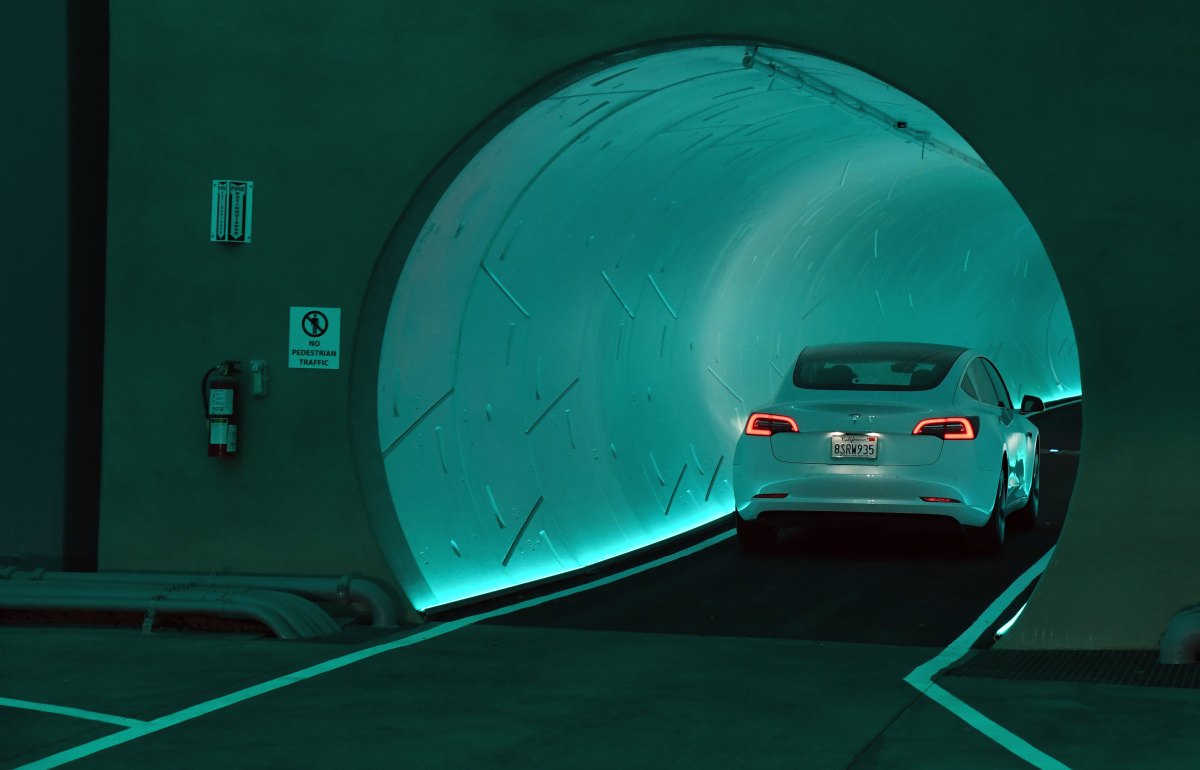
Prior to this international expansion, the tunneling outfit focused its operations primarily on proof-of-concept networks within the United States. Las Vegas, Nevada served as the primary proving ground, where operational loops currently transport visitors beneath the city's main convention center and connect key hotel-casino properties along the world-famous resort corridor.
Building on its Nevada track record, the firm recently initiated construction activities in Nashville, Tennessee. Municipal filings confirm that the proposed Tennessee project envisions a 10-mile underground transit loop connecting downtown commercial centers to suburban transit hubs, aimed at easing severe surface traffic along the city's busiest arterial commuter routes.
The company's core mission remains centered on eliminating soul-crushing traffic through a multi-layered, three-dimensional network of subterranean tunnels. By moving passenger vehicles and zero-emission transit pods off surface streets into dedicated underground channels, the company aims to dramatically shorten intra-city transit times without disrupting existing surface architecture.
Engineering Realities and The Path to Scale
Despite successful fundraising efforts, scaling tunnel construction presents monumental engineering and regulatory challenges. Geotechnical variability, utility relocation, and local environmental permits often delay subterranean projects. To fulfill its massive Middle Eastern deployment targets, the company must demonstrate that its next-generation boring rigs can sustain significantly faster excavation speeds than conventional industrial machinery.
Furthermore, operational safety and tunnel throughput remain central to municipal regulatory approvals worldwide. High-capacity transit systems require robust fire suppression, emergency egress tunnels, and advanced ventilation systems to handle dense vehicle traffic. Proving these safety mechanisms across 150 kilometers of international infrastructure will serve as a crucial benchmark for global regulatory acceptance.
Integrating fully autonomous vehicle fleets into high-speed subterranean environments presents another critical engineering milestone. While initial loop operations have relied on human drivers navigating enclosed pathways, long-term economic models depend on transitioning to fully automated shuttle fleets capable of operating at tighter follow distances and significantly higher speeds.
The Future of Underground Urban Mobility
As urban populations swell worldwide, traditional surface infrastructure faces severe space constraints and escalating land acquisition costs. Subterranean transportation networks offer a viable alternative by utilizing vertical space beneath existing metropolitan areas, enabling rapid point-to-point transit without taking up precious surface land needed for housing and commerce.
The $3 billion Series D funding round provides the necessary capital runaway for the firm to prove its technology on a global scale. If the upcoming 150-kilometer Gulf project meets performance expectations, it could mark a historic turning point in urban transit design, proving that underground loops offer a faster, cheaper alternative to traditional subways.
