
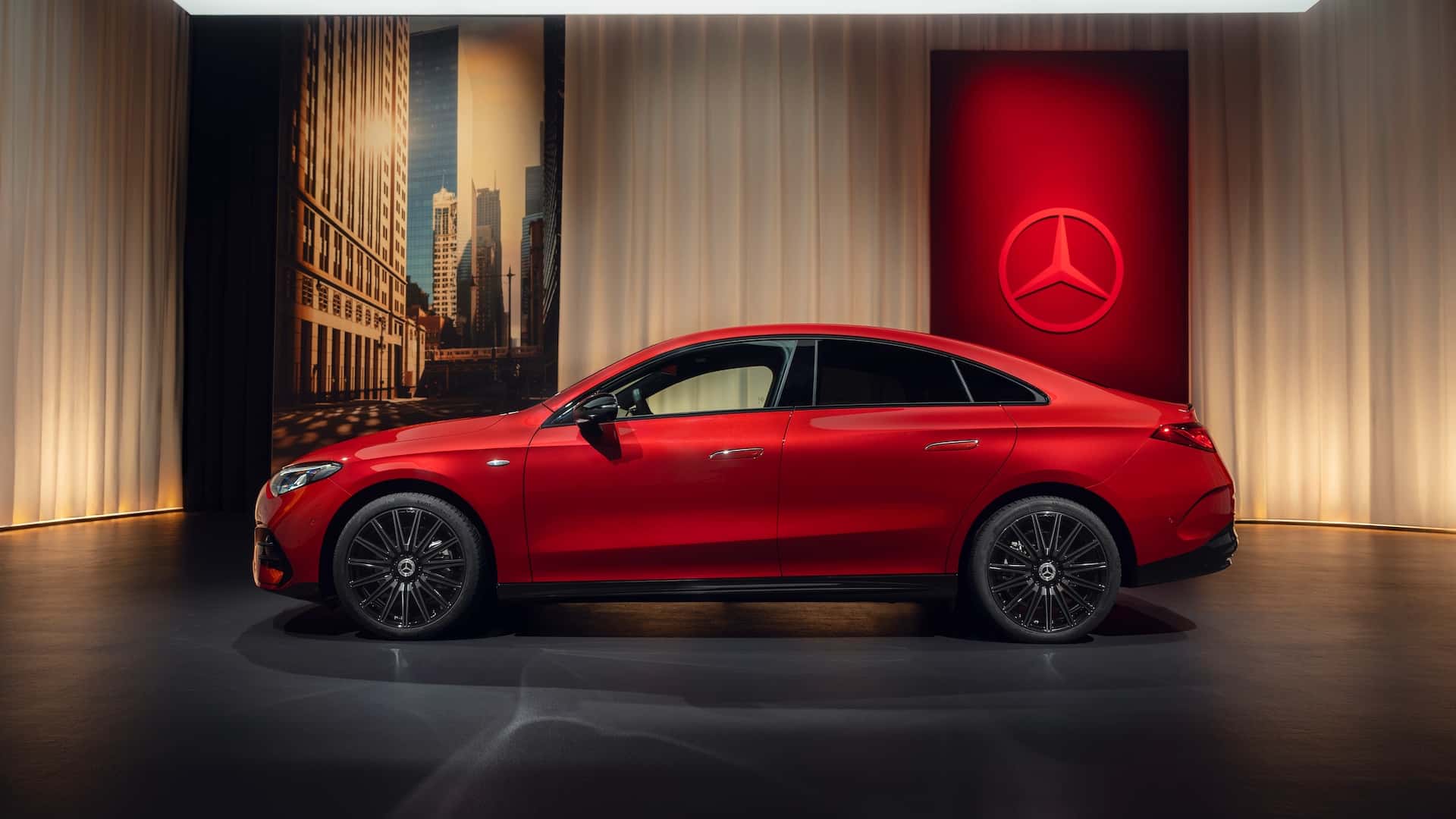
Mercedes-Benz CLA Establishes New Fast Charging EV Standard
High-Speed Charging Meets Real-World EV Efficiency
As the automotive industry transitions to electric propulsion, long-distance viability remains a critical metric for buyers. The Mercedes-Benz CLA is proving to be a formidable contender in this space, combining impressive highway efficiency with exceptionally fast energy replenishment. Recent real-world evaluations demonstrate that the compact luxury sedan outperforms many established rivals, positioning it among the fastest-charging vehicles available in the North American market today.
Crucial to its road-trip appeal is the vehicle's ability to maintain high efficiency at elevated speeds. In independent highway range testing conducted at a steady 70 mph, the all-wheel-drive CLA 350 4Matic achieved a notable 385 miles on a single charge. This result comfortably surpasses standard regulatory estimates, offering drivers genuine long-range capability that minimizes the need for frequent highway service stops.
Beyond raw range, the entry point for this technology makes the sedan particularly compelling. Starting at $49,400, the CLA brings top-tier charging architecture into a relatively accessible price bracket. For luxury EV buyers seeking rapid turnaround times without moving into six-figure super-sedan territory, the CLA represents a strong value proposition in an increasingly competitive marketplace.
Analyzing the Real-World Rapid Charging Curve
Peak charging speed often grabs headlines, but sustained charging curves determine how quickly a vehicle returns to the road. To evaluate the CLA under demanding conditions, independent automotive testers depleted the vehicle's battery pack down to essentially zero percent state of charge before plugging into ultra-fast DC fast chargers capable of delivering up to 400 kW of power output.
The vehicle demonstrated immediate performance upon plugging in, ramping up to a peak power intake of nearly 350 kW within the first minute of the session. While the sedan held this maximum speed briefly, it maintained impressive velocity early on. Energy delivery remained above 300 kW until the battery crossed the 10 percent threshold, ensuring a rapid initial boost of range.
As the battery filled, power tapered off smoothly rather than experiencing sharp drop-offs. By 20 percent capacity, the CLA continued pulling power in the mid-200 kW range, before settling near 160 kW at the 30 percent mark. Notably, even as the battery reached 75 percent capacity after 25 minutes, the vehicle maintained intake speeds exceeding 150 kW.
Thermal Management and Station Performance
Battery preconditioning plays a vital role in optimizing charge speeds by bringing the pack to ideal temperatures prior to plugging in. Testers conducted back-to-back charging sessions to measure this effect, running one trial with thermal preconditioning activated and another without it. Both tests took place under stable, warm summer ambient conditions on separate high-powered charging stations.
Interestingly, the session without active preconditioning performed almost identically to the preconditioned run, even staying roughly one percent ahead throughout the charge curve. Industry analysts note that warm ambient summer weather allowed the battery to reach optimal working temperature naturally. Thermal preconditioning would likely yield far more pronounced differences when navigating colder winter climates.
Total session duration from complete depletion to 100 percent capacity took 52 minutes on a 350 kW dispenser and 56 minutes on a 400 kW unit. The slight variation between charging stations highlights how real-world grid delivery, station load, and minor temperature fluctuations can influence total time when filling an EV battery completely to its maximum capacity.
Time at the Pump: What Minutes Mean for Highway Miles
For typical highway drivers, full 100 percent charges are rare, making the speed of partial fills far more relevant. The CLA demonstrated exceptional speed in early replenishment, hitting 10 percent battery capacity in just two minutes and 25 seconds. By five and a half minutes, the pack had reached 25 percent, expanding to nearly 40 percent in ten minutes.
Within 15 minutes of plugging in, the sedan successfully recouped 50 percent of its total energy capacity. Given the real-world efficiency observed during highway testing, this brief quarter-hour stop restores roughly three hours of continuous driving at 70 mph. That performance allows drivers to align necessary charging breaks with routine rest stops for coffee or food.
In the common 10 to 80 percent charging window, field evaluations recorded a completion time of 26 minutes. While official manufacturer claims suggest an 80 percent charge can be completed in 22 minutes under ideal laboratory conditions, the real-world figure remains highly competitive, solidifying the model as a capable option for transcontinental road trips.
Value Proposition in the Premium EV Landscape
Comprehensive data ranks the Mercedes-Benz CLA comfortably within the top five fastest-charging electric vehicles evaluated by independent automotive researchers. By focusing on sustained high-kilowatt power delivery across the middle of the battery curve, Mercedes has engineered a vehicle that minimizes station downtime without requiring ultra-expensive battery configurations.
Ultimately, the combination of sub-30-minute charging windows, a robust real-world range near 400 miles, and an approachable sub-$50,000 base price positions the CLA as a benchmark for long-distance electric mobility. For commuters and road-trippers alike, it demonstrates that efficiency and charging speed remain the true keys to seamless EV ownership.
