
Slate Electric Pickup Offers Simple DIY Trailer Hitch Setup
The landscape of affordable electric transportation is preparing for a major shift as the Slate electric pickup nears its official market debut. Positioned to take the crown as America’s cheapest new electric vehicle, the compact utility truck enters the market with a base price of $26,400, challenging existing assumptions regarding EV accessibility.
Achieving such an entry-level price point requires a departure from traditional automotive manufacturing strategies. Rather than shipping fully equipped trim levels loaded with standard features, the manufacturer designed the pickup as a stripped-down platform. Anything beyond basic driving essentials is offered as an optional add-on extra, giving buyers total control over their final vehicle investment.
Central to this design ethos is an emphasis on self-service installation and user-driven modularity. Company disclosures emphasize that the vehicle was engineered to be exceptionally do-it-yourself-friendly. Owners are encouraged to handle basic maintenance tasks and install structural accessories themselves, avoiding typical dealer labor charges associated with vehicle upgrades.
A Modular Approach to EV Towing
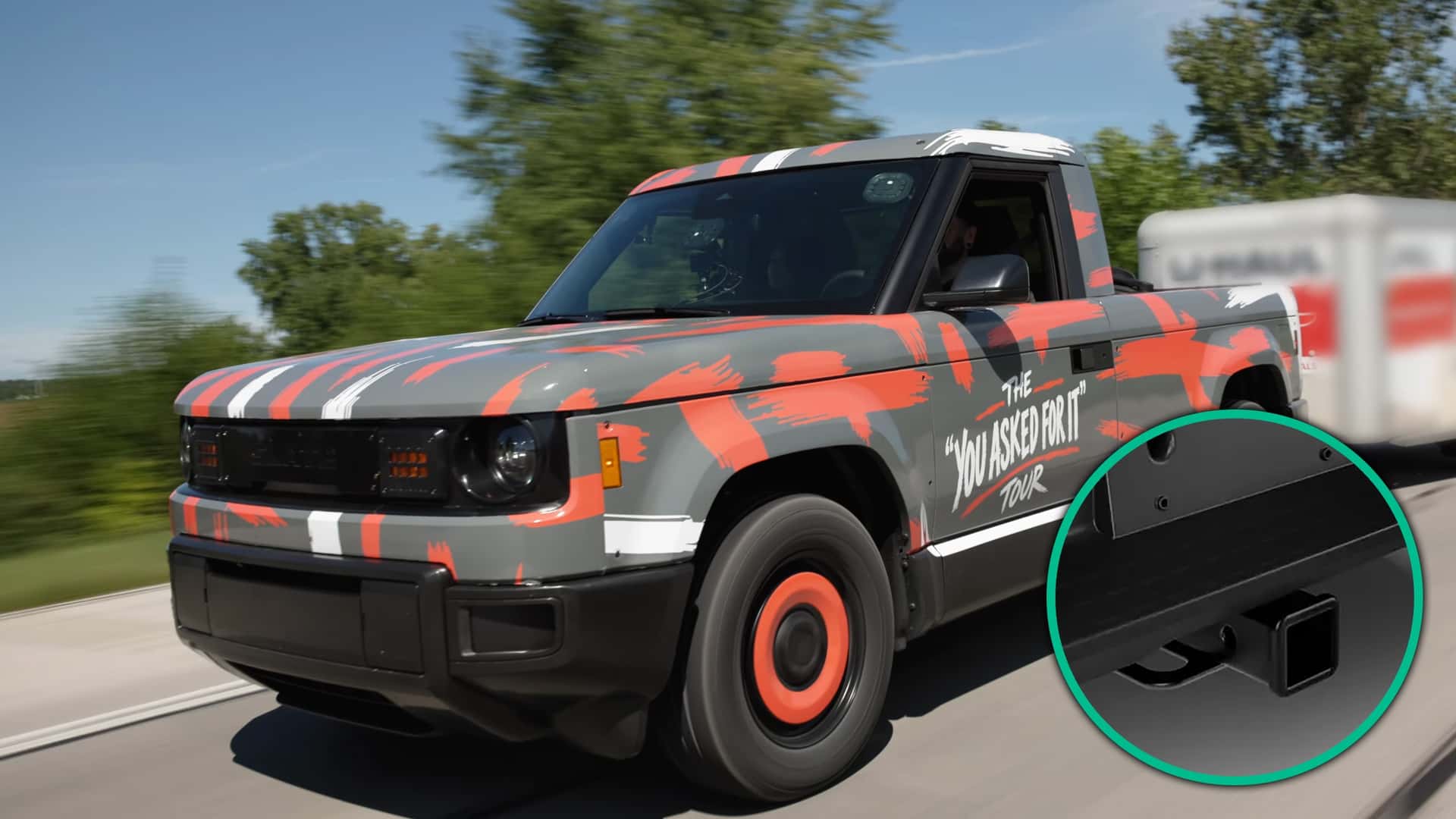
Demonstrating this hands-on philosophy is the truck’s newly detailed trailer hitch receiver option. Listed at a budget-friendly price point of $99.99, the package provides a standard two-inch receiver unit. Technical demonstrations indicate that securing the assembly to the rear chassis requires only four mounting bolts, streamlining what is usually a complex modification.
According to installation documentation, the process takes anywhere from 30 minutes to two hours depending on mechanical experience. Crucially, the job does not require specialized machinery or custom fabrication. Promotional material reveals that a basic set of hand wrenches is essentially all that is required to mount the assembly securely.
Once mounted, the standard receiver unlocks significant utility for the entry-level electric truck. Beyond basic towing, the receiver allows drivers to attach popular aftermarket accessories, including vertical bike racks, rear cargo baskets, and specialized gear carriers. This modularity allows buyers to tailor the vehicle without paying upfront for unused equipment.
Understanding Towing Limits and Wiring Options
Despite its compact footprint—measuring nearly nine inches shorter than a standard Hyundai Ioniq 5 crossover—the vehicle maintains genuine workhorse credentials. Technical specifications confirm a maximum towing capacity of 2,000 pounds. While not intended for heavy commercial loads, this capacity easily handles small utility trailers, light watercraft, or modest teardrop campers.
While the mechanical attachment is straightforward, details regarding electrical integration remain somewhat ambiguous. Recent instructional media highlights exposed wiring leads beneath the rear bumper during the hitch mounting process. However, official product listings for the $99.99 receiver kit currently omit any specific mention of an included electrical wiring harness.
Prior customer correspondence from company representatives indicated that a four-pin electrical cable would be offered as an accessory. The absence of a separate harness entry on the official portal suggests two possibilities: the truck may feature a factory-concealed wiring harness, or a dedicated electrical kit will launch prior to deliveries.
Powertrain Specs and Range Expectations
Underneath its utilitarian exterior, the electric pickup features a straightforward mechanical layout built for efficiency. Propulsion is supplied by a single rear-mounted electric motor delivering 181 horsepower (135 kilowatts). This rear-wheel-drive configuration provides responsive low-speed torque suitable for launching loaded trailers while keeping mechanical complexity to a minimum.
Energy storage is managed by a 65-kilowatt-hour lithium-iron-phosphate (LFP) battery pack. LFP battery chemistry offers distinct advantages for work trucks, including enhanced thermal stability, long cycle life, and lower production costs. Under standard testing conditions, this battery setup delivers an estimated maximum driving range of 205 miles when unladen.
Prospective owners must note that pulling a trailer will inevitably reduce driving range due to added aerodynamic drag and weight. Drivers planning long-distance towing trips must account for increased energy consumption. However, the vehicle’s charging capabilities help mitigate downtime, utilizing an integrated North American Charging Standard (NACS) port.
When connected to a compatible high-power DC fast charger, the LFP battery pack can charge from 20 percent to 80 percent in approximately 30 minutes. The inclusion of the native NACS connector ensures seamless access to expansive fast-charging networks across the country, allowing drivers to recharge quickly during highway travel.
Redefining Entry-Level Electric Trucks
By combining an ultra-low base price with high modularity, the Slate electric pickup creates a compelling case for budget-conscious fleet operators and suburban homeowners alike. The simplified $99.99 trailer hitch receiver reflects a broader philosophy where buyers only pay for exact features they need, installing them without dealer markups.
As production models prepare to hit public roads, industry observers will watch how well consumers embrace this minimalist vehicle model. If successful, this bare-bones electric truck could provide a proven template for future low-cost utility vehicles, proving that functional electric mobility does not require a premium luxury price tag.
