
New York City Deploys 700 Sleek Curbside EV Chargers
New York City is embarking on a major transformation of its urban EV infrastructure through a new contract with Brooklyn-based startup It’s Electric. Over the next three years, the city plans to install 700 sleek Level 2 curbside chargers across all five boroughs. This initiative addresses a longstanding barrier for urban drivers who lack dedicated garage parking or private driveways.
For years, apartment-dwelling electric vehicle owners in dense metropolitan areas faced distinct challenges, often resorting to creative yet impractical charging methods. While suburban drivers benefit from cheap home charging setups, urbanites have historically navigated a fragmented landscape of public fast-charging stations. The new municipal deployment aims to seamlessly integrate charging directly into standard city street parking spaces.
The citywide expansion builds on momentum from earlier municipal pilots, which demonstrated overwhelming demand for street-level charging infrastructure. Regulatory disclosures reveal that initial test sites experienced extraordinary usage, remaining occupied by active electric vehicles up to 99 percent of the time. The massive utilization rates proved that curbside Level 2 hardware provides an essential bridge for urban electrification efforts.
Solving the Urban Electric Vehicle Charging Dilemma
Across major North American metros, public charging infrastructure has historically lagged behind vehicle adoption. Beyond suburban corridors where private garages dominate, dense urban centers like New York, Boston, and Philadelphia have frequently been described as charging deserts. While high-powered DC fast chargers capture headlines, experts emphasize that accessible Level 2 curbside units are equally vital for daily vehicle utility.
The primary motivation behind this aggressive infrastructure expansion stems from municipal sustainability mandates aimed at curbing greenhouse gas emissions. City officials have established ambitious mandates requiring all rideshare platforms to operate zero-emission fleets by 2030. Achieving this goal requires providing tens of thousands of commercial drivers with convenient, cost-effective overnight charging options near their homes.
By shifting focus toward neighborhood-based curbside equipment, transportation planners hope to alleviate systemic bottlenecks in the local charging grid. Without accessible neighborhood power points, drivers are forced to travel out of their way, accumulating unpaid miles and adding congestion to already overburdened transit corridors. Curbside solutions effectively integrate charging into existing parking routines.
Innovative Hardware Built Specifically for City Streets
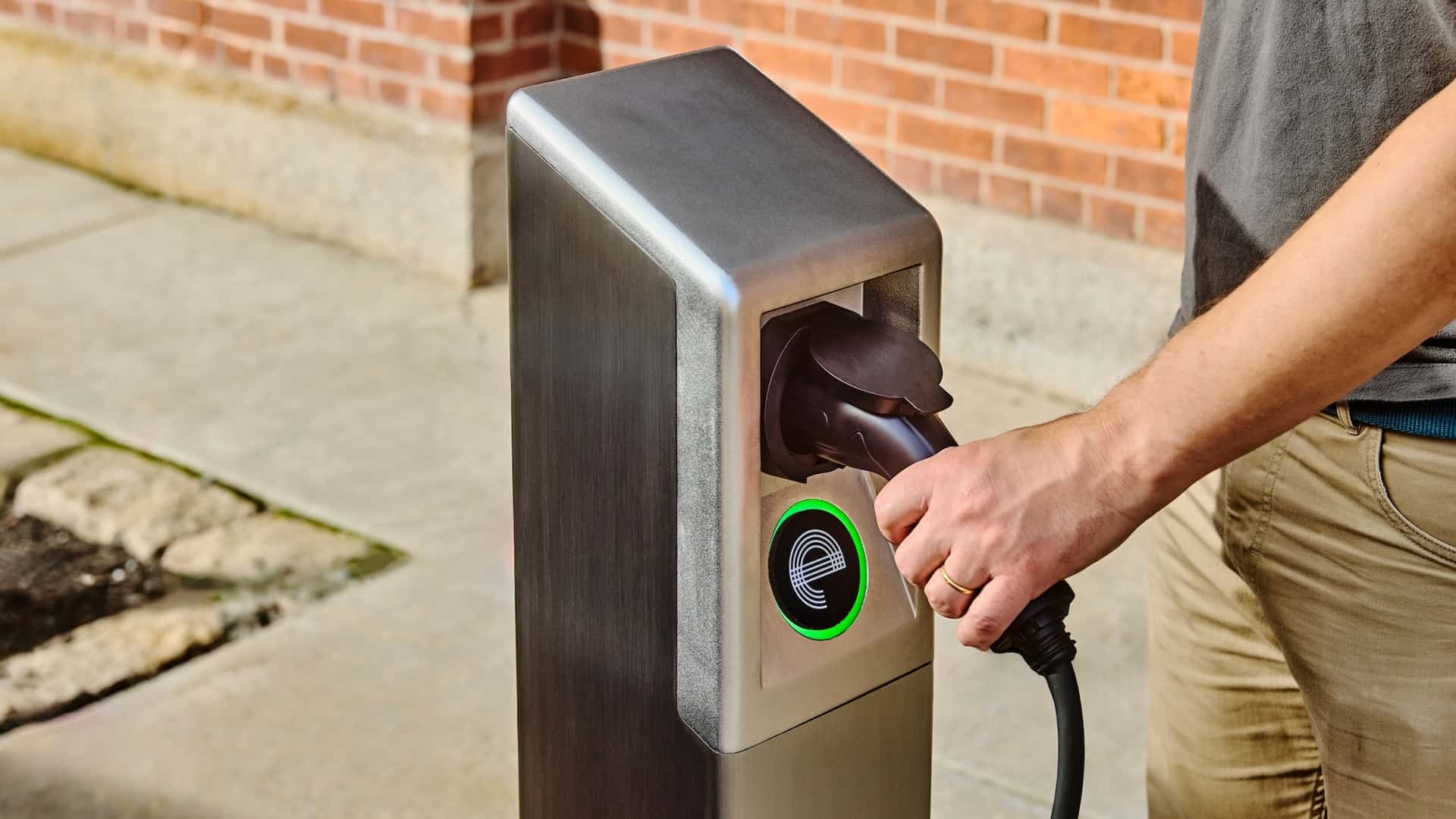
The hardware designed by It’s Electric strays significantly from traditional charging stations found in retail parking lots. Featuring compact, minimalist stainless steel bollards, the chargers completely eliminate attached cables. Instead, drivers carry lightweight, portable charging cords in their trunks and plug directly into the post, preventing vandalized cables and reducing sidewalk obstructions.
To meet stringent municipal aesthetic guidelines, the sleek bollards omit digital displays, touchscreens, and physical credit card readers. Operating entirely via smartphone apps and automated connectivity, the streamlined design earned approval from local urban design commissions. By prioritizing durable materials and unobtrusive forms, the posts blend harmoniously into historical and residential streetscapes.
Beyond physical appearance, the system utilizes an innovative electrical architecture that sets it apart from traditional municipal infrastructure projects. Rather than trenching streets to connect to utility mainlines, the curbside bollards draw electricity directly from adjacent private apartment buildings. This distributed power model significantly lowers installation expenses and cuts deployment timelines from years to months.
Targeted Deployment for High-Demand Neighborhoods
Strategic placement of the 700 new chargers will focus heavily on outer-borough neighborhoods with high concentrations of rideshare and taxi operators. Areas such as Jackson Heights, Flushing, and portions of the Bronx will see prioritized installations. Industry filings indicate these residential zones currently lack adequate commercial charging, placing an undue burden on working drivers.
Currently, commercial fleet operators in outer boroughs must travel to distant fast-charging hubs, enduring long queues and premium electricity rates upwards of 50 cents per kilowatt-hour. By deploying low-cost Level 2 infrastructure in their residential neighborhoods, drivers can charge overnight at standard utility rates, saving both valuable time and operational expenses.
Waking up to a fully replenished battery transforms the daily workflow for thousands of gig-economy drivers. Rather than spending peak earning hours waiting at congested commercial charging plazas, drivers can launch their shifts directly from home. Analysts suggest this convenience factor will accelerate voluntary EV adoption among commercial drivers far faster than regulatory mandates alone.
Scaling a European Infrastructure Model Across American Cities
The untethered, curbside charging format brings a proven European infrastructure concept to the North American market. Cities across the United Kingdom and continental Europe have successfully deployed cord-free street bollards for over a decade, establishing a reliable ecosystem for urban car owners. Adapting this model allows U.S. cities to scale street-level electrification without cluttering public right-of-ways.
By partnering with local property owners to tap existing building electrical capacity, the startup offers property management groups shared revenue opportunities while expanding public access. This decentralized framework reduces capital expenditure for municipalities while ensuring fast, scalable rollouts across diverse urban topography, creating a template for other high-density American cities.
As New York City prepares to roll out these 700 stations over the coming months, urban transit advocates view the project as a critical bellwether for dense metro areas across the country. If successful, the combination of sleek hardware, smart grid integration, and targeted neighborhood placement could serve as the master blueprint for nationwide urban EV adoption.
