
The 1961 Electric Shopper Shows How Micro EVs Started
The conversation around urban mobility often focuses on hyper-modern micro electric vehicles designed for narrow European streets and crowded city centers. However, compact zero-emission transport is far from a contemporary invention. Back in 1960, long before modern lithium-ion batteries and advanced power electronics transformed the auto industry, a small California company introduced a tiny urban commuter called the Electric Shopper.
Designed primarily for short errands around town, this charming vehicle anticipated today's low-speed neighborhood electric vehicles by more than six decades. When compared to modern micro-cars like the Fiat Topolino or Citroen Ami, the historic Electric Shopper proves that the fundamental formula for short-distance personal transit has remained surprisingly consistent over the last half-century.
Mid-Century Innovation Meets Urban Mobility Needs
Underneath its modest fiberglass bodywork, the 1961 Electric Shopper relies on a simple rear-mounted electric motor producing roughly 1.5 horsepower. Powering this modest drivetrain is a set of heavy lead-acid batteries designed to provide basic neighborhood range. While those performance figures sound minuscule by modern EV standards, they were carefully tailored to meet the specific requirements of suburban errand runners seeking an affordable second car.
Remarkably, historical vehicle documentation reveals that the Electric Shopper could achieve approximately 30 miles on a single charge. In context, today's state-of-the-art quadricycles offer about 46 miles of range. Considering the 60-year technology gap between rudimentary lead-acid systems and modern lithium-iron-phosphate battery packs, the classic American micro-EV held its own with impressive efficiency for its era.
Top speed for the vintage Shopper tops out at around 18 mph. That performance envelope closely mirrors the base configurations of modern European quadricycles, which frequently ship with electronically governed speeds of around 19 mph to comply with low-speed driver license regulations. Although contemporary iterations are receiving motor upgrades to reach 25 mph, the original 1960s blueprint already captured the essentials of neighborhood speed limits.
Retro Styling With Tail Fins and Classic Aesthetics
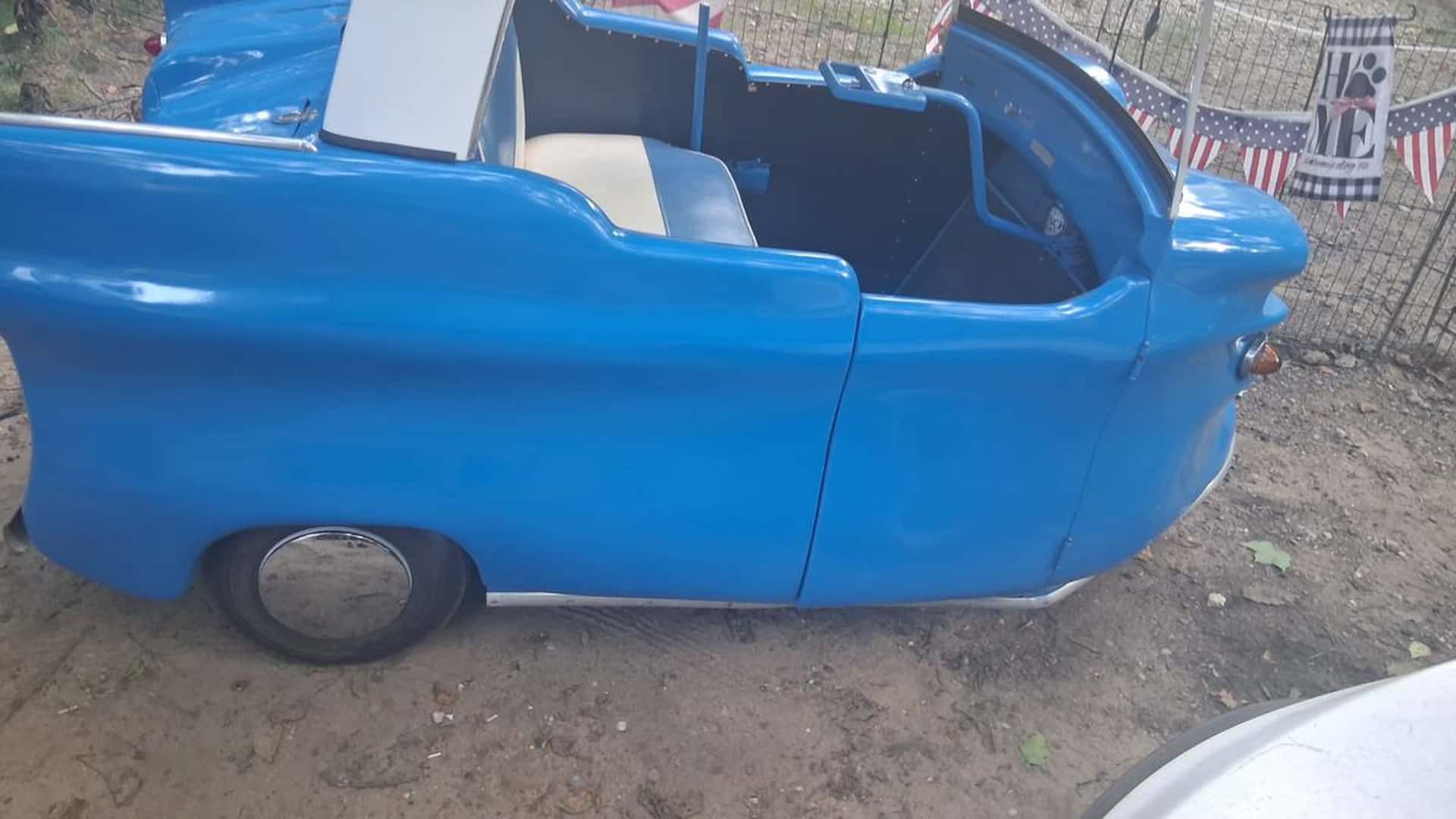
Visually, the Electric Shopper looks like a scaled-down caricature of classic mid-century Detroit steel. Despite measuring little larger than a modern golf cart, the vehicle features sculpted front headlights, prominent rear tail fins, and a contrasting two-tone white roof. It blends the playful aesthetic of a vintage pedal car with genuine automotive styling cues from the late 1950s era.
The compact footprint meant the car was built strictly for short trips to the local grocer or dry cleaners. Its open cabin and minimal bodywork kept weight to an absolute minimum, ensuring the tiny motor could propel the chassis without excessive battery drain. This lightweight philosophy is precisely what modern automotive engineers continue to champion when developing efficient city commuters today.
Rarity and Collector Value in Today's Market
Finding an operational Electric Shopper today is an exceptional event for automotive historians and collectors alike. Archival sales listings reveal that only about 15 examples of these quirky vehicles are known to survive worldwide. Among those survivors, a mere seven vehicles feature fully documented provenance, making any preserved unit an extraordinarily rare piece of early American electric vehicle history.
Several surviving units currently reside in prominent transportation museums, including the Route 66 Electric Vehicle Museum and historical exhibits across California. A rare road-worthy example recently surfaced on the collector market with an asking price of $12,500. Featuring a charming light blue exterior and original brightwork, the vehicle displays 129,000 recorded miles on its odometer, underscoring decades of actual utility.
At a five-figure price point, potential buyers must weigh historical novelty against practical modern transport. A brand-new micro electric vehicle costs roughly the same amount while providing modern safety features, updated occupant seating, higher top speeds, and weather-tight cabin enclosures. Yet for vintage enthusiasts, the Shopper represents a tangible artifact from the dawn of alternative-fuel personal transportation.
The Enduring Relevance of Low-Speed Electric Vehicles
The resurgence of micro electric vehicles across global markets highlights a growing realization: most daily urban car trips do not require 4,000-pound sedans or massive electric SUVs. As municipal planners add dedicated low-speed lanes and calm neighborhood traffic, the compact commuter concept pioneered by the Electric Car Company in 1960 is enjoying a widespread modern rebirth.
Charging a classic lead-acid micro-car required little more than a standard household wall outlet and a few cents worth of electricity. Today’s low-speed electric vehicles follow that exact same plug-and-play philosophy, bypassing expensive high-voltage public charging networks in favor of overnight home replenishment. The operational simplicity of the 1961 design remains its most attractive and enduring legacy.
Ultimately, the 1961 Electric Shopper serves as a vivid reminder that smart urban mobility solutions are timeless. While modern manufacturing techniques, lithium chemistry, and digital connectivity have refined the user experience, the core idea—a lightweight, low-cost electric pod for local errands—was already perfected on California streets more than six decades ago.
