
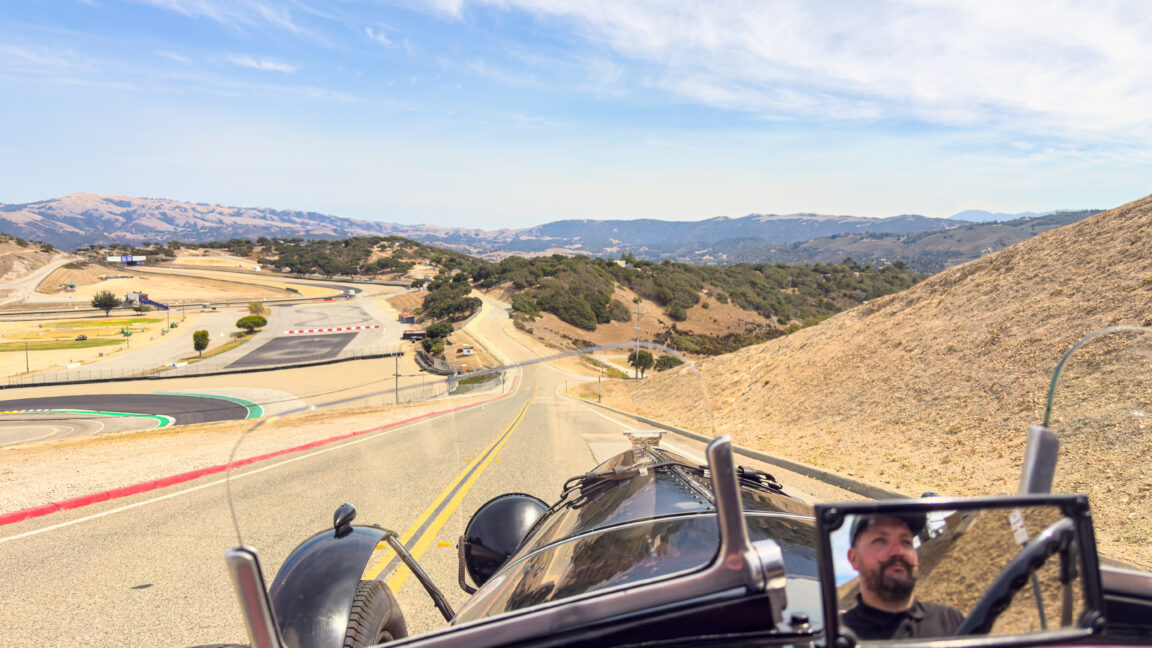
What a Supercar Felt Like a Century Ago: The 1926 Bentley
A Glimpse Into the Golden Age of Performance Automotive Engineering
At the recent Monterey Car Week gathering near California’s historic Laguna Seca circuit, enthusiasts observed a dramatic comparison of automotive progress. While modern performance vehicles dominate headlines with high-horsepower non-hybrid powertrains and advanced lightweight composite construction, manufacturer heritage divisions took a step back in time. They brought forth an iconic survivor from automotive history to demonstrate how the very concept of high-speed performance originated nearly one hundred years ago.
Long before modern telemetry, carbon-ceramic brakes, and electronic traction control existed, early automotive pioneers were defining what it meant to build a supercar. Historical records indicate that between 1925 and 1927, hand-assembled performance machines laid the structural and mechanical groundwork for high-speed endurance driving. Experiencing these century-old vehicles on contemporary tarmac offers an extraordinary perspective on the sheer bravery and mechanical ingenuity that defined early motor racing.
Engineering the Original 100-MPH Machine
To create the original Super Sports variant, engineers took their standard 3.0-liter platform and shortened the wheelbase by 9.5 inches. This reduction in overall length shaved significant vehicle mass and noticeably improved steering agility and chassis responsiveness. Additionally, coachbuilders crafted tapered front radiator designs that significantly reduced aerodynamic drag, allowing the vehicle to push through ambient air far more efficiently than standard passenger cars of the era.
Underneath the metal bonnet, the powertrain received extensive internal upgrades to elevate performance above standard production models. According to manufacturer heritage documentation, the upgraded engine featured lightweight aluminum pistons, a lightened flywheel, increased static compression ratios, and specialized dual carburetors paired with custom gear ratios. These modifications allowed the vehicle to comfortably exceed 100 mph, a staggering benchmark when mass-market commuter vehicles struggled to reach 40 mph.
During this golden era of bespoke vehicle manufacturing, complete cars were rarely produced under a single roof. Automotive chassis were assembled by factory technicians, while bodywork was customized based on owner preference through independent coachbuilding specialists. This approach resulted in an exclusive run of just 18 total units, each featuring subtle styling variations while maintaining the rigid engineering philosophy aimed directly at high-speed endurance, track competition, and driver engagement.
The Storied History of Chassis YM 4037
Among the surviving vintage chassis, chassis YM 4037, affectionately nicknamed "Smoky," stands out as an exceptional specimen of vintage racing heritage. Built in 1926 as the twelfth unit in the production run, this particular vehicle was fitted with a lightweight two-seater body crafted by Jarvis of Wimbledon. Before spending time preserved in private collections across New Zealand and South Africa, it actively competed in premier European motorsport events.
Historical racing archives document that in 1932, the car's second owner, racing driver Kit Baker-Carr, executed a massive mechanical upgrade. He replaced the original 3.0-liter engine with a legendary 4.5-liter engine sourced from the winning vehicle of the 1928 Le Mans endurance race. Powered by this historic engine, the upgraded sports car went on to secure seven distinct victories at the famed Brooklands circuit between 1935 and 1937.
During its historic campaign at Brooklands, the vehicle achieved a recorded lap speed approaching 117 mph. That incredible velocity demonstrated the immense potential of pairing lightweight chassis architecture with proven endurance racing engines. On loan from its current private collector for demonstration laps, the vintage machine provided a living demonstration of the mechanical brutality required to conquer competitive motorsport during the pre-war era.
Navigating Inverse Controls and Unfiltered Speed
Riding inside an authentic 1920s competition vehicle exposes passengers to an unvarnished environment devoid of modern safety protocols. Contemporary safety features like restraint belts, padded crash structures, and roll bars were completely non-existent during this developmental period. Passengers sit elevated in a compact cockpit, fully exposed to rush winds, ambient thermal heat, and atmospheric elements while navigating undulating track elevation changes.
Adding to the visceral challenge of operating pre-war machinery is an inverted mechanical pedal configuration. While the clutch pedal remains on the far left, early race car designs inverted the accelerator and brake positions, placing the throttle in the middle and the primary brake pedal on the far right. Vintage technical reports suggest this layout helped drivers manage weak drum brakes while maintaining throttle control during aggressive double-clutch downshifts.
Behind the wheel, sensory inputs overwhelm the occupant’s perception compared to modern insulated cabins. Guided by experienced heritage department drivers, passengers encounter minimal shielding from tiny glass wind deflectors, subjecting occupants to intense aerodynamic buffeting and raw engine exhaust fumes. Interestingly, the dominant acoustic note inside the cockpit is not the deep roar of combustion, but rather a persistent mechanical whine emanating directly from the straight-cut gearbox gears.
Bridging the Gap Between Vintage Heritage and Modern Supercars
Despite its primitive suspension layout, the vintage machine demonstrates surprising mechanical grip on modern asphalt surfaces. The ride quality remains stiff, unyielding, and distinctly bouncy over pavement imperfections, requiring occupants to firmly brace themselves against hand-stitched leather upholstery. However, when pitched into sharp corners, narrow period-correct tires bite into the road surface with far more lateral tenacity than modern drivers might initially expect.
Modern supercars focus on computational speed, seamless electronic stability systems, and active aerodynamics to maximize lap times. Yet, evaluating the raw mechanical dynamics of a century-old predecessor reveals shared core values: weight reduction, optimized airflow, specialized gearing, and focused driver feedback. Examining this legendary 1926 chassis highlights how the fundamental pursuit of automotive speed has evolved across a full century of engineering breakthroughs.
