
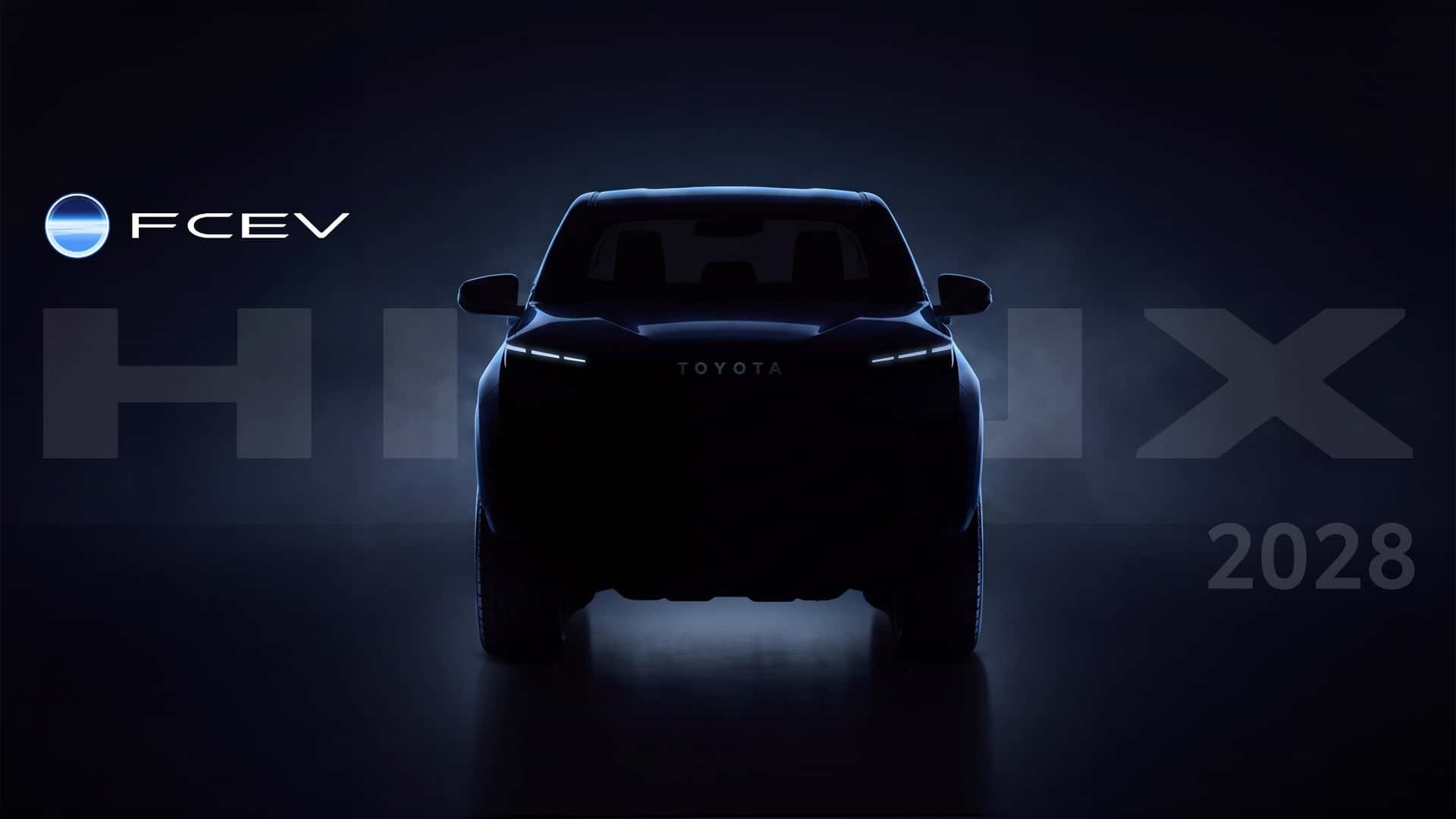
Toyota Confirms Hydrogen Fuel Cell Hilux Pickup For 2028
Toyota has officially confirmed plans to commercialize a hydrogen fuel cell version of its iconic Hilux pickup truck by 2028. Target markets initially include Europe, where the utility vehicle will mark a significant milestone as the region’s first commercially available mid-size hydrogen fuel cell pickup. The announcement reinforces the Japanese automaker’s commitment to exploring alternative zero-emission powertrains for heavy-duty applications.
The upcoming hydrogen-powered Hilux will join an increasingly diverse lineup that already features mild-hybrid and all-electric variants of the popular truck nameplate. By incorporating hydrogen technology into its legendary commercial vehicle family, Toyota aims to provide enterprise fleets and retail customers with flexible alternatives tailored to demanding operational environments where traditional battery-electric solutions might face operational constraints.
Performance Metrics and Towing Advantages
Preliminary specifications shared in corporate updates highlight distinct operational advantages for the hydrogen fuel cell vehicle (FCEV) over its battery-electric counterpart. Toyota targets a driving range of approximately 248 miles (400 kilometers) on a full tank for the production Hilux FCEV. This represents a substantial increase over the 159-mile (257 km) maximum range provided by the fully electric Hilux model.
Towing capabilities also see a notable upgrade under the fuel cell architecture. Engineering projections target a maximum towing capacity of 5,512 pounds (2,500 kilograms) for the hydrogen model. In comparison, the battery-electric version caps its towing capability at roughly 4,410 pounds (2,000 kilograms), making the fuel cell variant far better suited for hauling heavy loads, equipment trailers, and commercial gear.
Under the hood, the Hilux FCEV leverages core components adapted from Toyota’s Mirai sedan, utilizing a proven fuel cell stack that combines hydrogen gas with ambient oxygen to generate electricity. Because chemical conversion replaces internal combustion, the truck produces zero harmful tailpipe emissions during operation, discharging nothing more than pure water vapor into the atmosphere during daily driving cycles.
Hydrogen Refueling Speed Versus Battery Charging
One of the primary selling points for the hydrogen-powered pickup lies in its rapid refueling process. Refilling the vehicle’s high-pressure storage tanks requires approximately five minutes, mimicking the fast turnaround times of conventional diesel or gasoline pumps. This rapid process stands in stark contrast to battery-electric trucks, which often require extended periods hooked to high-power chargers.
For comparison, the electric Hilux requires roughly 30 minutes to complete a 10-to-80 percent fast-charging cycle under ideal conditions. For commercial operations and trade professionals who rely on maximum vehicle uptime, the quick replenishment window of hydrogen offers a compelling operational workflow. Minimal idle time translates directly into higher daily productivity for commercial fleet managers.
Furthermore, fuel cell systems avoid the massive weight penalty associated with large battery packs required for heavy towing. By keeping the vehicle weight manageable while delivering consistent energy output, the fuel cell architecture maintains traditional pickup capabilities without sacrificing chassis dynamics or payload efficiency, presenting an intriguing proposition for utility operators who regularly haul high-mass cargo.
Infrastructure Hurdles in the European Market
Despite these technological benefits, the widespread adoption of hydrogen vehicles faces severe headwinds due to a lack of refueling infrastructure. Industry disclosures reveal that there are currently only 179 operational hydrogen fueling stations across the European Union and the United Kingdom combined. This sparse coverage makes long-distance travel and daily route planning exceptionally challenging for early adopters.
In contrast, drivers of battery-electric vehicles in Europe currently benefit from access to over 1.16 million public charging points. The vast discrepancy between hydrogen pumps and EV chargers highlights the daunting logistically complex landscape FCEV owners must navigate, where finding a working pump often requires significant detours and careful route preparation before starting journeys.
Additionally, the financial equation surrounding hydrogen mobility remains steep. Fuel cell vehicles historically carry higher retail price tags than equivalent electric vehicles, which are already priced above traditional internal combustion models. High pump prices for green hydrogen further complicate total cost of ownership calculations, creating financial hurdles that may limit initial buyer interest to specialized municipal fleets.
Prototype Evolution and Production Expectations
Toyota’s journey toward a commercial hydrogen truck has progressed steadily through rigorous testing phases. The company first introduced a Hilux H2 concept prototype in late 2022, followed by the deployment of a ten-vehicle evaluation fleet in 2024. These real-world test beds allowed engineers to gather critical telemetry data on durability, thermal management, and fuel efficiency under harsh working conditions.
The late-stage evaluation prototypes utilized a rear-wheel-drive powertrain layout, integrating three high-pressure hydrogen tanks neatly within the ladder-frame chassis to maximize interior cab room. A lightweight lithium-ion buffer battery was positioned under the pickup bed to store regenerative braking energy and provide supplemental power during rapid acceleration, achieving an estimated prototype range of 373 miles.
As the project moves toward its confirmed 2028 commercial debut, several technical details remain finalized. Industry reports indicate that Toyota is evaluating whether the production model will retain the rear-wheel-drive setup seen on early prototypes or introduce a dual-motor, all-wheel-drive powertrain to meet the traction demands of commercial fleet buyers operating in rugged environments.
