
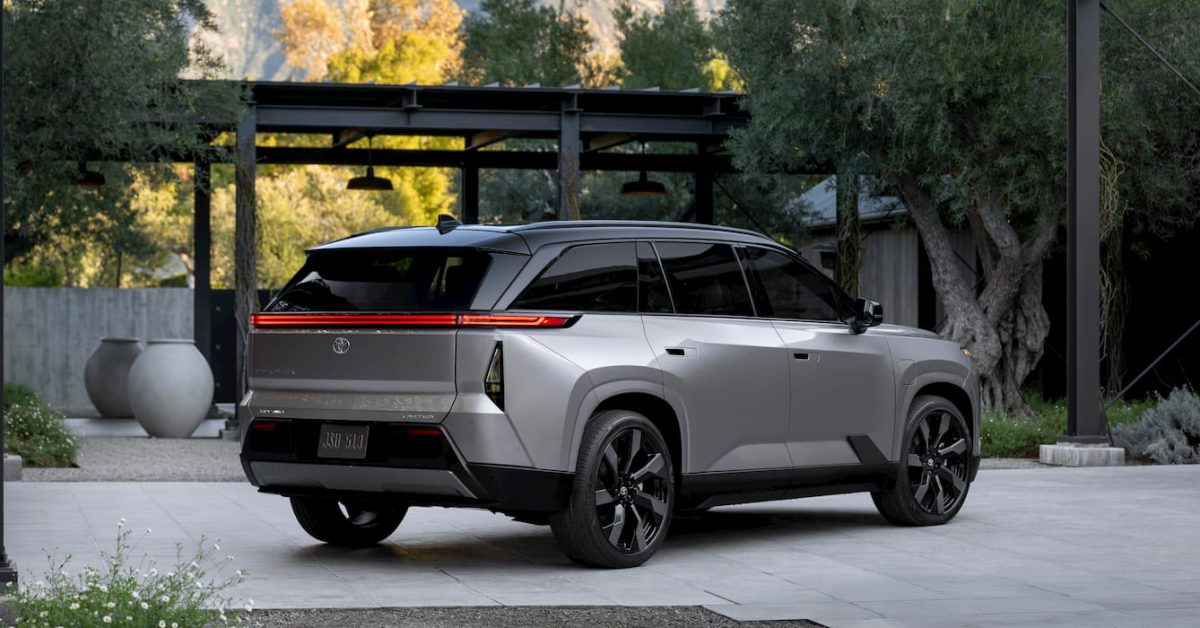
Toyota Delays Highlander EV Launch as Inventory Shortage Looms
Toyota has officially pushed back the production schedule for its upcoming all-electric Highlander SUV, introducing an unexpected delay into the automaker's North American electrification strategy. The three-row family vehicle was slated to enter assembly at the company's Georgetown, Kentucky manufacturing plant, with initial consumer deliveries anticipated by late 2026. However, manufacturing timelines have shifted forward into early 2027.
Official corporate statements indicate that the delay stems from a requirement for additional fine-tuning and vehicle adjustments prior to commercial release. While specific technical details behind the schedule revision remain undisclosed, the vehicle will now officially launch under the 2028 model year badge. This schedule adjustment affects both internal assembly targets and broader distribution logistics across North American dealership networks.
The immediate bottleneck creates a distinct challenge for retail operations across the region. To bridge the transition period, manufacturing facilities will continue building the existing 2026 internal combustion and hybrid Highlander variants through December. However, because production lines are set to sunset at the end of the year, inventory buffers may prove insufficient to cover the gap before the electric successor arrives.
Unexpected Production Delays Create Dealership Shortages
Industry inventory tracking indicates that existing Highlander showroom stock was already constrained, dropping to approximately a twenty-day supply nationwide in recent weeks. Dealer communications reveal that component suppliers are tied to fixed delivery volumes, preventing Toyota from easily extending or increasing the production run of the current gas and hybrid models past their scheduled December sunset date.
This rigid component output means retail lots could face several months of zero Highlander availability during early 2027. Car buyers seeking a three-row crossover may find showroom floors completely bare before the first wave of battery-electric models arrives. Retail groups have expressed concern that even a brief multi-month gap in inventory will create operational friction for franchises dependent on steady vehicle volume.
The timing is particularly problematic given existing inventory bottlenecks across other popular product lines. Toyota has simultaneously been managing supply constraints for the redesigned RAV4 as assembly plants work to ramp up volume. Facing concurrent inventory deficits across two core crossover segments threatens to stifle the brand's year-to-date sales momentum, which has seen modest overall volume gains.
A Growing Gap in Toyota's Core Family Lineup
The production adjustment extends beyond Toyota's primary brand identity to affect key strategic partners. The Subaru Getaway, an upcoming electric crossover sharing the Highlander EV’s platform and architecture, is also being assembled at the same Kentucky plant. Consequently, Subaru's variant has been delayed until at least the first quarter of 2027, compounding supply issues for both Japanese automakers in North America.
Losing a high-volume three-row family carrier from showroom floors—even temporarily—exposes Toyota to significant market share risks. Competitors in the midsize SUV segment are accelerating their own production cycles, leaving little margin for error. Customers looking for immediate multi-row vehicle replacements may be forced to look elsewhere if dealership allocation remains empty throughout the upcoming spring selling season.
The gap comes at a critical juncture when automakers are striving to maintain consumer loyalty amid shifting powertrain preferences. By capping current generation output while delaying the next-generation replacement, Toyota risks ceding momentum in a segment it traditionally dominated. Dealer networks will have to navigate customer demand carefully while waiting for manufacturing lines to achieve full scale operational readiness.
Platform Specifications and Electric Range Metrics
When the 2028 Toyota Highlander EV finally reaches retail showrooms, it will arrive in two distinct trim configurations: XLE and Limited. The architecture will offer flexibility for buyers, featuring both front-wheel-drive and all-wheel-drive dual-motor powertrains. This modular approach aims to satisfy both suburban commuters seeking efficiency and buyers requiring enhanced traction for winter conditions or light utility hauling.
Energy storage options will center around two lithium-ion battery pack capacities. Base models will feature a 77 kWh battery delivering an estimated driving range of up to 287 miles. Higher trim variants will house a larger 95.8 kWh battery pack capable of achieving up to 320 miles of range in the front-wheel-drive configuration, putting it on competitive footing with rival long-range crossovers.
Inside, the electric Highlander preserves its core identity as a versatile family hauler, accommodating up to seven passengers across three rows of seating. The cabin features Toyota's latest Audio Multimedia System, dominated by a 14-inch central infotainment display paired with a 12.3-inch digital instrument cluster. Wireless integration for Apple CarPlay and Android Auto comes standard, along with advanced driver assistance features.
Quality Assurance Priorities and Market Competition
While Toyota has not detailed the exact reasons for the production pause, industry analysts point to a heightened focus on quality control. Automotive observers note that Toyota is determined to avoid the early execution stumbles that plagued its initial mass-market electric vehicle, the bZ4X, which faced early recall actions over wheel hub assembly issues before being successfully updated and re-established in the market.
Ensuring absolute vehicle reliability prior to rollout appears to outweigh the risk of temporary sales losses. The updated bZ lineup has shown strong sales performance following its revised release, proving that thorough validation pays long-term dividends. However, applying extra validation time to the Highlander EV leaves a temporary window open for aggressive rival offerings already competing for market share.
Key competitors like Kia with its EV9 and Hyundai with the upcoming IONIQ 9 are rapidly solidifying their positions in the three-row electric SUV segment. By delaying the Highlander EV’s debut into 2027, Toyota once again finds itself taking a cautious, reactive stance in the zero-emission race, granting rival brands valuable time to capture family EV buyers.
