
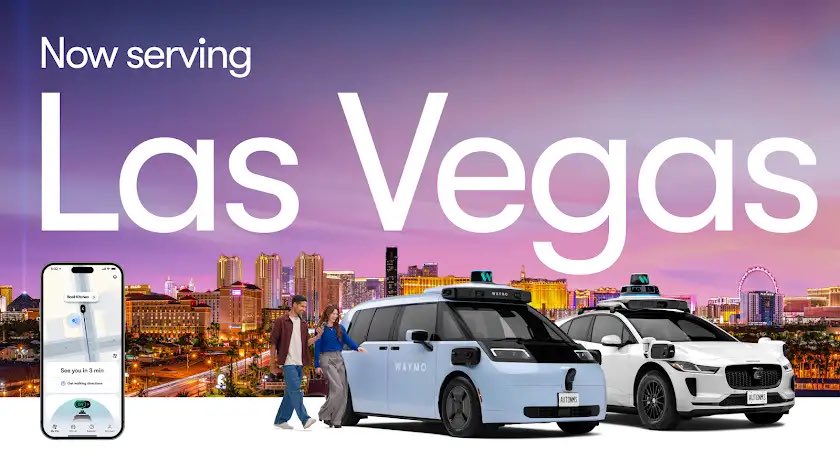
Waymo Launches Driverless Robotaxi Service in Las Vegas
Waymo Expands Autonomous Footprint to Las Vegas
Alphabet-owned autonomous vehicle pioneer Waymo has officially inaugurated commercial driverless ride-hailing operations in Las Vegas, Nevada. The deployment marks the company’s 15th operational metropolitan market within the United States, expanding its commercial service reach into one of the nation's most iconic travel destinations. Public access officially began on Monday, allowing local residents and visitors to hail fully autonomous vehicles.
According to official company announcements, passenger access is being granted on a rolling waitlist basis to manage initial demand effectively. The company is debuting the service with a specialized initial fleet comprising a few dozen vehicles. Company executives indicate plans to incrementally scale up vehicle numbers across the region as operational validation progresses and fleet management logistics mature.
The initial operating envelope covers roughly 24 square miles across key economic corridors in southern Nevada. Riders will have driverless transport access along major stretches of Las Vegas Boulevard, adjacent residential neighborhoods, and high-density commercial entertainment districts. Detailed maps defining precise boundary limits and highway capability remain under evaluation as localized highway testing continues.
Debuting Next-Generation Autonomous Hardware
The Las Vegas launch signifies more than just a geographic expansion; it serves as the public debut for Waymo’s sixth-generation autonomous driving architecture. This upgraded system incorporates advanced sensor suites, elevated computing power, and refined machine learning models designed specifically to navigate dense pedestrian zones, intricate pickup points, and dynamic traffic patterns characteristic of tourist hubs.
Vehicles deployed for the Las Vegas fleet feature the new "Ojai" vehicle architecture. The purpose-built robotaxi was engineered specifically for driverless mobility services on a vehicle platform developed in collaboration with Chinese automaker Zeekr. Eliminating traditional driver controls in favor of passenger-centric roominess, the Ojai vehicle represents a major operational pivot toward customized autonomous vehicle design.
Company representatives highlighted that cruising along Las Vegas Boulevard in the new platform delivers a premium, high-roller experience tailored to local tourism. Passengers ride inside a spacious cabin outfitted with interactive touchscreens, extensive ambient personalizations, and automated climate preferences, ensuring riders arrive at their destinations safely, comfortably, and in distinct modern style throughout the operating region.
Escalating Competition on the Las Vegas Strip
Las Vegas is rapidly evolving into a high-stakes proving ground for driverless commercial transportation platforms. With its grid roadway structures, night-heavy traffic flow, and high density of ride-hailing demand, the city provides an ideal real-world laboratory. Autonomous vehicle developers are aggressively moving to secure necessary commercial permits and establish brand dominance along the famous resort corridor.
Competition in the local ecosystem has intensified rapidly over recent weeks. Amazon-owned Zoox officially launched its own paid public robotaxi rides in Las Vegas earlier this month, utilizing custom bidirectional vehicles. The arrival of multiple autonomous operators within days of each other underlines how critical Nevada regulatory approvals have become for commercial autonomous viability.
Regulatory disclosures indicate that electric vehicle automaker Tesla has also secured state regulatory permission to deploy up to 5,000 driverless robotaxis within the municipality. As multiple major mobility firms assemble operational hardware in the city, industry analysts expect price competition and user experience benchmarks to elevate significantly across the regional ride-hailing market.
Rapid National Fleet Expansion Across the US
The Las Vegas launch comes amid an accelerated nationwide rollout schedule driven by Waymo throughout 2026. The company has moved aggressively beyond its original experimental hubs to capture market share across primary metropolitan regions. By establishing commercial infrastructure in top tourist and business cities, the company aims to solidify its position as the market leader.
Strategic roadmap disclosures reveal that Waymo has finalized plans for upcoming commercial service launches in Denver, San Diego, and Tampa. These upcoming markets will join an active operational roster that already encompasses major urban areas across California, Arizona, Texas, and Florida, creating a multi-state driverless footprint unmatched by rival driverless operators.
Industry filings indicate that scaling into diverse urban landscapes allows the driverless system to adapt to varied climate patterns and roadway topologies. Expanding operations across distinct climate zones—from desert heat to humid coastal environments—helps refine the underlying software algorithms, boosting safety metrics and speeding up regulatory approvals nationwide.
Regulatory Pathways and Fleet Scaling Challenges
While the Las Vegas service launch represents a major technical milestone, operational boundaries remain deliberately measured during the opening phase. Waymo has not yet confirmed whether high-speed freeway corridors will be accessible to passengers immediately, a critical capability needed to seamlessly connect airport hubs directly with major casino resorts along the Strip.
Managing unpredictable pedestrian movements around high-occupancy resort entrances presents unique challenges for autonomous drive engines. Industry experts note that navigating complex drop-off valet zones requires precise localization and real-time path planning. Resolving these localized friction points is key to unlocking full commercial efficiency and securing long-term consumer trust.
As commercial driverless fleets move from early pilot phases toward massive urban scale, the public deployment in Las Vegas highlights the accelerating pace of autonomous transportation adoption. With robust vehicle platforms, refined software suites, and growing public acceptance, the transition toward fully driverless urban mobility is fast becoming an everyday reality.
