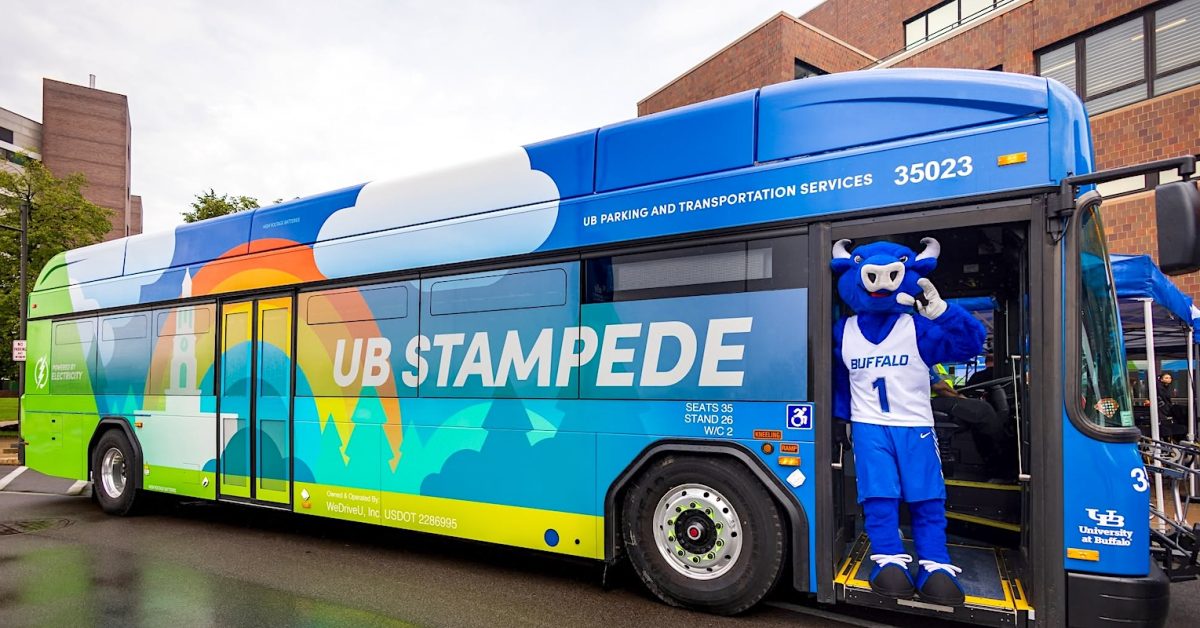
University at Buffalo Deploys First Electric Campus Buses
The University at Buffalo has officially introduced eight new 40-foot electric transit buses into its active campus transportation network. These vehicles represent the very first zero-emission models to join the university’s Stampede fleet, initiating a complete departure from traditional diesel-powered transit service. Operating quietly across campus routes, the new vehicles are designed to transport thousands of daily riders while significantly cutting local atmospheric pollution.
Designed to replace aging diesel units, these modern vehicles mark the initial phase of a broader four-year initiative to electrify the entire campus mobility network. Campus administrators note that the newly added buses are already quietly carrying students, faculty, staff, and campus visitors across daily transit corridors, offering a cleaner and modernized ride experience compared to the legacy combustion vehicles they replace.
Institutional statements indicate that the primary objective of this vehicle rollout centers on elevating passenger safety and transit dependability while aggressively scaling down environmental footprints. The new electric buses improve daily rider experiences immediately while establishing a foundation for sustained operational upgrades, serving as a critical capital investment in the long-term future of sustainable campus mobility.
Electrifying the Stampede Transit Fleet
The newly integrated 40-foot electric buses are slated to carry an estimated 16,000 passengers every day across the campus transit network. By replacing fossil-fuel consumption on these heavily traveled routes, the eight initial vehicles will deliver an immediate and substantial drop in local tailpipe emissions, proving the operational viability of high-capacity electric transit in heavy daily usage scenarios.
Over their operational life cycle, these eight electric vehicles are projected to eliminate nearly 6,000 tons of carbon dioxide equivalent emissions. According to official performance metrics, this transition achieves an impressive 55.6 percent reduction in total greenhouse gas emissions when directly compared against legacy diesel-powered bus operations previously supporting the campus transit schedule.
To put that environmental benefit into broader context, institutional analytical reports note that cutting 6,000 tons of carbon dioxide equivalent emissions is mathematically comparable to removing roughly 1,395 standard gasoline-powered passenger cars from public roads. This significant reduction highlights the immediate localized environmental impact achieved by transitioning institutional heavy-duty transit fleets to zero-emission technology.
Strategic Goals and State Mandates
The deployment of these eight vehicles marks just the beginning of a comprehensive transition for the complete Stampede transit fleet. The university has established a firm timeline to fully electrify all campus transit vehicles over the next four years, replacing legacy diesel infrastructure with modern battery-electric alternatives to establish an entirely zero-emissions transportation grid.
This broad transportation overhaul forms a central pillar of the institution's overarching 10 in 10 roadmap, which mandates a completely zero-emissions campus environment by the year 2030. By setting a 2030 target, the university is rapidly accelerating its internal decarbonization schedules well ahead of regional statutory requirements for institutional fleet operations.
Notably, reaching full fleet electrification by 2030 places the university’s initiative a full 15 years ahead of the 2045 deadline established under New York Executive Order 22 for heavy-duty vehicle fleets. By accelerating this deployment timeline, institutional leaders aim to set a practical precedent for large-scale public and private fleet transitions across the region.
Industry Partnerships and Infrastructure Support
Executing a seamless transition from legacy diesel to battery-electric heavy transit required specialized external expertise and operational integration. The institution partnered directly with solutions provider WeDriveU alongside fleet electrification specialists Zenobē to manage the procurement, technical implementation, and ongoing operational support necessary to keep the new eye-catching buses running reliably.
Fleet operators and large institutional entities require complete operational certainty that their electric buses will remain fully charged and ready to service demanding daily routes without disruption. Industry specialists emphasize that delivering this reliability depends on meticulous upfront planning, robust depot charging infrastructure, and continuous long-term support services tailored to heavy-duty battery performance.
Through structured charging strategies and dedicated fleet support systems, the technology partners aim to ensure that the new electric buses maintain optimal uptime under rigorous transit demands. Providing dependable, zero-emission service every day gives institutional operators the confidence required to aggressively retire remaining combustion vehicles across the coming four-year phaseout period.
The Future of Campus Mobility
The initial integration of these 40-foot electric vehicles represents a major tangible milestone in the gradual retirement of diesel transit infrastructure across academic institutions. As the remaining campus fleet undergoes systematically planned electrification phases, daily passenger experiences will continue to improve alongside measurable localized air quality enhancements throughout the surrounding community.
By demonstrating that heavy-duty battery-electric buses can handle heavy passenger volumes of 16,000 daily riders, this ongoing initiative offers a scalable blueprint for institutional fleet decarbonization. The success of the initial eight buses validates the operational, environmental, and infrastructure strategies needed to achieve a zero-emissions campus transportation network by 2030.