
Federal Court Strikes Down Forced Michigan Coal Plant Emergency
A federal appellate court has officially invalidated federal emergency directives aimed at forcing the continued operation of the J.H. Campbell generating station in Michigan. The decision brings a decisive end to regulatory interventions that previously prevented local utility providers from retiring the legacy coal facility. Court filings confirm that federal agencies overstepped statutory boundaries by declaring fictitious energy crises to delay retirement.
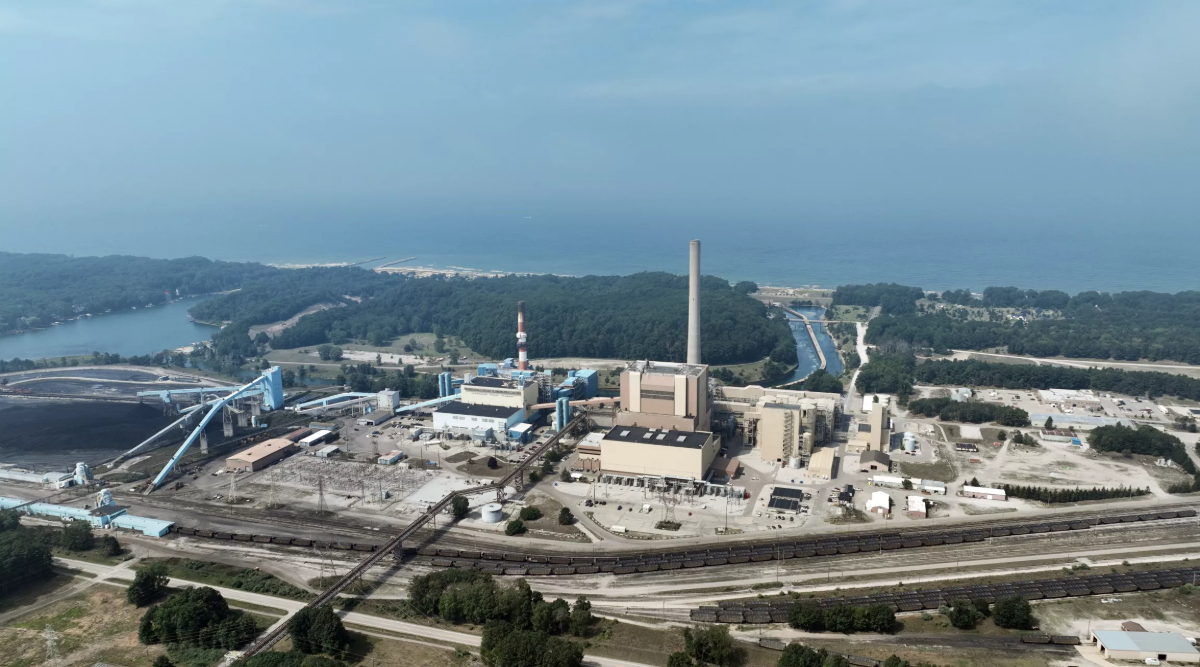
Located in West Olive along the eastern shore of Lake Michigan, the J.H. Campbell facility first entered commercial service in 1962. Over six decades of operation, the site expanded into a power complex featuring three distinct coal-fired generating units. At peak capacity, the facility generated 1,420 megawatts of electricity, serving as a primary power source for lower Michigan industrial and residential customers.
Plant owner Consumers Energy developed a detailed strategy to phase out the aging coal units in favor of modern power generation assets. The transition plan outlined replacing coal output with a combination of natural gas resources, solar arrays, and utility-scale battery energy storage systems. Regulatory disclosures indicated this transition would lower ambient air pollution while reducing long-term electricity rates for utility customers.
Comprehensive Grid Planning Meets Federal Resistance
Before initiating the retirement sequence, utility executives submitted their plan to both state regulatory bodies and regional grid administrators. Officials at the Midcontinent Independent System Operator conducted exhaustive technical evaluations of the proposal. Grid assessments confirmed that the planned solar, gas, and storage installations offered more than sufficient electrical capacity to match and exceed the output of the retiring coal units.
Despite consensus among state regulators and regional power engineers, the retirement plan encountered unexpected resistance from federal authorities. Legal filings indicate that policy strategists sought administrative mechanisms to stall clean energy transitions across the power sector. Federal officials specifically targeted Section 202(c) of the Federal Power Act, a legacy statutory provision originally enacted to preserve grid stability during acute national emergencies.
Historically, federal energy secretaries exercised Section 202(c) authority under extremely limited circumstances, such as catastrophic weather events or severe physical grid destruction. These emergency interventions typically lasted only a few days until localized grid stability was restored. However, federal regulators reinterpreted the statute to issue continuous top-down commands, claiming broad authority to mandate power generation regardless of underlying market conditions.
The Mechanism Behind Serial Emergency Extensions
To bypass statutory limitations on emergency powers, federal administrators established a system of recurring extensions. Under the federal framework, an initial emergency declaration authorized mandatory plant operations for up to ninety days. At the conclusion of each period, federal authorities simply issued consecutive emergency orders, claiming grid conditions remained compromised. Federal regulators executed six consecutive extension orders targeting the plant.
The repeated emergency declarations prompted legal challenges from state leaders and environmental advocacy groups. Attorneys general representing Michigan, Minnesota, and Illinois filed suit alongside a broad coalition of public interest organizations, including Earthjustice, the Sierra Club, and the Natural Resources Defense Council. Legal petitions argued that federal agencies were abusing emergency mandates to artificially subsidize uneconomic fossil fuel facilities against state preferences.
The federal court panel decisively rejected the emergency rationale, ruling that executive directives cannot manufacture crises to achieve policy objectives. Judicial transcripts highlight that federal emergency authority is strictly reserved for genuine, unforeseen physical disruptions to power delivery. The court emphasized that federal mandates cannot displace state regulatory authority or override grid operator findings when regional reserve capacity is fully maintained.
Restoring State Authority Over Local Energy Transitions
Writing for the unanimous judicial panel, Judge Cornelia Pillard reaffirmed that Congress explicitly entrusted state commissions with managing power generation portfolios within their borders. The opinion noted that federal intervention is appropriate only when local state authorities and regional reliability organizations prove incapable of managing grid operations. Because regional power managers had already secured replacement power supplies, federal emergency orders lacked statutory foundation.
Legal representatives for the public interest coalition commended the ruling, emphasizing that federal agencies cannot weaponize emergency statutes to favor preferred energy resources over market alternatives. Court documents revealed that the forced operation of legacy coal units unnecessarily elevated consumer electricity bills while producing unwanted localized pollution. The decision reinstates the authority of state utility commissions to manage generation retirements efficiently.
The invalidation of federal directives clears the path for Consumers Energy to resume its original transition timetable. Decommissioning the three coal units will eliminate thousands of tons of harmful emissions annually. Meanwhile, integrating local battery storage and solar installations will provide fast-ramping clean capacity designed to balance seasonal electricity demand across the region cleanly and cost-effectively for all ratepaying customers.
Strategic Implications for the Midwest Power Grid
The judicial decision establishes an important legal precedent for power plant retirements throughout the Midwest and across the broader nation. Utility companies planning to phase out legacy thermal generation can now proceed with state-approved resource transitions without facing arbitrary federal overrides. Energy market analysts note that the ruling restores market certainty, allowing electric utilities to invest in modern infrastructure without political interference.
As regional grid operators continue integrating renewable energy and storage resources, the ruling provides structural clarity regarding federal jurisdictional limits. Federal agencies remain empowered to respond to legitimate grid emergencies, but cannot use statutory emergency powers as a tool for permanent market intervention. Consumers Energy and regional grid planners will now execute the final retirement steps for the J.H. Campbell plant.
