
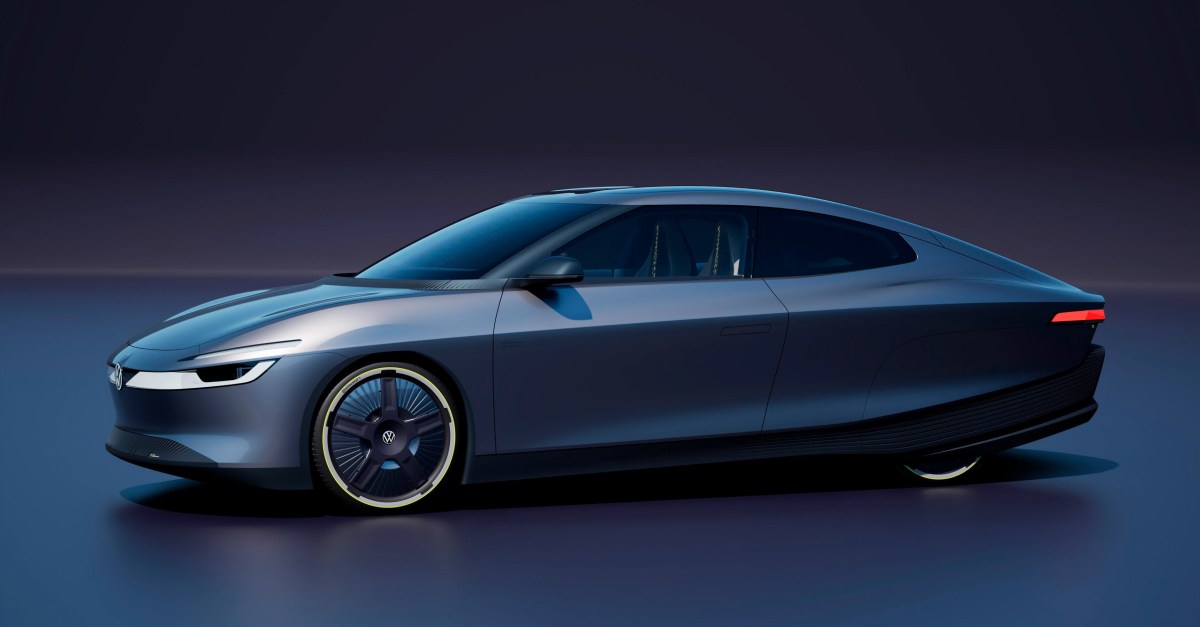
Volkswagen Mission Efficiency Concept Breaks EV Range Records
Automotive engineering has reached a significant milestone as Volkswagen unveils its Mission Efficiency concept, a sleek 2+2 electric coupe prototype designed to push the boundaries of energy conservation. Boasting an unprecedented drag coefficient of just 0.158, engineering reports confirm that the experimental vehicle is officially the most aerodynamic road-approved automobile ever developed, surpassing previous records held by exotic concepts and niche production models.
Constructed on Volkswagen’s versatile MEB+ modular electric platform, the Mission Efficiency isn’t merely a futuristic styling exercise. The prototype incorporates frontline front-wheel-drive propulsion components shared directly with upcoming mass-market models, including the ID. Polo and ID. Cross superminis. By leveraging standard mechanical foundations under a slippery shell, the automaker demonstrates that massive range gains can be unlocked without exotic powertrains.
Engineering a New Benchmark for Aerodynamic Design
The core philosophy behind the vehicle centers on cutting aerodynamic resistance to absolute minimum levels. The vehicle features a dramatic teardrop silhouette tailored to allow air molecules to flow smoothly across its surface with minimal turbulence. Design elements such as fully covered wheel wells, an enclosed underbody panel, frameless glass windows, and flush-mounted door handles work in unison to eliminate drag-inducing pockets.
Achieving a drag coefficient of 0.158 places the concept in a league of its own, outperforming existing high-efficiency production vehicles by a wide margin. Technical briefings indicate that this hyper-optimized shape directly translates into extreme energy preservation during steady-state cruising, proving that geometric refining can deliver efficiency leaps that battery chemistry alone cannot currently match.
During standardized closed-course evaluations on flat terrain, the prototype established a benchmark consumption rate of just 6.48 kWh per 100 kilometers. Conducted at a steady cruising speed of 68 km/h with secondary climate control systems disengaged, the test highlighted the sheer physical potential of reduced wind resistance when rolling friction and auxiliary power draws are minimized.
Practical Efficiency and Real-World Range Testing
To validate these laboratory achievements under real-world conditions, test drivers executed a long-distance endurance run spanning 1,278.36 kilometers (794.34 miles) from Wolfsburg, Germany, to Vienna, Austria. Remarkably, the entire cross-country journey was completed on a single charge of the prototype’s modest 54.9 kWh net-capacity battery pack, completely re-writing expectations for compact electric vehicle travel.
Maintaining an average speed of 67.72 km/h across highway and rural routes, the Mission Efficiency recorded a real-world energy draw of only 6.89 kWh per 100 kilometers. Even when factoring in grid charging losses, which brought total consumption to 7.51 kWh per 100 kilometers, the prototype completed the journey with 164 kilometers of usable battery range still remaining upon arrival.
These results demonstrate that long-distance electric mobility does not inherently require massive, heavy battery packs that increase vehicle weight and environmental footprint. Industry disclosures emphasize that by prioritizing aerodynamic refinement over battery capacity scaling, automakers can deliver long-haul utility while utilizing smaller, more cost-effective energy storage systems that reduce vehicle weight and production costs.
Shared Architecture Proves the Power of Aerodynamics
What makes the Mission Efficiency particularly relevant to consumers is its reliance on production-ready hardware. Beneath its streamlined body, the prototype utilizes a standard 99 kW electric motor mounted on the front axle, coupled with high-voltage battery modules, aluminum structural elements, and high-strength carbon fiber materials borrowed directly from the developmental architecture of the upcoming ID. Polo.
The dramatic impact of aerodynamic design becomes increasingly evident as speeds rise. Technical performance data indicates that at velocities above 80 km/h, the Mission Efficiency consumes over 30 percent less energy than the standard ID. Polo body shape. At 140 km/h, the sleek coupe draws the exact same power as the ID. Polo traveling at just 100 km/h.
Weight Reduction and Minimalist Interior Innovation
Beyond cutting atmospheric drag, Volkswagen engineers focused heavily on curb weight reduction. The prototype employs lightweight body paneling alongside a radically simplified cabin design. Traditional infotainment hardware, heavy dashboard wiring, and complex touchscreen assemblies were removed in favor of a streamlined interior environment that relies on driver-supplied smart devices for digital interface duties.
The cabin features an integrated docking station for smartphones and tablets paired with a removable Bluetooth speaker, effectively stripping out weight while maintaining full digital connectivity. Additionally, solar panel arrays integrated into the vehicle's roof capture ambient sunlight, generating enough supplementary power to contribute up to 30 kilometers of auxiliary electronics operating range during extended road journeys.
The Broader Shift Toward Aerodynamic Efficiency in EVs
The groundbreaking accomplishments of the Mission Efficiency highlight a broader strategic transition occurring across the global automotive sector. Rather than continually expanding battery pack sizes, major vehicle manufacturers are increasingly prioritizing aerodynamic optimization and drag reduction to extend driving range, reduce manufacturing expenses, and meet aggressive regulatory sustainability mandates.
As competing manufacturers implement similar design challenges across truck and passenger car segments, the ultimate test lies in consumer adoption. Ultra-slippery teardrop designs offer unprecedented energy savings, but manufacturers must balance functional drag reduction with visual appeal and cabin space. Whether car buyers will enthusiastically embrace these radically streamlined silhouettes remains the next big question for the industry.
