
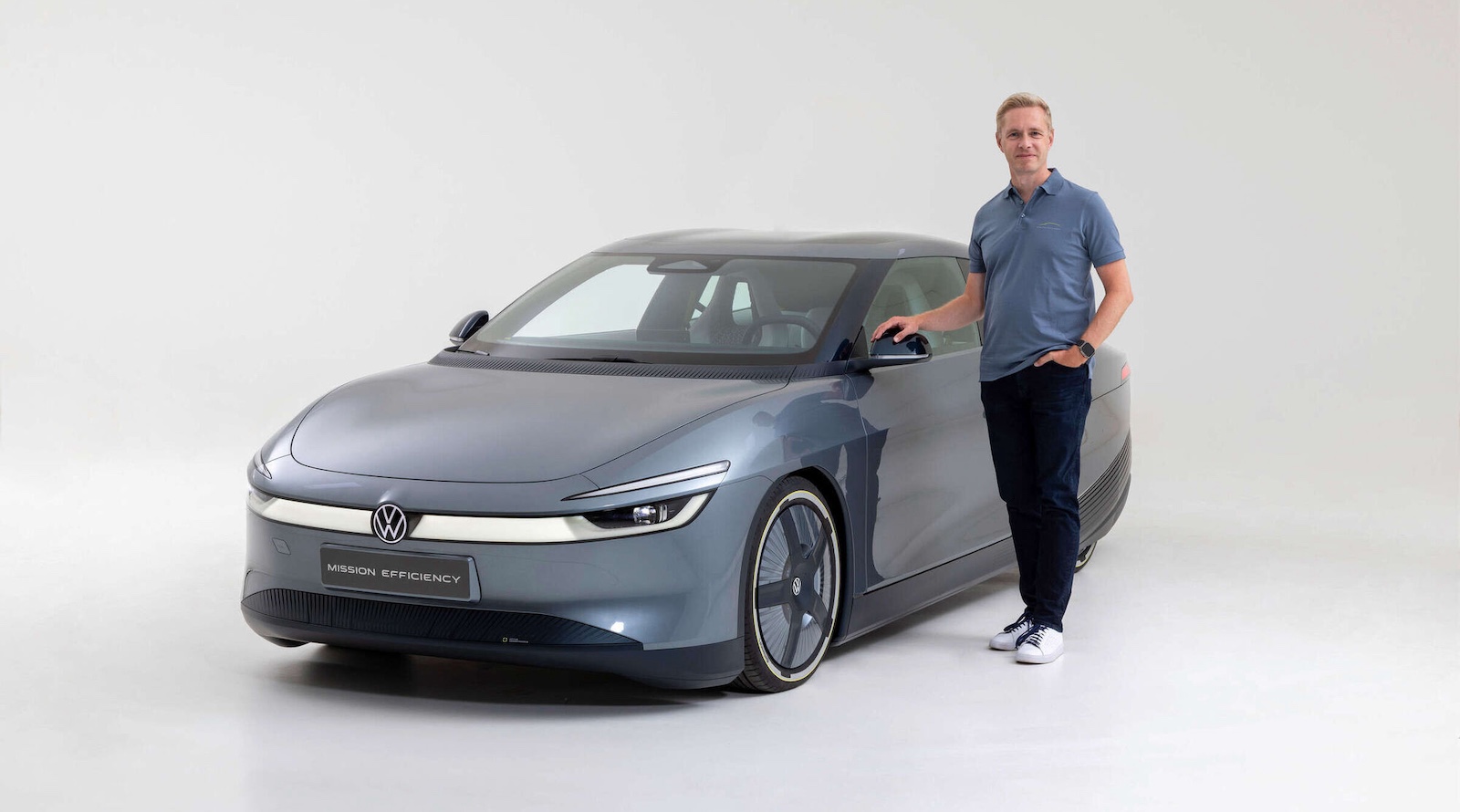
Volkswagen Reveals Record Breaking Mission Efficiency Prototype
Setting New Aerodynamic and Range Benchmarks
Volkswagen has unveiled an extraordinarily efficient electric vehicle prototype named Mission Efficiency, creating a stir across the automotive industry. The vehicle demonstrates unprecedented energy consumption metrics while serving as a showcase for future platform capabilities. Engineers designed the near-production concept to push aerodynamic boundaries and powertrain efficiency, proving what can be accomplished when range optimization becomes the primary focus.
The core achievement of Mission Efficiency lies in its groundbreaking aerodynamic profile, achieving a drag coefficient of just 0.158. This figure sets a new world record for road-approved vehicles, easily beating modern production cars. By aggressively shaping the vehicle's bodywork and managing underbody airflow, the engineering team significantly reduced drag, enabling the electric car to travel with minimal atmospheric resistance.
During controlled testing, the prototype achieved a remarkable energy consumption rate of 6.48 kWh per 100 kilometers under ideal conditions. Operating at a steady speed of 68 kilometers per hour without elevation changes or climate control usage, the vehicle highlights raw powertrain efficiency. This figure demonstrates how low mechanical friction and optimized power electronics dramatically extend battery range.
Standard Mass Market Engineering Behind the Records
What makes the Mission Efficiency project particularly notable is its mechanical foundation. Rather than relying on exotic materials or bespoke race car components, the development team built the prototype using scaled mass-production technology. The vehicle shares core architectural elements with upcoming entry-level models, leveraging the modular MEB+ platform designed primarily for front-wheel-drive electric vehicles.
Underneath its streamlined skin, the prototype utilizes off-the-shelf production hardware, including a modest 99 kW electric motor producing 135 horsepower. This electric drive unit is identical to the powertrain planned for upcoming mass-market models like the ID. Polo and ID. Cross. Utilizing standard production components proves that mass-market drive units possess significant efficiency potential when paired with low-drag bodywork.
Energy storage is provided by a net 54.9 kWh high-voltage battery pack, which is also destined for volume production cars. Executive statements emphasized that the primary goal of the development team was demonstrating accessible technology rather than creating an expensive niche vehicle. The project proves how much untapped range potential exists within standard components when aerodynamic drag is minimized.
Real World Testing Demonstrates Exceptional Energy Gains
To test the vehicle outside laboratory settings, engineers conducted a comprehensive real-world endurance drive. The route covered 1,278.36 kilometers, starting at the central engineering facility in Wolfsburg, Germany, and traveling through Poznań, Poland, and Olomouc, Czech Republic, before arriving in Vienna, Austria. This multi-country journey provided rigorous performance data across public roads and varying traffic conditions.
Over the long-distance evaluation, the prototype recorded a real-world consumption of 6.89 kWh per 100 kilometers excluding charging losses. When accounting for charging losses, the final figure came in at 7.51 kWh per 100 kilometers. The test driver maintained an average speed of 67.72 kilometers per hour throughout the drive, while reaching a maximum speed of 138 kilometers per hour.
Remarkably, the test driver completed the entire 1,278-kilometer route requiring only a single mid-trip charging stop. Upon arriving at the destination in Vienna, the onboard computer displayed a remaining driving range of 164 kilometers. Analyst reports emphasize that this level of efficiency enables a modest battery pack to deliver range comparable to luxury EVs carrying massive batteries.
The Strategic Dilemma of Unusable Innovation
Despite these technical milestones, the unveiling of Mission Efficiency has raised questions among automotive observers. The primary frustration lies in the prototype's commercial availability: it is strictly an engineering demonstrator. The company has no immediate plans to produce or sell this ultra-efficient configuration to consumers, leaving retail buyers unable to purchase the world's most economical electric vehicle.
Industry analysts note a growing divide between high-profile technological demonstrations and consumer vehicle options. While achieving a 0.158 drag coefficient generates positive media coverage, everyday consumers remain limited to heavier, less aerodynamic crossovers. Demonstrating what standard hardware can accomplish without putting that extreme efficiency into showrooms creates a puzzling disconnect for consumers looking to purchase maximum efficiency.
Company representatives maintain that the prototype serves as an internal testbed for refining high-volume production cars. Technical leadership noted that aerodynamic lessons and software algorithms developed for the concept will influence future entry-level electric models. However, the extreme teardrop styling required for ultra-low drag often conflicts with customer preferences for spacious cabins, upright visibility, and practical utility.
What This Breakthrough Means for Future Production EVs
While drivers will not see the Mission Efficiency in dealerships, the project highlights key engineering trends for future electric fleets. As battery manufacturing remains expensive, reducing aerodynamic drag represents a cost-effective method for extending driving range. Maximizing vehicle efficiency allows manufacturers to fit smaller, lighter, and less costly battery packs while still offering generous range to price-sensitive consumers.
Ultimately, the Mission Efficiency prototype functions as both a demonstration of technical capability and a target for future platform refinement. If engineers successfully integrate even a fraction of the concept's aerodynamic features into upcoming production vehicles, mass-market EVs will see notable range improvements. Until then, the prototype remains an impressive yet inaccessible vision of electric vehicle efficiency.
