
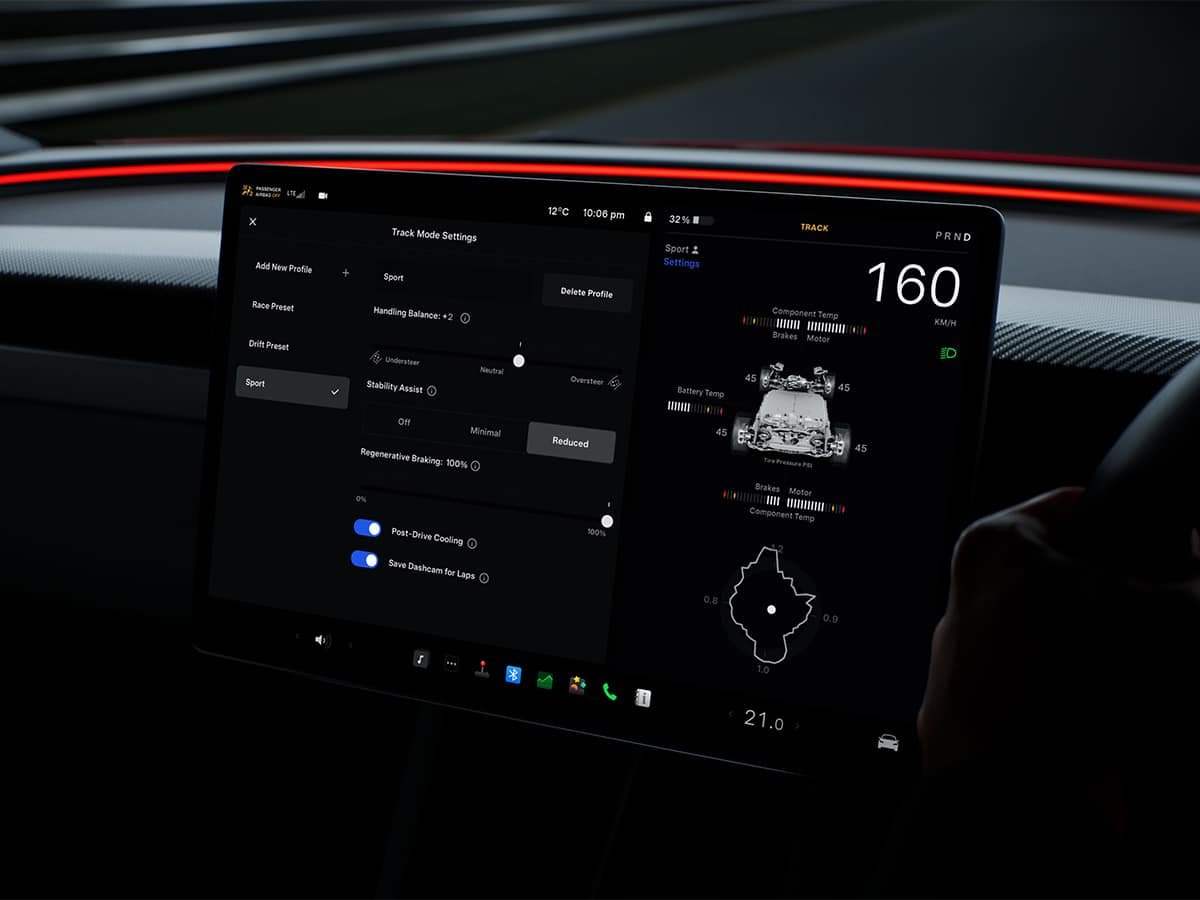
The 2026 high-performance electric sedan landscape continues to evolve rapidly as hardware refinements and software algorithms unlock unprecedented straight-line acceleration metrics. Recent engineering data confirms that the latest iteration of the Model 3 Performance achieves its quickest zero-to-sixty sprint specifically when operating within its dedicated Track Mode environment. This specialized operational state optimizes thermals and torque distribution beyond standard everyday driving configurations.
Industry analysts highlighting recent testing benchmarks note that the flagship dual-motor setup demonstrates a marked reduction in initial launch latency. By bypassing traditional traction control limitations inherent in street modes, Track Mode allows the vehicle to maximize instantaneous electric motor torque while maintaining total directional stability. Consequently, the high-performance trim establishes a new baseline for affordable electric performance sedans entering the market this year.
Thermal Management and Power Delivery
Official company disclosures emphasize that optimal acceleration times are fundamentally linked to the vehicle's active thermal management strategy. Track Mode proactively preconditions the high-voltage battery pack to an ideal operating window, significantly lowering internal resistance prior to hard launch initiation. Furthermore, aggressive heat dissipation protocols ensure that peak discharge rates remain available across successive high-load runs without thermal throttling.
Engineering data indicates that dual-motor power delivery during a Track Mode zero-to-sixty attempt dynamically biases torque output toward the rear permanent magnet motor. This tactical shift accounts for dynamic weight transfer during hard launches, maximizing grip over the driven rear axle. Concurrently, the front induction unit delivers precise complementary pull, resulting in seamless all-wheel-drive traction that eliminates wasteful wheel spin.
According to official company disclosures, maintaining battery state-of-charge above seventy percent is essential for replicating sub-three-second sprint times consistently. Voltage drop at lower charge thresholds directly degrades maximum kilowatt output to the electric drive units, extending sprint duration by several hundredths of a second. Consequently, real-time battery voltage telemetry serves as a critical variable for track enthusiasts seeking peak performance figures.
Powertrain Calibration and Traction Dynamics
Regulatory filings reveal that the underlying slip control software governing Track Mode evaluates wheel speed telemetry at microsecond intervals. Rather than reducing power abruptly when minor slipping is detected, the system permits controlled tire rotation to generate optimal friction coefficients. Industry analysts point out that this sophisticated traction algorithm allows driver skill to interact harmoniously with automated electronic intervention.
Adaptive dampening and revised chassis geometry also play vital roles in sustaining mechanical grip during aggressive standing launches. Engineering data proves that the electronic suspension reduces front-end lift and mitigates rear squat under full throttle, keeping the tire contact patches uniformly planted against the asphalt surface. This structural rigidity allows the vehicle to transform instantaneous electrical energy into pure forward momentum effortlessly.
Comparing standard launch modes against Track Mode configurations demonstrates a distinct divergence in throttle response mapping. In standard driving profiles, power ramp-up follows a progressive, safety-oriented curve designed to prevent sudden cabin discomfort. Track Mode completely removes these artificial dampeners, delivering full system current to the inverter hardware the exact moment the driver releases the brake pedal.
Telemetry Insights and Acceleration Metrics
Comprehensive telemetry logs collected across diverse asphalt surfaces show that one-foot rollout variations significantly influence published acceleration numbers. Official company disclosures list the zero-to-sixty time with rollout subtracted, representing standardized drag-strip track conditions. However, raw engineering data confirms that even without rollout subtraction, the sedan achieves reproducible zero-to-sixty times that comfortably outperform its previous generation predecessors.
Analyzing longitudinal G-force charts derived from Track Mode sprints highlights an immediate peak force exceeding one G within the first half-second of motion. This initial spike steadily tapers as vehicle speed increases and back-electromotive force builds within the electric motors. Industry analysts emphasize that maintaining strong sustained acceleration past forty miles per hour remains a standout engineering achievement for this revised platform.
Software enhancements within the central touchscreen interface allow drivers to customize power bias, stability control severity, and regenerative braking power directly. Engineering data indicates that sliding stability assist down to its lowest setting yields the fastest straight-line times on prepped drag strips. However, official company disclosures recommend maintaining moderate stability assist on public road surfaces to preserve safety reserves.
Industry Impact and Competitor Benchmarking
The performance metrics recorded in Track Mode place the electric sedan in direct competition with traditional internal combustion supercars costing significantly more. Industry analysts note that accessible high-performance electric vehicles are forcing established legacy manufacturers to recalibrate their own performance development timelines. Achieving repeatable low-three-second zero-to-sixty acceleration has transitioned from an exotic supercar luxury into a mainstream EV expectation.
Regulatory filings reveal that powertrain safety standards and thermal protection systems remain active even during extreme Track Mode operations. Safety systems monitor cell temperatures, inverter current density, and motor winding resistance continuously to prevent catastrophic component degradation. Engineering data proves that these software safeguards operate in the background without truncating peak acceleration output during short-duration drag runs.
Looking ahead, over-the-air software architecture promises further refinement to acceleration profiles as fleet data accumulates throughout 2026. Industry analysts predict that future updates will introduce hyper-specific track pre-settings tuned to famous race circuits worldwide. Continuous optimization of motor control algorithms ensures that existing hardware will continue delivering competitive performance metrics well into the future.
