
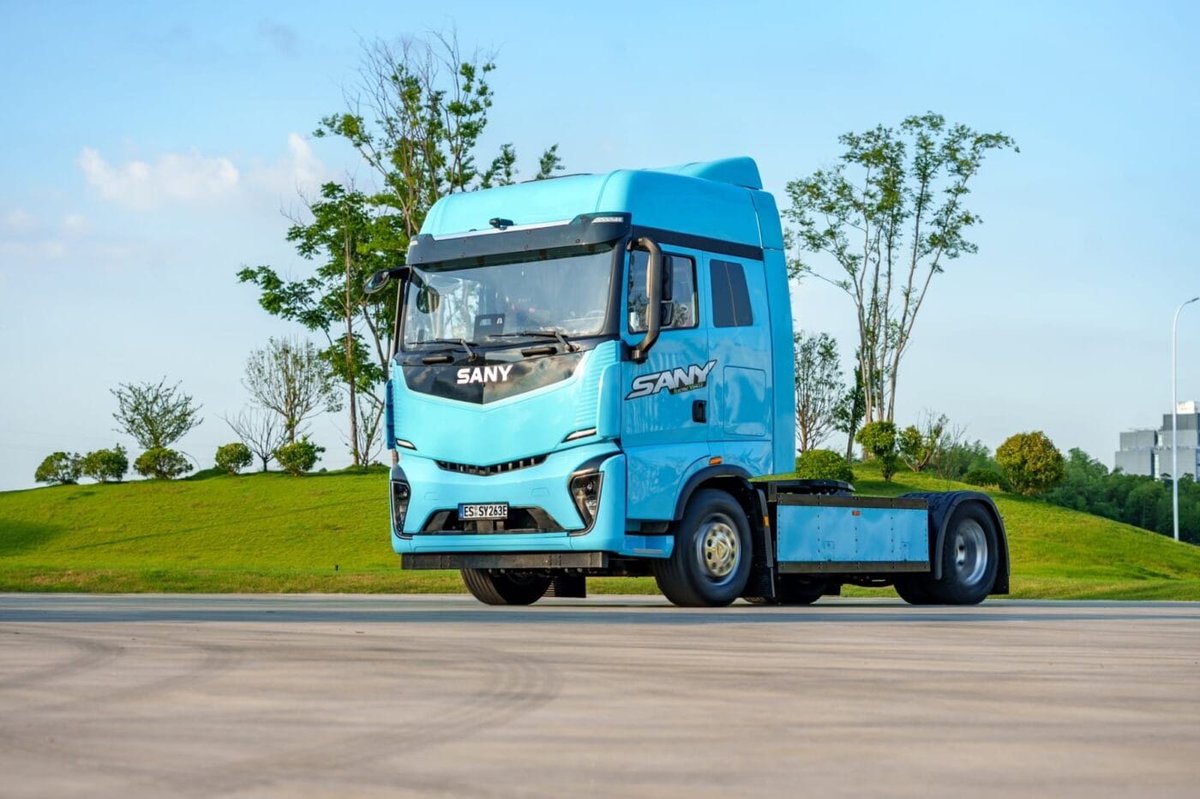
SANY Ships 800 Heavy Electric Vehicles In Global Fleet Push
Massive Monthly Deliveries Signal Industrial Transformation
While Western markets continue to debate the timeline for commercial fleet electrification, global equipment leaders are demonstrating that zero-emission heavy machinery is already viable at scale. Chinese heavy equipment manufacturer SANY recently reached a major milestone, delivering 200 heavy-duty electric haul trucks and over 600 electric wheel loaders within a single calendar month. This massive volume highlights a rapid operational shift across industrial sectors.
Official corporate updates indicate that international shipments made up a substantial portion of these figures. The company exported 200 electric dump trucks and 403 electric wheel loaders to customers worldwide in just thirty days. These figures do not account for the equipment manufacturer's expanding lineup of electric reach-stackers, commercial semi-trucks, and hydraulic excavators, which are also seeing increased deployment across overseas mining sites and infrastructure projects.
Company representatives emphasized that expanding the zero-emission lineup gives commercial operators flexibility without sacrificing performance. Offering both electric and conventional diesel options allows operators to select machinery tailored to specific site requirements while systematically reducing fleet carbon emissions. Industry analysts point out that fulfilling such high volumes in a short period signals mature manufacturing capability and robust international supply chains.
Battery Swapping Tech Drives Site Efficiency
At the core of this hardware deployment is modular energy management. Many of SANY's heavy electric machines utilize a standardized, swappable 550 kWh battery pack. This battery architecture addresses the critical challenge of operational downtime on high-intensity worksites. By replacing depleted packs with fully charged units in minutes, operators can maintain continuous cycles that mirror or exceed traditional diesel duty patterns.
Beyond eliminating on-site diesel exhaust, these massive battery systems offer unexpected grid interaction benefits. When idle or during off-peak shifts, fleet-scale battery packs can act as distributed energy storage assets. Equipment managers can participate in local demand response programs, charging during low-cost surplus hours and stabilizing regional electrical grids—a capability that standard internal combustion engines simply cannot provide.
The economic advantages of electric heavy equipment are rapidly moving past theoretical models into real-world proof. Electric drivetrains provide instantaneous torque, which is particularly beneficial for heavy haulage and excavation tasks under demanding conditions. Furthermore, reducing mechanical complexity leads to lower routine maintenance overhead, allowing fleet managers to offset higher initial capital costs far quicker than previously anticipated.
Autonomous Innovations Accelerate Next-Generation Fleets
Parallel to its aggressive electrification push, SANY is advancing autonomous operation technology to maximize safety and fleet productivity. At its recent Global Mining Key Customer Summit in Xi'an, the company showcased the SKT145Ei, a fully cab-less electric heavy haul truck designed for harsh mining environments. The vehicle eliminates human cabin operator requirements entirely, relying on automated navigation systems to execute high-volume material transport.
The manufacturer is also targeting mass-market commercial road logistics through strategic technology alliances. In partnership with autonomous driving tech developer Pony.ai, SANY plans to co-develop and manufacture 100,000 electric semi-trucks. This joint initiative aims to pair heavy-duty vehicle manufacturing scale with level 4 autonomous driving software, targeting high-density freight corridors where driver shortages and fuel costs represent significant operational bottlenecks.
The Widening Gap in Commercial EV Adoption
The speed of this rollout underscores a widening gap between Western commercial vehicle electrification and global market realities. While many North American and European logistics operators remain cautious, international competitors are aggressively scaling battery-electric solutions. Analyst reports suggest that commercial buyers who delay adopting high-efficiency electric platforms risk facing severe structural cost disadvantages as battery manufacturing continues to achieve economies of scale.
This rapid commercialization also reframes the ongoing debate around alternative fuels in heavy industry. While some Western manufacturers invest heavily in hydrogen fuel cells, current field data demonstrates that battery-electric platforms are capturing market share today. The immediate availability of swappable battery architectures provides a functional solution for continuous heavy work without waiting for expensive, capital-intensive hydrogen refueling infrastructure to materialize.
Strategic Implications for Global Heavy Logistics
Market watchers note that regulatory mandates across Asia and Europe are accelerating the retirement of high-emission commercial fleets. Heavy industry, long considered one of the hardest sectors to decarbonize, is finding that direct electrification offers clear operational savings alongside environmental compliance. As a result, municipal construction projects and multinational mining operations are increasingly specifying zero-emission machinery during procurement bidding.
The sheer scale of recent equipment deliveries demonstrates that heavy vehicle electrification has surpassed the pilot testing phase. With hundreds of electric wheel loaders and haul trucks entering daily service globally, the commercial equipment sector is entering a transformative era defined by high uptime, quiet operation, and digital fleet management.
Looking ahead, global equipment manufacturers that master battery supply chains and automated vehicle integration will likely dictate the future of commercial logistics and heavy construction. For fleet operators watching from the sidelines, the message is clear: battery-electric heavy machinery is no longer a future concept—it is actively reshaping global job sites today.
