
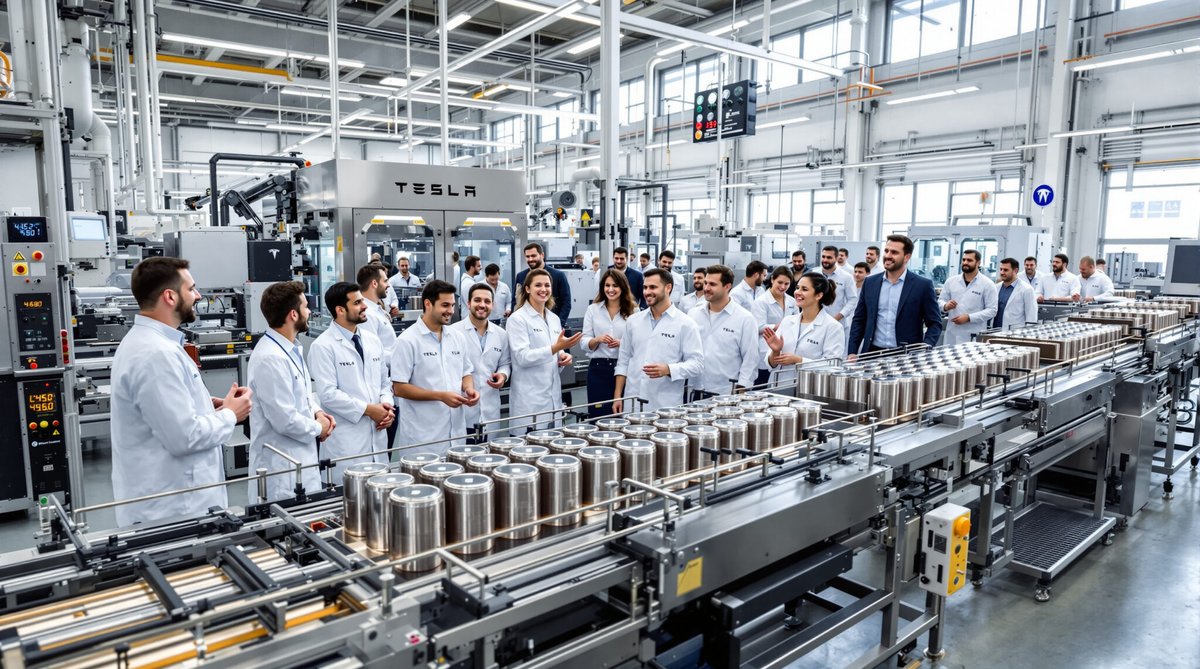
Scaled In-House Battery Material Processing
Tesla has officially achieved full operational readiness at its long-awaited cathode processing facility located within the Giga Texas complex in Austin. According to official company disclosures, the massive refinery has commenced high-volume synthesis of cathode active materials, marking a pivotal shift toward North American battery independence. This manufacturing milestone significantly streamlines internal battery cell production while scaling up output for next-generation electric vehicles across multiple vehicle platforms.
Regulatory filings indicate that the Austin cathode facility spans over one million square feet of localized chemical processing infrastructure. By centralizing raw precursor processing and active cathode manufacturing on the same site as cell synthesis, the automaker eliminates thousands of miles of international transit logistics. Industry analysts note that this vertically integrated setup reduces supply chain vulnerability while accelerating overall production throughput across Texas assembly lines.
The newly operational cathode facility feeds directly into Giga Texas cell manufacturing lines, supporting expanded production of high-density 4680 structural battery packs. Engineering data reveals that localized cathode synthesis ensures tighter control over chemical purity and particle uniformity, which directly translates to improved cell reliability. This milestone provides necessary material volume to sustain aggressive vehicle assembly schedules projected throughout the remainder of 2026.
Technical Breakthroughs in Dry Electrode Refining
A critical highlight of the Austin facility involves advanced dry-coating application processes for cathode synthesis, eliminating traditional energy-intensive wet slurries. Engineering data confirms that this dry electrode methodology slashes manufacturing footprint by over seventy percent while cutting processing energy requirements dramatically. Automating this refined process represents one of the most substantial manufacturing innovations in modern lithium-ion battery production history.
Transitioning from prototype lines to commercial-scale output required solving complex mechanical challenges associated with binder distribution and pressure roll alignment. Official company disclosures highlight that recent machinery upgrades reduced scrap rates to sub-one percent levels during initial ramp trials. Consequently, the facility maintains consistent chemical homogeneity across massive production runs, ensuring baseline structural stability within completed battery modules.
Environmental regulatory filings confirm that the dry processing technique eliminates toxic solvent evaporation and recovery infrastructure entirely from the Texas plant. By removing chemical solvents like N-Methyl-2-pyrrolidone from the processing loop, the facility achieves unprecedented sustainability metrics for battery precursor refining. This localized operational profile allows the manufacturing footprint to comply easily with stringent North American environmental standard requirements.
Financial and Supply Chain Implications
Financial assessments by industry analysts suggest that localized cathode processing will yield substantial manufacturing cost reductions per kilowatt-hour at the pack level. Eliminating overseas shipping fees, tariffs, and intermediary refining markups cuts cell production expenses by estimated double-digit percentages. These cost efficiencies provide essential margin buffers as consumer pricing across the broader electric vehicle market continues to adjust dynamically.
The Texas facility also guarantees maximum eligibility for federal clean energy tax credits tied to domestic battery material sourcing directives. Regulatory filings reveal that locally processed cathode active materials fulfill stringent federal requirements regarding domestic supply chain proportions. Secured tax incentives bolster overall corporate margins while maintaining competitive purchase pricing for end consumers purchasing North American vehicles.
Regulatory filings confirm that internal cathode production shields manufacturing operations from geopolitical trade disruptions and volatile international material spot prices. By sourcing raw lithium and nickel directly through long-term mining contracts, the company establishes predictable cost structures. Industry analysts emphasize that this vertical integration provides a resilient blueprint that rival automakers will struggle to replicate quickly.
Expanding Vehicle Lineup Integration
The surge in localized cathode output directly supports accelerated manufacturing rates for the Cybertruck and next-generation autonomous Robotaxi platforms. Engineering data indicates that cells utilizing the Texas-processed cathodes exhibit enhanced energy density and superior thermal performance under high-load operating conditions. These performance improvements prove critical for heavy-duty electric trucks and continuous commercial fleet deployment scenarios.
Official company disclosures confirm plans to scale cathode throughput to support over one hundred gigawatt-hours of annual cell production at Giga Texas. Achieving this target requires continuous deployment of automated material handling and real-time machine vision inspection systems. Engineering data indicates that current operational expansion remains ahead of baseline scheduling projections established in early corporate roadmaps.
Locating cathode refining directly adjacent to cell assembly lines minimizes inventory holding costs and eliminates transit damage risks associated with long-distance shipping. Official company disclosures highlight that real-time material feed systems keep active cathode powder flowing directly into cell winding machines without delay. This streamlined operational layout sets a new standard for hyper-efficient automotive manufacturing campus design.
Global EV Market Competitiveness
Industry analysts note that reaching commercial scale at the Austin cathode plant significantly alters competitive dynamics across the global electric vehicle sector. Traditional automakers relying on third-party Asian battery suppliers face widening margin disparities compared to fully integrated North American manufacturing footprints. Internal material processing provides an enduring strategic advantage in controlling quality, costs, and overall vehicle production volumes.
Looking ahead, engineering data suggests the lessons learned from the Giga Texas cathode project will guide future refinery designs across worldwide manufacturing hubs. As global battery demand scales exponentially through the decade, localized cathode processing facilities will serve as the cornerstone of low-cost, high-volume production operations. Texas has successfully demonstrated that onshore battery material refining is both commercially viable and strategically essential.
