
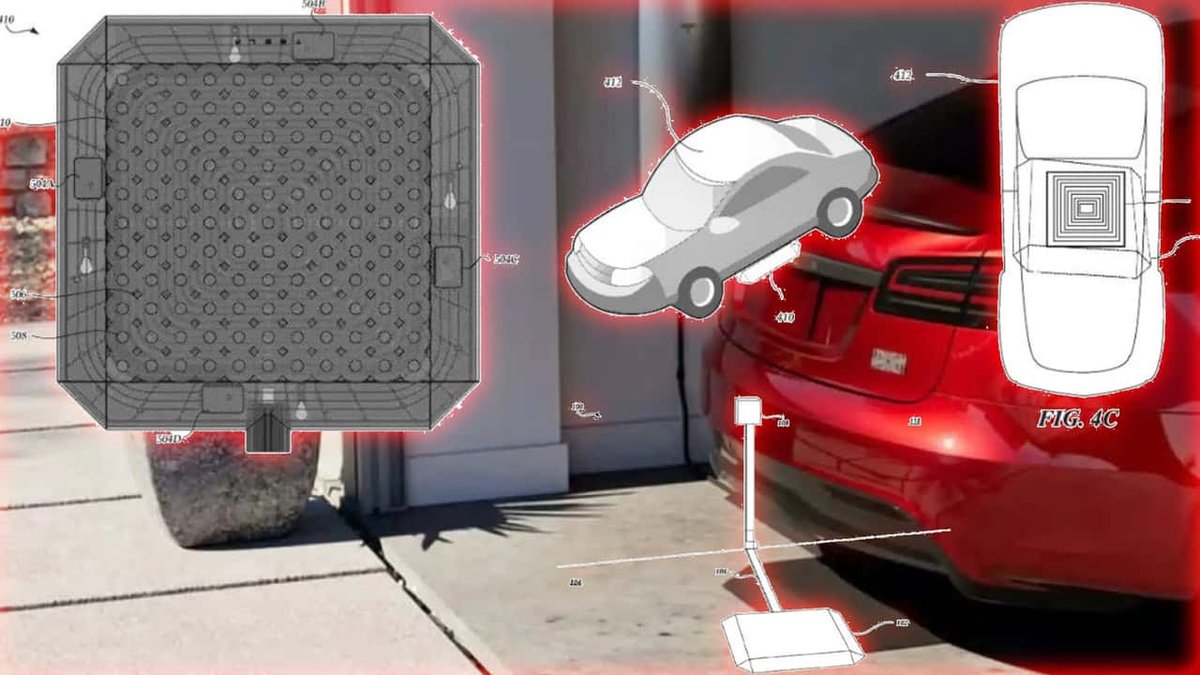
Official company disclosures published in early 2026 reveal that Tesla has officially secured several key patents covering high-efficiency inductive wireless home charging systems. These technical documents describe an automated garage mat system capable of delivering energy directly to a vehicle battery without requiring manual plug connections. The new intellectual property signals a major shift toward hands-free automated home charging solutions.
Regulatory filings filed with international patent offices demonstrate that the proprietary architecture targets charging efficiencies exceeding ninety-five percent, matching traditional tethered cable performance. According to engineering data included in the submission, the design utilizes advanced magnetic resonance alignment to reduce energy loss across spatial gaps. This breakthrough effectively resolves historical thermal dissipation concerns that previously hampered wireless energy transfer.
Decoding the New Inductive Patent Applications
The newly unveiled intellectual property details an adaptive primary transmitter coil embedded within a slim floor pad designed for easy residential garage setup. Official company disclosures indicate that the ground transmitter automatically tunes its operating frequency between eighty-five and one hundred kilohertz to optimize magnetic coupling with the vehicle. This dynamic frequency modulation maintains peak transmission even during minor vehicle parking misalignment.
Engineering data shows that the receiving vehicle assembly utilizes a lightweight, ultra-thin secondary coil integrated directly into the underbody protective armor. Industry analysts note that by combining structural battery enclosure materials with magnetic shielding, engineers successfully minimized added vehicle weight. The integrated architecture protects sensitive cabin electronics while maintaining high structural rigidity across the entire underbody assembly.
Thermal Management and High-Efficiency Power Electronics
Heat generation has historically presented a formidable bottleneck for kilowatt-scale magnetic induction systems operating in enclosed residential environments. Regulatory filings outline a multi-stage active cooling loop that routes specialized dielectric coolant through both the ground transmitter pad and the vehicle-side receiver. This continuous thermal loop prevents heat buildup from degrading surrounding concrete floors or onboard power transformation components.
Regulatory filings highlight an integrated solid-state silicon carbide inverter system tasked with converting incoming alternating current into optimized radio-frequency electromagnetic waves. Engineering data confirms this advanced power electronics module operates at reduced junction temperatures, significantly extending hardware longevity while maintaining stable output levels. Industry analysts emphasize that solid-state switching components remain critical for achieving residential industrial-grade safety certifications.
Safety protocols embedded into the patent architecture feature high-frequency debris and object detection sensors capable of instantly interrupting power transfer. Official company disclosures confirm the system continuously scans the air gap between the transmitter pad and vehicle chassis for foreign metal objects or living creatures. If an intrusion is detected, power output throttles down within milliseconds to prevent localized thermal hazards.
Seamless Integration with Autonomous Vehicle Fleets
The strategic timing of these patent approvals aligns precisely with broader corporate initiatives surrounding fully autonomous robotaxi development. Industry analysts stress that uncrewed passenger vehicles require fully automated replenishing infrastructure to operate efficiently without human intervention at depot hubs. Inductive wireless charging pads eliminate physical mechanical arms, reducing structural failure points and maintenance overhead for fleet operators.
According to engineering data, the wireless charging system integrates directly with vehicle self-parking algorithms through ultra-wideband localized positioning signals. This fine-grained wireless communication link allows the autonomous vehicle to align its secondary receiver over the ground pad within millimeter precision. Once positioned correctly, automatic handshakes initiate high-power wireless energy flow without driver input or external physical manipulation.
Infrastructure Costs and Residential Installation Reality
Transitioning laboratory concepts into mainstream home garages presents distinct financial and installation challenges for early adopter consumers. Industry analysts project that initial residential hardware packages will carry a premium price tag compared to traditional wall-mounted wall connectors. However, simplified installation protocols outlined in regulatory filings indicate the ground pad can plug directly into existing standard high-voltage residential circuits.
Official company disclosures emphasize modular design choices aimed at reducing specialized electrical contractor labor during home installations. The floor-mounted transmitter pad utilizes surface-anchored mounting plates that eliminate heavy concrete trenching requirements in typical home garages. Additionally, weatherized protective enclosures ensure the pad operates reliably across extreme seasonal ambient temperature swings and high humidity conditions.
Market Impact and Future Industry Standardization
The public release of these patent filings intensifies competitive pressure across the electric vehicle hardware ecosystem. Industry analysts observe that legacy automakers and third-party charging suppliers are accelerating their own wireless research to avoid proprietary market lock-in. Tesla's technological leap may compel global standards organizations to harmonize wireless protocols around high-efficiency resonant induction frameworks.
Regulatory filings indicate that future iterations of the technology may incorporate bi-directional power transfer capabilities to support home energy storage. Engineering data outlines how stored energy in vehicle batteries could wirelessly flow back into home electrical panels during peak demand periods. This potential bidirectional wireless grid integration represents a transformative step forward for decentralized home energy ecosystems.
As commercial deployment approaches later in the decade, the electrification sector stands on the cusp of an automated charging evolution. Official company disclosures indicate initial commercial rollout will focus on premium vehicle trims before scaling to mass-market models. Wireless inductive charging is poised to transform passive garage parking into an effortless, invisible energy replenishment experience for millions of drivers worldwide.
