
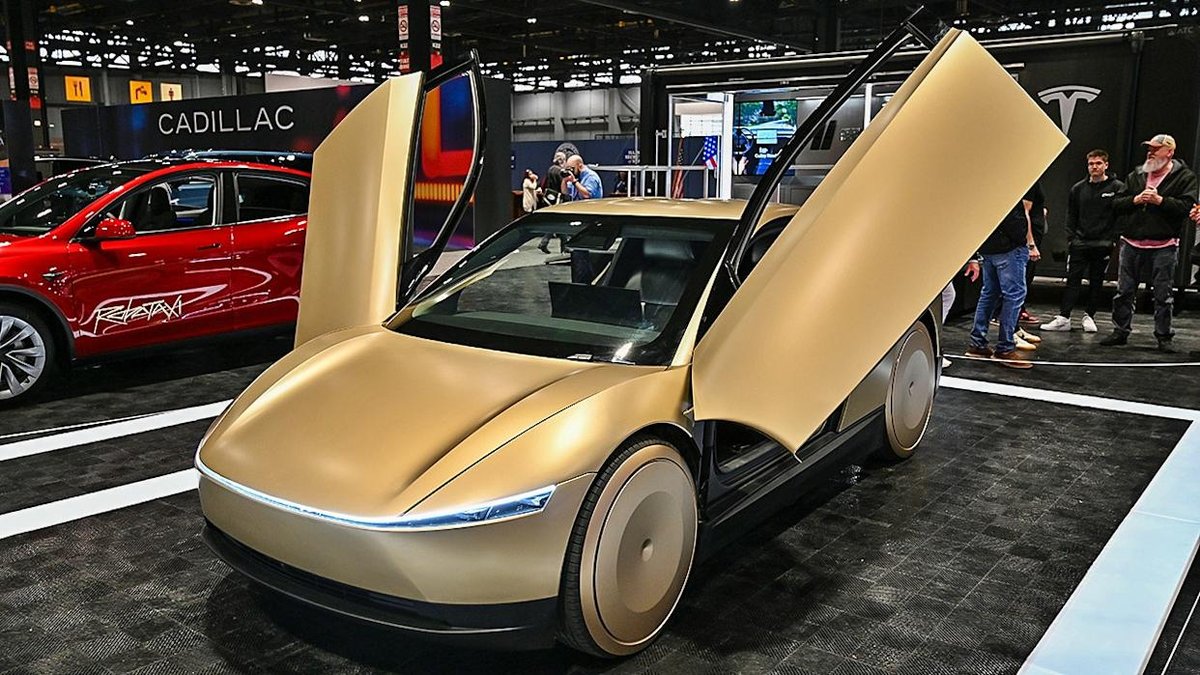
Tesla Opens Cybercab Rides to the Public Without Steering Wheels
Tesla has officially launched its Cybercab service for the general public, rolling out the dedicated two-seater vehicle into its operational Robotaxi fleet in Austin, Texas. The service officially opens to public passengers on Friday, September 4, at 5 p.m. Central Time. This commercial deployment follows a high-profile unveiling event where initial attendees experienced driverless rides across the company's designated local testing geofence.
The deployment marks a dramatic shift in how autonomous transportation is packaged and presented to everyday commuters. Unlike previous iterations of self-driving passenger vehicles that relied on converted production models, the Cybercab is built from the ground up purely as a driverless transit platform. Passengers in the Austin area can now hail these vehicles directly through the company's dedicated mobility platform.
Eliminating Manual Controls in the Cockpit
The defining characteristic of the Cybercab is the complete absence of traditional driver interface hardware inside the cabin. Engineers have removed the steering wheel, accelerator pedal, brake pedal, and gear selector entirely. This radical design philosophy forces full reliance on the latest iteration of the automaker's Full Self-Driving neural network system, which interprets sensor data to navigate complex urban traffic.
Inside the minimalist two-seat interior, passenger controls are strictly confined to comfort and basic operational preferences. Occupants can adjust their seat positions, regulate climate control settings, and interact with the central infotainment touchscreen. By eliminating mechanical controls, vehicle interior volume is maximized, transforming the cabin into an unencumbered personal space designed specifically for transit comfort rather than driving oversight.
Industry observers note that removing manual overrides represents a bold departure from regulatory standards historically imposed on autonomous testing fleets. For years, automotive critics and regulators emphasized the necessity of human supervision and physical backup systems. The launch of a vehicle completely devoid of manual inputs underscores the company's confidence in its camera-based computer vision architecture and machine learning models.
Satellite Connectivity and In-Cabin Entertainment
To enhance the passenger experience during autonomous rides, the vehicle is outfitted with advanced connectivity hardware, including integrated Starlink V5 satellite terminals. Company executives highlighted that this satellite integration provides gigabit-class broadband speeds directly to the moving vehicle. Passengers can stream ultra-high-definition content without buffering, play cloud-based video games, or participate in video conferences seamlessly throughout their journeys.
Chief Executive Officer Elon Musk described the interior environment as a comfortable lounge on wheels, prioritizing rider relaxation over vehicle operation. Featuring high-end displays and an engineered audio subsystem, the cabin experience mimics a mobile entertainment suite. The company aims to monetize travel time by offering premium digital content and productivity tools while the autonomous system manages navigation and safety.
The emphasis on digital amenities aligns with broader corporate strategy to transition from a pure hardware manufacturer into a software and services provider. By turning transit time into passive leisure, the company expects to boost passenger adoption rates and set a new standard for ride-hailing comfort across metropolitan markets, starting with the initial Texas coverage zones.
Fleet Expansion and Commercial Purchasing Intent
Beyond launching the vehicle within its own corporate ride-hailing network, the EV manufacturer is laying the groundwork for individual and commercial ownership of the platform. Industry filings reveal that a public interest portal has been established on the company's website. This portal allows prospective buyers, fleet managers, and independent contractors to submit inquiries regarding future vehicle purchases.
The target production price point for the Cybercab is expected to hover around $25,000, positioning it as an affordable asset for commercial ride-hailing operations. Analysts suggest that offering a low-cost, purpose-built autonomous vehicle could enable private operators to establish independent robotaxi businesses. This decentralized operational model could rapidly expand vehicle availability without requiring massive centralized capital expenditure from the manufacturer.
Company statements suggest that commercial deliveries to private buyers and fleet operators could begin in the coming months, pending manufacturing scaling and regional regulatory approvals. Early indications show substantial consumer and commercial interest, as small business owners seek to leverage autonomous fleets to build passive income streams within urban transportation markets.
Milestone Achievement in Driverless Operations
The commercial debut of the Cybercab coincides with a major operational landmark for the automaker's autonomous division. Recent regulatory disclosures confirm that the company's Robotaxi fleet has officially surpassed 1 million unsupervised autonomous miles. Achieving this milestone without driver intervention provides crucial safety data required to convince local transportation authorities to permit broader urban deployments.
Reaching the 1-million-mile benchmark demonstrates the scalability of the underlying neural network software across real-world driving environments. The data gathered from these miles directly informs future software builds, continuously refining vehicle behavior in complex scenarios such as heavy rain, road construction, and unpredictable pedestrian traffic encountered across the Austin metropolitan service zone.
As the Friday 5 p.m. launch time approaches, industry analysts view this milestone as a pivotal test for the future of driverless mobility. If the Austin rollout succeeds without major operational hiccups, it could accelerate approval timelines in other metropolitan regions, firmly establishing fully autonomous, pedal-free transit as a viable mainstream reality.
