
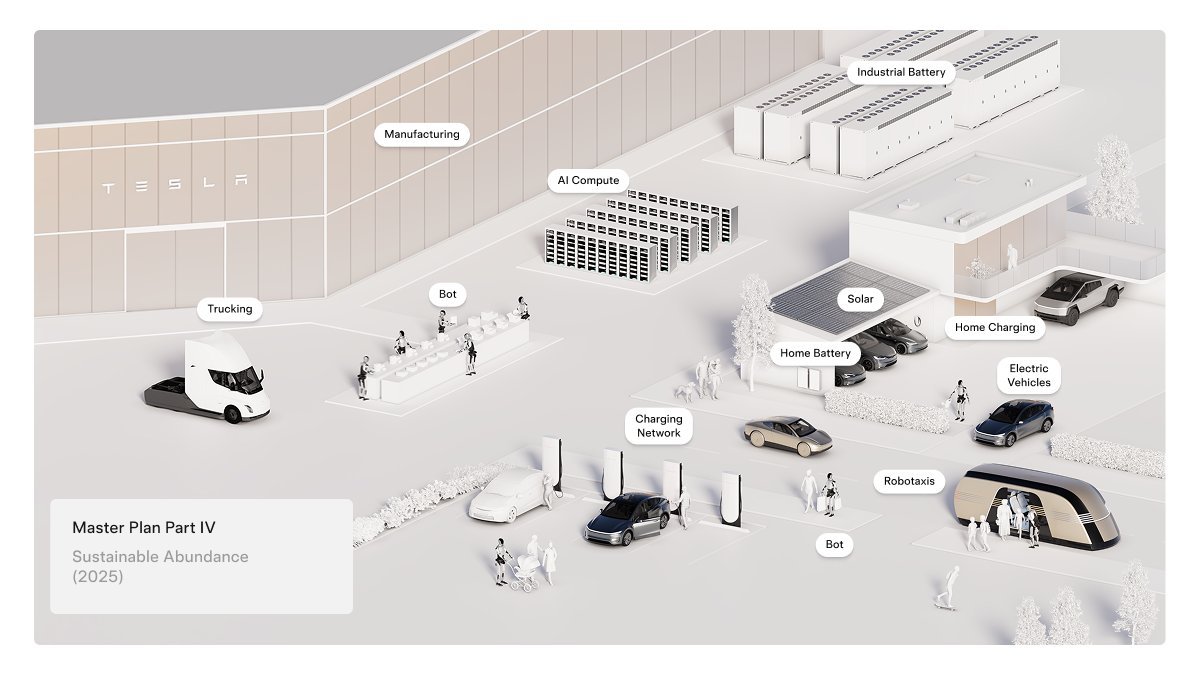
Official company disclosures released in early 2026 outline an unprecedented framework to accelerate the global transition toward fully sustainable energy. The updated blueprint details a comprehensive roadmap targeting complete economy-wide decarbonization through electrification, massive battery deployment, and renewable power generation. According to engineering data, achieving this global objective will require scaling renewable generation capacity alongside high-density battery storage across commercial and residential sectors worldwide.
Industry analysts emphasize that this refreshed strategic vision addresses structural bottlenecks in global energy networks rather than focusing solely on personal passenger vehicles. The roadmap prioritizes building out redundant grid storage networks capable of stabilizing intermittent solar and wind resources on every major continent. Furthermore, regulatory filings indicate that rapid grid transformation represents the fastest pathway to replacing fossil fuel reliance in primary industrial hubs.
Next-Generation Vehicle Platforms and Manufacturing
Central to the updated transportation strategy is the deployment of a highly simplified, next-generation vehicle architecture engineered for extreme manufacturing efficiency. Official company disclosures reveal that the unboxed assembly methodology reduces factory footprint requirements by over thirty percent while accelerating production throughput. This low-cost platform underpins upcoming mass-market electric vehicles designed to dramatically expand global EV adoption across emerging consumer markets.
Engineering data confirms that the upcoming vehicle platform utilizes a refined 48-volt electrical architecture paired with advanced drive units requiring zero rare-earth materials. This technological transition significantly lowers manufacturing overhead while mitigating critical supply chain vulnerabilities associated with specialized heavy metals. Additionally, official company disclosures confirm that integrated structural battery packs enhance overall vehicle chassis rigidity while substantially reducing total curb weight.
Autonomous commercial transport forms another foundational pillar within the updated long-term operational strategy outlined in official company disclosures. Regulatory filings show that autonomous ride-hailing networks are positioned to drastically increase vehicle utilization rates compared to traditional consumer ownership models. Industry analysts project that deploying dense fleets of dedicated cyber-cabs will lower urban transport costs per mile below current public transit benchmarks.
Terawatt-Scale Stationary Storage Expansion
Expanding global stationary energy storage remains critical for balancing electrical grids as fossil-fueled baseline plants continue to decommission rapidly. Official company disclosures highlight the ramp-up of next-generation Megapack hardware engineered with higher energy density and integrated liquid thermal management. These utility-scale battery systems provide essential grid stabilization services, including frequency response and synthetic inertia, to prevent localized blackouts.
Beyond utility-scale installations, decentralized energy ecosystems are expanding through aggregated residential storage systems and bidirectional electric vehicle charging infrastructure. According to regulatory filings, software platform enhancements now aggregate thousands of individual home batteries into functional Virtual Power Plants. Industry analysts note that these distributed energy networks provide immediate emergency grid relief during extreme weather events without consuming additional land.
To meet surging global demand, manufacturing capacity for storage systems is expanding across primary industrial facilities in North America, Asia, and Europe. Engineering data indicates that streamlined cell manufacturing techniques have lowered production costs per kilowatt-hour to historic industry lows. This manufacturing scaling enables rapid utility deployment cycles, allowing large-scale energy projects to transition from contract sign-off to full grid interconnection within months.
Supply Chain Verticals and Resource Sustainability
Securing raw material processing capabilities serves as a crucial mechanism for maintaining long-term supply chain independence across global markets. Official company disclosures document significant progress at dedicated lithium refining plants and cathode processing facilities designed to bypass conventional refining bottlenecks. Engineering data demonstrates that these localized processing centers utilize innovative chemical processes that substantially reduce water consumption and eliminate toxic waste outputs.
Closed-loop battery recycling initiatives have reached industrial scale, allowing recovered raw materials to re-enter the active cell manufacturing pipeline. Regulatory filings confirm that advanced recycling facilities currently achieve recovery efficiency rates exceeding ninety-five percent for nickel, cobalt, and lithium. Industry analysts emphasize that high material recovery rates drastically lessen environmental impacts associated with virgin mining while establishing a resilient localized supply chain.
Beyond vehicle and grid storage applications, the global transition strategy targets the electrification of industrial high-temperature heat systems. Official company disclosures highlight specialized heat pump architectures designed to replace natural gas boilers in commercial buildings and manufacturing plants. Engineering data proves that industrial heat pump technology operates at thermodynamic efficiencies far superior to legacy combustion systems, accelerating carbon elimination across manufacturing sectors.
Financial Architecture and Global Grid Transformation
Executing a global transition toward total energy sustainability requires massive capital allocation supported by innovative financing structures. According to regulatory filings, capital expenditures are optimized to fund high-margin software platforms alongside physical infrastructure expansion without overleveraging balance sheets. Industry analysts project that capital efficiency will improve as standardized factory modules enable rapid, repeatable facility construction across international markets.
Global regulatory alignment remains a critical catalyst for accelerating clean energy deployment across diverse international jurisdictions. Official company disclosures stress the importance of streamlined permitting processes for large-scale solar, wind, and storage interconnections to prevent project delays. Engineering data suggests that standardized grid integration protocols reduce commissioning times, allowing municipal utilities to achieve decarbonization targets years ahead of original schedule deadlines.
Ultimately, the updated Master Plan establishes a measurable benchmark for monitoring global carbon reduction milestones over the coming decade. Industry analysts agree that integrating electric transport, stationary energy storage, and clean generation creates a self-reinforcing industrial ecosystem. According to official company disclosures, achieving these integrated objectives will permanently reshape global energy architecture while proving the commercial viability of complete economic sustainability.
