
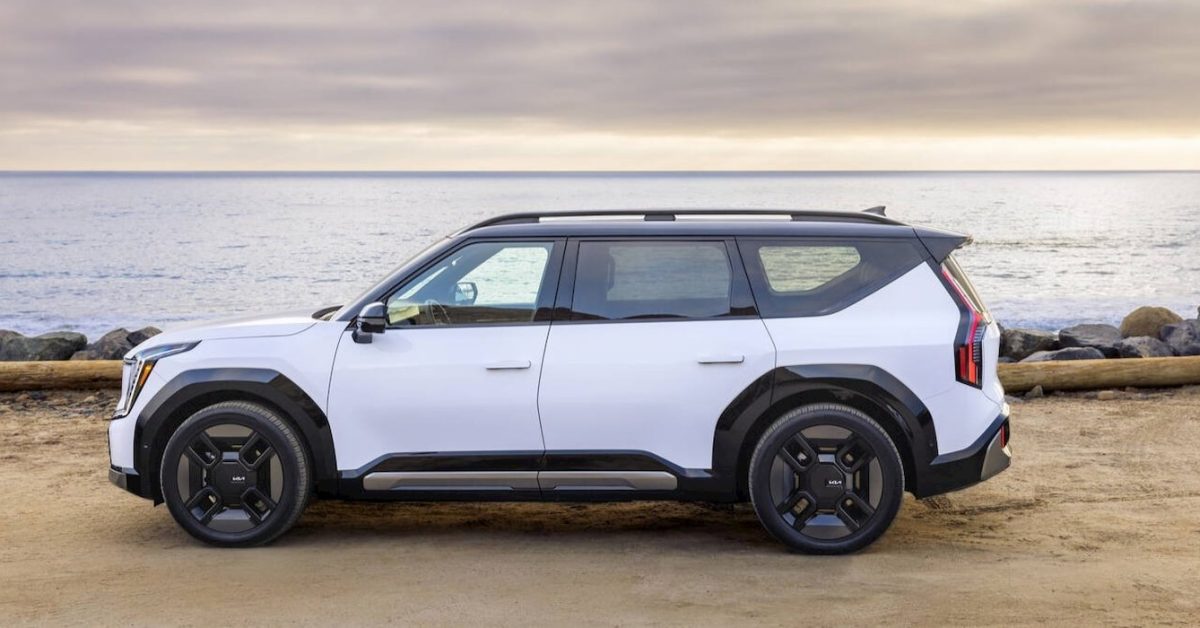
Kia EV9 Price Cut Spikes Dealer Discounts Past $15,000 Mark
Aggressive Retail Discounts Reshape Family Electric Vehicle Pricing
Kia’s flagship electric family crossover is seeing unprecedented price reductions across the United States as retail outlets clear inventory ahead of year-end deadlines. Industry marketplace tracking reveals that select dealerships are discounting the 2026 Kia EV9 by more than $15,000 off sticker price. The substantial markdowns make the spacious three-row vehicle one of the most cost-effective long-range options in the electric utility segment.
Nationwide corporate programs provide a baseline $10,000 factory customer cash incentive, but individual retailers are leveraging additional store-level discounts to lower drive-away prices significantly. Promotional updates from dealerships in Texas indicate that entry-level Light Short Range models carrying an original sticker price of $56,735 are being listed for as low as $40,500. These combined reductions effectively slice over twenty-eight percent off the original manufacturer price tag.
Midwestern auto group listings reflect similar pricing strategies. Regional disclosures show Illinois franchises advertising 2026 EV9 Light Short Range trims for under $43,000 inclusive of local processing fees. For buyers seeking greater highway endurance, the EV9 Light Long Range variant has seen equivalent markdowns. Prices for the extended battery version have dropped to roughly $45,100, providing an estimated 305 miles of driving range per charge.
Bucking Broader Market Trends with Resilient Sales Growth
The steep promotional push comes during a turbulent transition period for the broader electric vehicle market. Demand across several rival zero-emission models, such as the Ford Mustang Mach-E and Chevrolet Equinox EV, softened following the expiration of direct federal clean vehicle tax credits last autumn. However, Kia’s flagship three-row platform has successfully resisted the broader industry downturn by expanding its retail footprint.
Trade volume data shows that Kia delivered nearly 10,500 EV9 units across the United States during the first eight months of 2026. This performance marks a twelve percent increase compared to the same period during the previous year, despite operating without federal purchase subsidies. The steady volume growth demonstrates sustained consumer appetite for full-sized battery-electric SUVs when priced competitively against traditional internal combustion engines.
Despite these encouraging gains, electric utility sales still represent a minority portion of overall brand volume. For context, regional distribution records reveal that Kia sold over 98,000 gasoline-powered Telluride SUVs within the same eight-month timeframe. To bridge this structural volume gap, the automaker and its dealer body have actively deployed manufacturer-backed rebates to maintain showroom foot traffic and sustain high turn rates across EV inventory.
Corporate Subsidies and Financing Terms Power Year-End Push
To maintain sales velocity, Kia has structured dual promotional pathways for prospective buyers. The headline national incentive centers on a straightforward $10,000 Customer Cash rebate on 2026 model-year vehicles. This factory discount applies directly at the point of sale, allowing buyers to bypass complicated eligibility hurdles previously associated with federal tax incentive paperwork while benefiting from immediate price reductions.
Alternatively, qualified buyers looking to minimize monthly finance charges can opt for low-interest corporate financing packages. Automotive finance filings confirm that Kia is currently offering 0% APR financing for up to 60 months on the EV9 lineup. This interest-free financing structure can be combined with a $5,000 APR Bonus Cash allowance, providing a substantial alternative incentive for consumers preferring long-term loan amortization over upfront lump-sum cash savings.
Industry analysts note that these aggressive promotional structures highlight a broader operational strategy across foreign automakers. By substituting missing federal subsidies with factory-sponsored capital, manufacturers protect their market share while building brand loyalty in the expanding multi-row EV category. The combination of zero-percent financing and dealer markdown guarantees competitive positioning against emerging domestic three-row utility rivals.
Expanding Accessible Electric Options Across Vehicle Segments
While the flagship EV9 anchors the top end of the lineup, Kia is simultaneously expanding its entry-level zero-emission offerings. The newly introduced Kia EV3 compact crossover has entered North American showrooms with a base starting price of $29,890. This aggressive entry pricing provides a budget-conscious path for households that do not require the expanded dimensions or three-row seating capacity of the larger EV9 vehicle platform.
The dual-pronged approach allows the brand to capture diverse demographics across the electrification spectrum. Budget-minded commuters can utilize the low entry barrier of the compact EV3, while growing families can leverage current dealer markdowns to secure a spacious three-row crossover at prices traditionally reserved for two-row midsize vehicles. This comprehensive portfolio structure helps the manufacturer defend retail market share against both legacy and startup competitors.
Consumer advocates advise shoppers that individual dealer participation and exact discount values will vary based on regional inventory levels and local competition. While the $10,000 national customer cash is universally available through corporate programs, securing maximum discounts exceeding $15,000 requires comparing inventory across regional franchises. Prospective buyers are encouraged to review local dealership disclosures carefully to identify stacked store-level price reductions.
Ultimately, the aggressive pricing landscape highlights how rapid market adjustments benefit modern automotive shoppers. As manufacturers recalibrate distribution strategies without reliance on federal tax credits, competitive discounting on high-capacity electric vehicles is establishing new benchmarks for affordability. The EV9's current price structure signals a major milestone in making large family electric vehicles truly accessible to mainstream automotive consumers.
